Buildings cost money and buildings that appear to be a part of a themed environment cost even more money. The jobs of Project Managers rest on the foundation that they deliver projects on time and on budget, so PMs are inspired to find ways to reduce costs wherever possible. If they go over budget or a project opens late, they may not manage another project.
Not everything is in the control of a Project Manager such as when a natural disaster increases the cost of building materials due to demand, or when a ride system fails to preform and has to be rebuilt. These are uncommon, but when the project mandate is building a mountain, then a mountain they shall build. That is the goal for the project.

Splash Mountain is an example of a building that appears to be a mountain.
But there was a popular trend starting in the late 1980s that resulted in not building mountains but building movie studio soundstages and back lot set walls. The Disney MGM Studios at Walt Disney World was the Disney Park that led the way because a simple box instead of an immersive environment could be built which was acceptable because simple construction meant the story conceit. If guests were asked what they were seeing the answer was ‘it’s a soundstage’, and soundstage are simple boxes and boxes are cheap and fast to build. The finished project achieves its objectives and general happiness results.
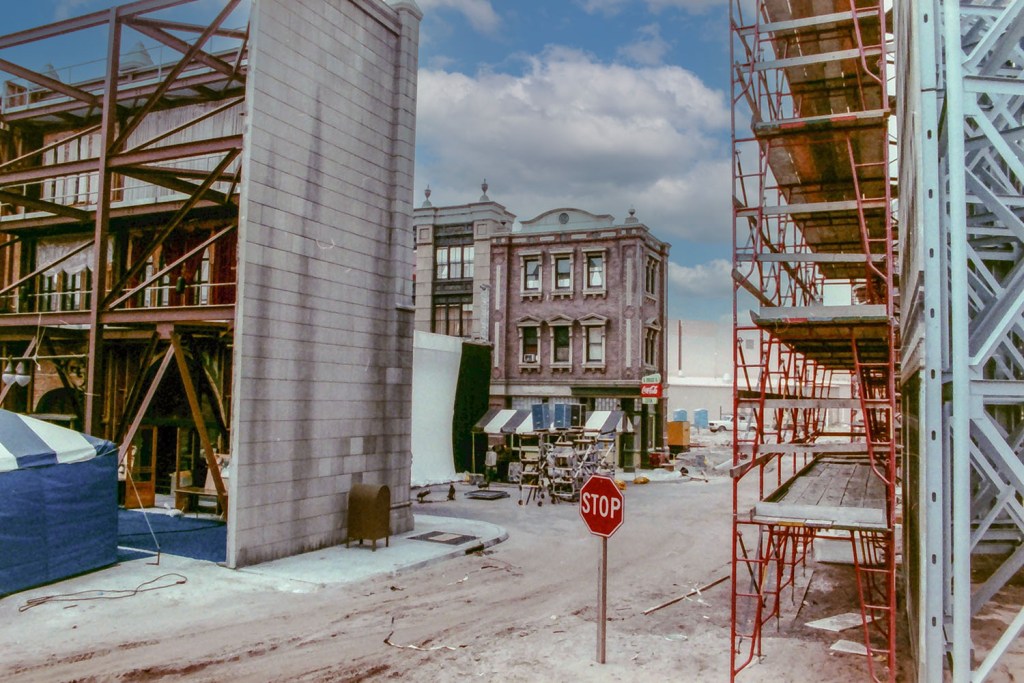
Backlot street at the Disney MGM Studios Walt Disney World.
But the ‘first cost’ often isn’t the ‘final cost’.
Due to the fact that the simple box is limited, inflexible, and expensive there are costs for changes and modifications driven by future projects. This is what we are seeing now in Anaheim with the expansion of ‘Avengers Campus’ at Disney California Adventure. The simple wall with the mounted Avengers Quinn jet and the opening was built to accommodate the Red Car ride. But to build the expansion of Avengers Campus, the Red Car maintenance barn has been demolished. What was built originally was ‘just enough’ with no solid plans for future modifications and revisions. Should the existing retail shop become part of a new project there could costs, and the costs fall to the next Project Team.
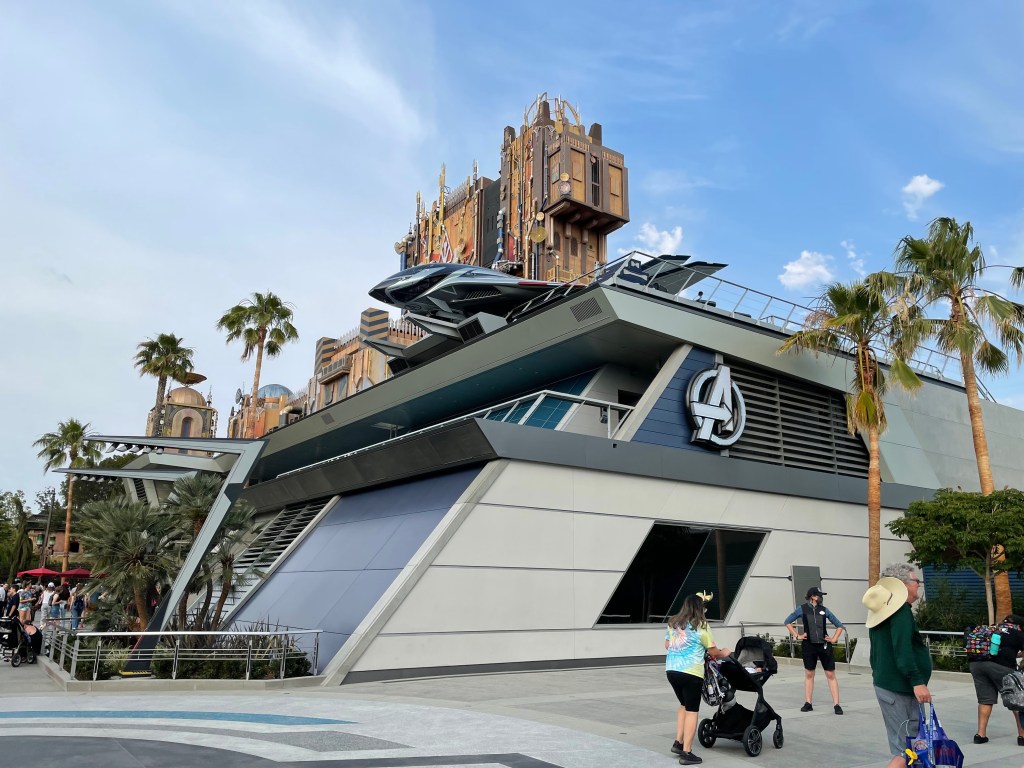
Looks like a building but its not (Avengers Campus DCA).
The rule of first vs second costs is applied to entire Disney Parks. For example, when Hong Kong Disneyland and Walt Disney Studios Park opened, both were half day parks. Over the years new rides were built and lands added at a cost greater than if they had been built originally.
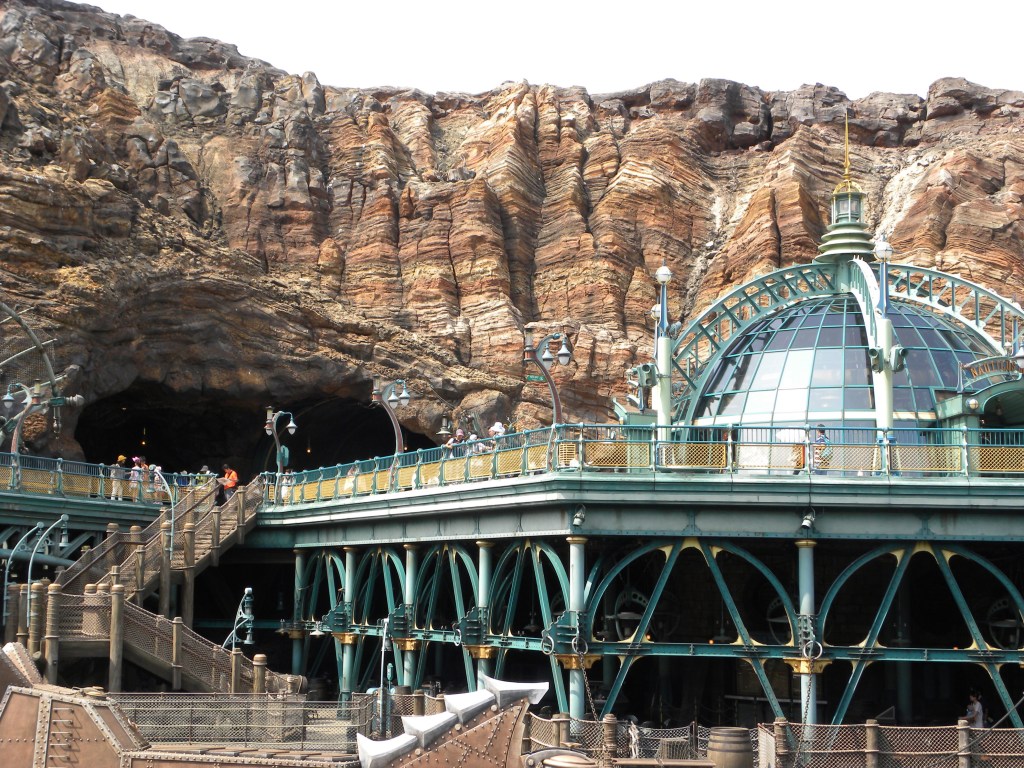
20K ride at Tokyo Disney Sea.
In fairness sometimes there are second costs incurred due to guests opinions and dissatisfaction, such as when the 20k ride at Tokyo Disney Sea was redesigned with a new show. So, the ‘bean counters’ aren’t always at fault. Sometimes but not always. It’s an artful skill to balance the risks and needs of projects to succeed not fail, deliver on time and not late, and stay on budget while not going broke. Writing as someone who has been in the war trenches, I confirm it is not an easy or simple task.
 Disney Journey Blog