“Behind the Castle Walls” Review

Former CEO of The Walt Disney Company

I ordered Bob Chapek’s new book, “Behind the Castle Walls,” with great interest and anticipation because of both the period it covers and my personal connection to it. As an Imagineer, I pitched ideas to Chapek in Glendale while he oversawDisney Parks. Earlier in his 30-year career, he led Consumer Products and, before that, Direct-to-Home Video. That career arc offered rich material for an entertaining and informative book, but this is not that book.

Because of the limits imposed by a confidentiality agreement, these views are confined to the public record. Based on that record, however, Chapek’s book is ultimately disappointing: it reads less like a book than a letter of complaint. He portrays himself as poorly served by the circumstances of his tenure as CEO of The Walt Disney Company and blames others for its brevity.

A history book without a index

More complaint letter than book, it resembles a note sent after a new sofa arrives in the wrong color, does not fit the room, or has the armrest on the wrong side. Yet the book neither examines the causes of Chapek’s grievances nor accepts responsibility for his brief tenure.

The book’s central failing is its missed opportunity to illuminate an important era at The Walt Disney Company. Chapek held a rare succession of roles across the business—from Consumer Products and Home Video at its peak to Parks and Resorts and, finally, CEO. He may not have seen everything, but he was in the room for many consequential moments. Missing are stories such as John Lasseter’s influence on Home Video and evidence supporting the claim that Bob Iger retired because he anticipated COVID’s impact on the company.

The book’s tone and structure may reflect Chapek’s co-author, whose published work consists largely of sports books. On a second reading, this book feels much the same: it keeps score, tallying each loss as if recounting a series of games.

Image: CNBC

Biographies are inevitably filtered through personal perception, memory, and bias, but they can still provide a factual record—a standard “Behind the Castle Walls” fails to meet. This material might have worked better as an essay or complaint letter than as a book. Even its presentation raises questions: it lacks an index, and the cover appears to have been created with artificial intelligence.

This book is a missed opportunity—for researchers interested in The Walt Disney Company and for Chapek, if his goal was to provide the definitive account of this period.

AI is a Tool but is it Useful?

Recently, I experimented with AI to see what it could do. Most of what I found was disappointing, though a few things were useful. I’ll start with the good: running my writing through an AI editor helps me see it from a different perspective, and a second set of eyes is always valuable. Next, I turned a photograph into a poster styled like a 1960s B movie. The results were terrible—the art, copy, and font choices were painful to look at.

Result of AI prompts to create a film poster from a photo.

For my third test, I asked AI to create a fun map showing what a Disneyland Texas might look like, and this is what it produced. The artificial intelligence gave me what I requested, but it did so by pulling from existing sources, rearranging information, and reformulating the result. It did not truly create; it only recombined. AI can offer structure and rhythm, but it cannot replace original creation. That is why AI is a useful tool, not a replacement. New tools will always emerge. Most will be improvements, and only a few will be truly revolutionary. Let me end with a story.

AI delivered this cliche filled ‘fun map’ of Disneyland Texas.

When I started at WDI, the computer was housed in a dedicated room with a raised floor and large machines lining the walls.

I remember stepping into that computer room at WDI. You had to step up because the floor concealed the systems beneath it. The machines filled the room with a low whirring sound, and spinning magnetic tape reels lined the walls. Years would pass before Apple introduced the desktop, Mac. Then one day, there was a knock at my office door, and a technician delivered one to me.

Big. bulky and imposing was this Mac desktop system.

The IT person unboxed and set up the equipment. When he finished, I asked, “What is this for?” He replied, “I don’t know. I just deliver it. It’s set up; what you do with it is up to you.” Those words have stayed with me. Today, as we look at artificial intelligence, we are asking the same question: what will we really use it for? In 10, 15, or 20 years, AI may seem quaint and outdated, and we may already be talking about the tool that replaces it.

State of the Art

This post is a little bit of a rant. If you don’t like to read rants, then stop here unless you like a rant about technology. To begin with the issue I’m having I know is my fault, my responsibility. The company that makes the devise I’m having an issue with has designed and built a devise that does what’s promised.
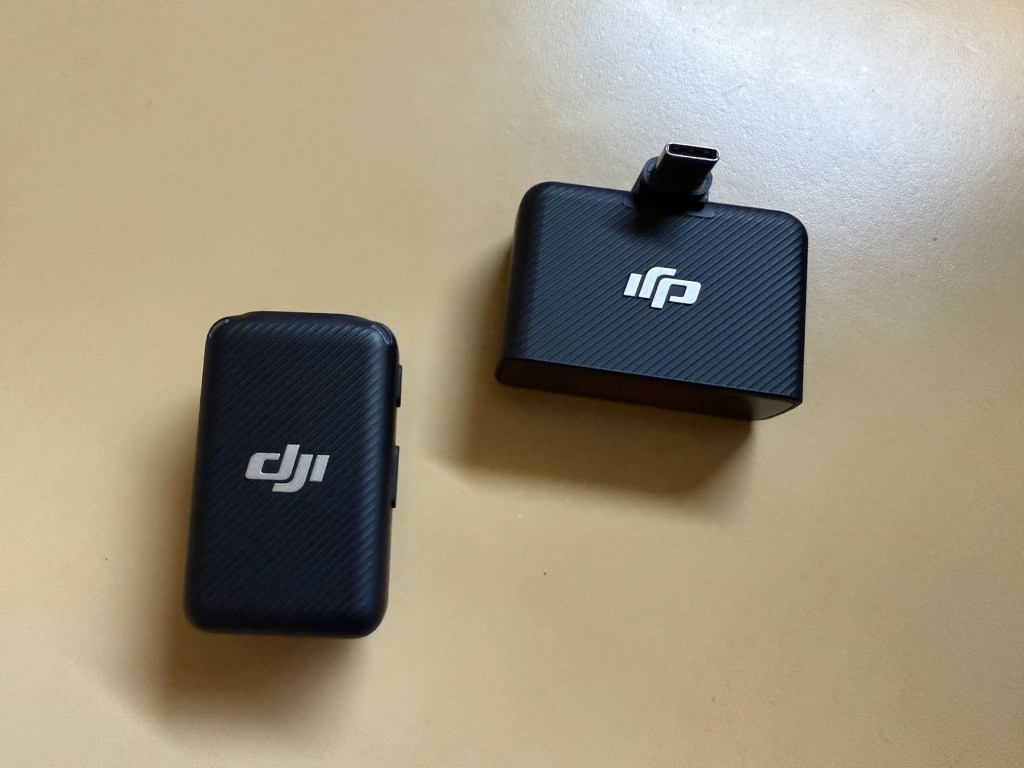
DJI Mic (1 TX & 1 RX) Wireless Lavalier Microphone

My problem is that I use this mic to record the portions of the Disney Journey with Jim Shull videos. I use a Scarlett 2i2 4h generation mic combined with a Focusrite box to record the voice over portions of my videos, and the issue is the sound quality ‘jumps’ between the two recorded sources.
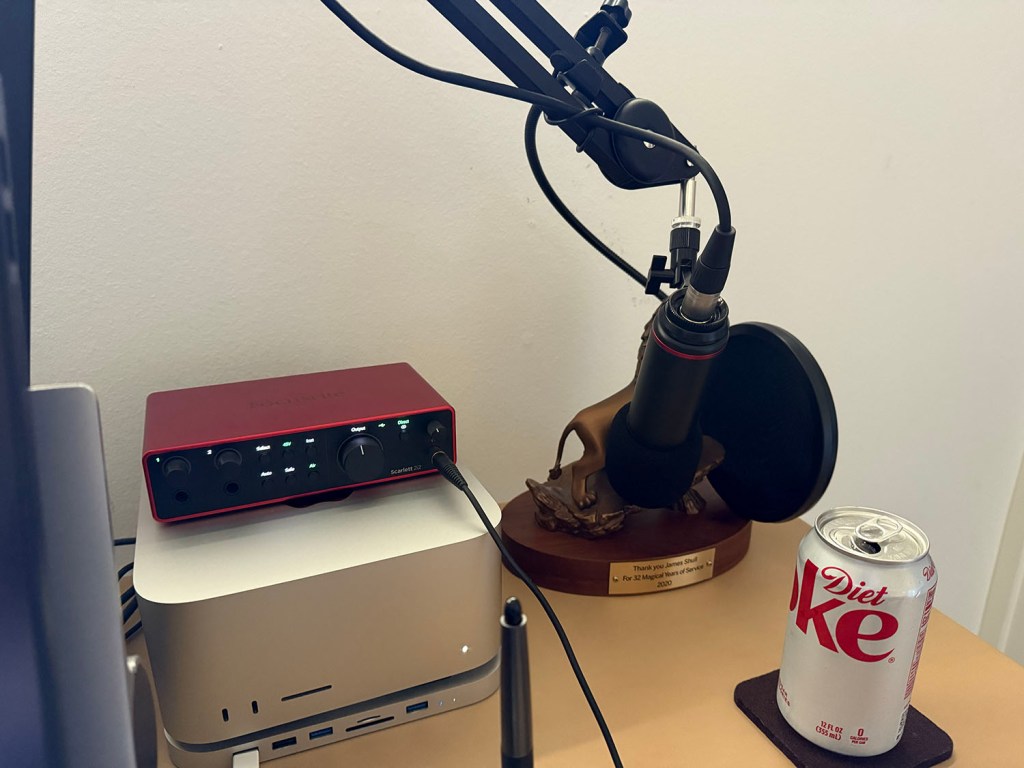
The system and my drink of choice.

Thankfully the people who watch Disney Journey have called me to task and as a result I spent ‘quality time’ manually adjusting the on screen audio and the voice over audio. Hopefully this should help but this is where my rant starts. All the recorded audio sounds good before I release the episodes. However when I watch the released videos on a television on YouTube that is when I hear the my booming voice on screen combined with the pleasant soothing voice in the voce overs.

Screenshot

The solution to my audio woes?

In the spirit of spending to make Disney Journey better I’ve ordered this. The DJI Mic 3 (2 TX + 1 RX + Charging Case) hoping that a newer bit of technology kit will fix (or at least make) the audio issue better. Aside from the technology purchased I wished companies would share simple video instructions on the level of ‘How to Make Toast”. First buy bread, then put bread in toaster, plug in the toaster and push the lever down. That level of instructions. I don’t need chip generation, or other gobbledygook when I only want to make toast.

State of the Art circa early 1990s

Finally I have walked this road before and may again. When working away in my office at Disney Imagineering in the early 1990s a box was delivered that contained the Mac computers that were distributed to Imagineers in WDI Creative. BTW the photo is a later generation of Mac not that it matters. The person who delivered my shiny new computer smiled and wished me luck because I had entered a new world of technology much as I have now.

Wish me luck.