A Personal Perspective from a Disney Imagineer
Setting the Stage
Welcome to Disney Journey. With 12 Disney parks around the globe, it’s inevitable that one will find itself at the bottom of the list. As someone who worked on the park that in my opinion, is at the bottom, I have stories to share about why it often disappoints. The park in question is Epcot, and here is its story.
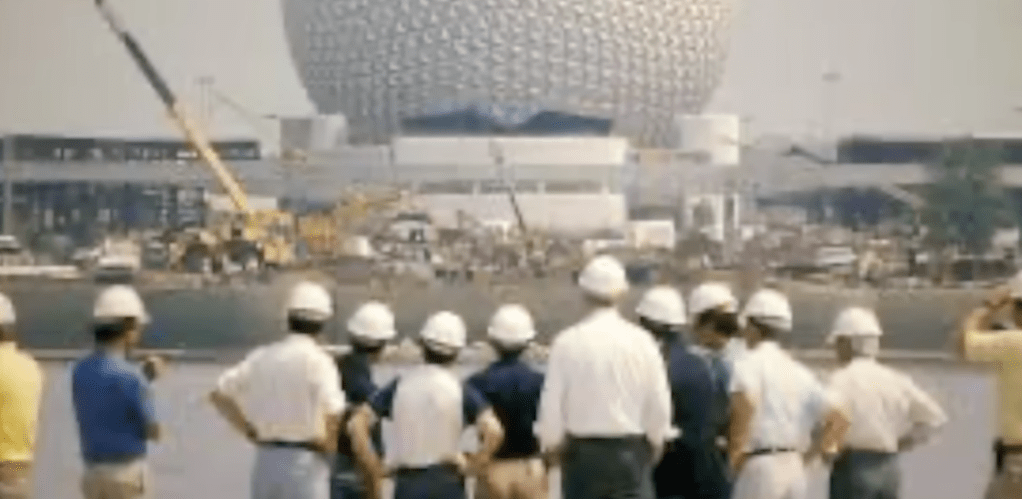
Epcot Center construction image
Journey to Epcot
Disney Imagineering, based in Glendale, California, is just a short drive from the corporate headquarters in Burbank. As a project-based company, WDI receives assignments from Burbank and brings them to life. That’s how I found myself involved in several projects, starting with Epcot Center—a park that fascinated me long before I became an Imagineer.

Hydril Company Downtown Los Angeles early 1930s image
While working for a Oil Service Company, I often traveled to Florida on business. When I was at Walt Disney World, I would take the elevator and then the stairs to the rooftop of the Contemporary Hotel. I watched from the rooftop Epcot Center rising during its construction, never imagining that I’d someday join the team building it. At the time and in the future, Epcot captivated me as a showcase of technology and an optimistic vision of the future—right around the corner.
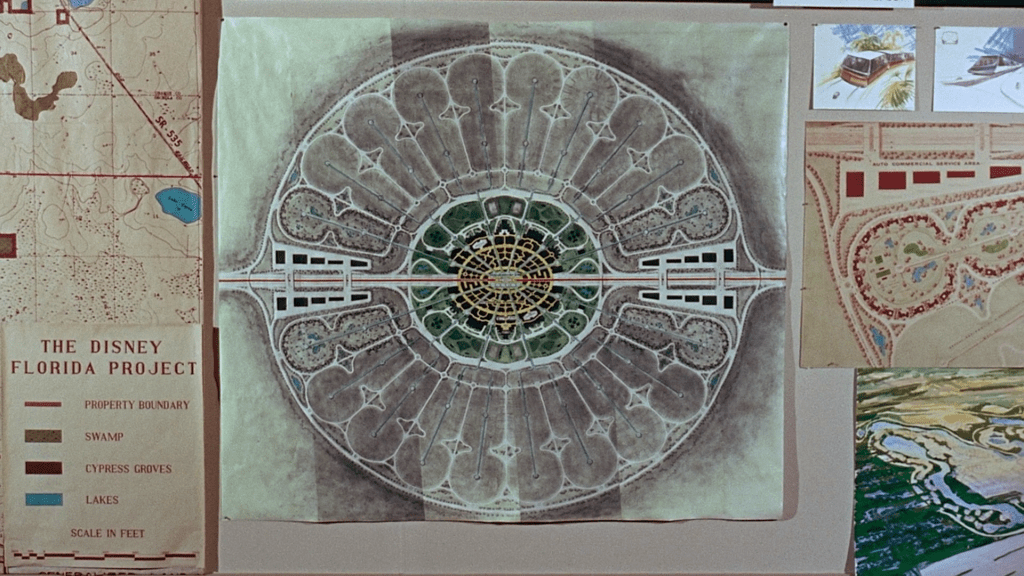
Early Epcot Center unbuilt master plan
Epcot’s Promise and Reality
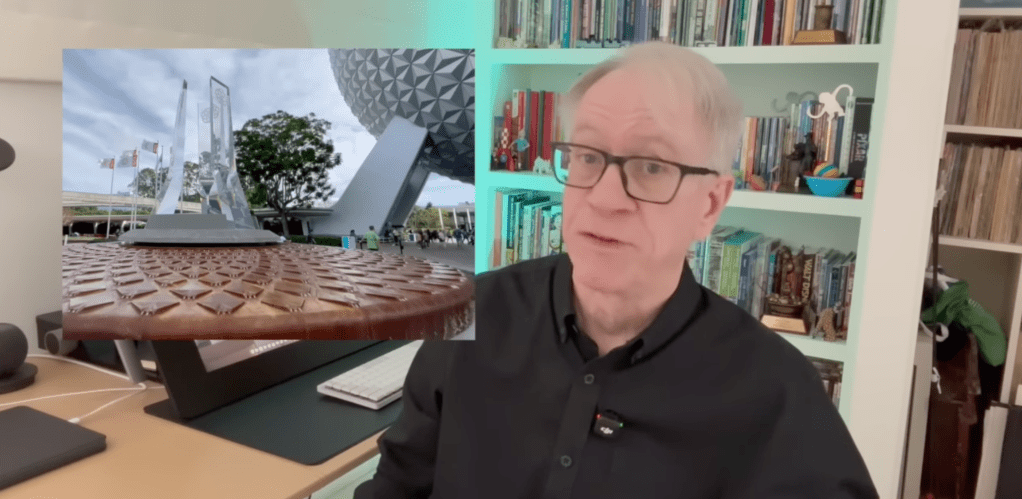
Epcot Center was conceived as a celebration of the future, promising a technology showcase for the world. Although the park has undergone many changes, the most recent “Epcot Experience” displayed ambitious plans, many of which were never delivered. This led me to figuratively consult Walt Disney himself—represented by his statue in the park he envisioned but never saw completed. I reflected on my confusion, not just disappointment, because the Epcot of today feels far removed from Walt’s original vision. It seems to continually promise something that never quite materializes.

Unbuilt Celebration Center concept art
Unfulfilled Promises
During the Epcot Experience, bold concepts like Celebration Center—a multi-story building with views of the lake and nighttime fireworks—were presented but never built. Instead, Celebration Center became Celebration Hall, a much simpler structure. Over multiple visits, I watched Celebration Hall rise, only to realize it was a pared-down version of what was promised. While not bad, it was certainly disappointing.
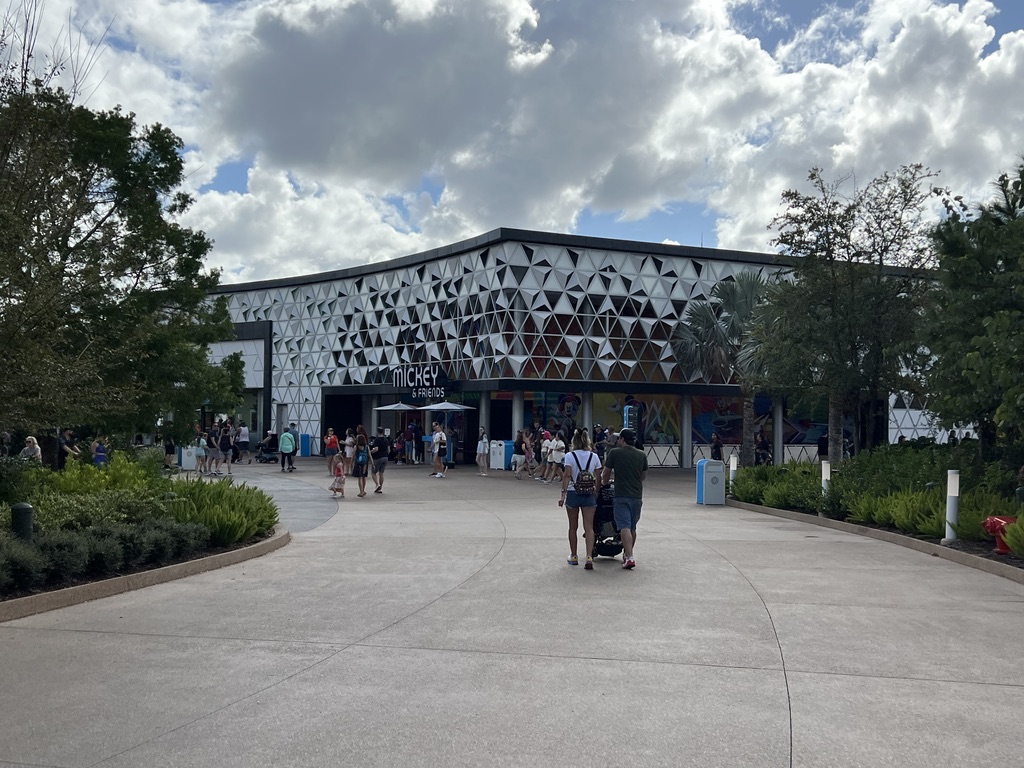
A shopping center or a Disney theme park?
I soon experienced that disappointment firsthand. Walking through what felt like a corporate business park filled with tables, chairs, and artificial trees sculptures, I arrived at Communicore Hall—a one-story building with flashing lights mounted behind a grill. It looked fine, but nothing special. To make matters worse, it was closed to guests, violating the Disney principle that nothing in the park should feel “closed for business,” especially at the entrance. The stage behind had no entertainment, and the only activity available was playing cornhole—a fun game, but not what one expects at Epcot Center.
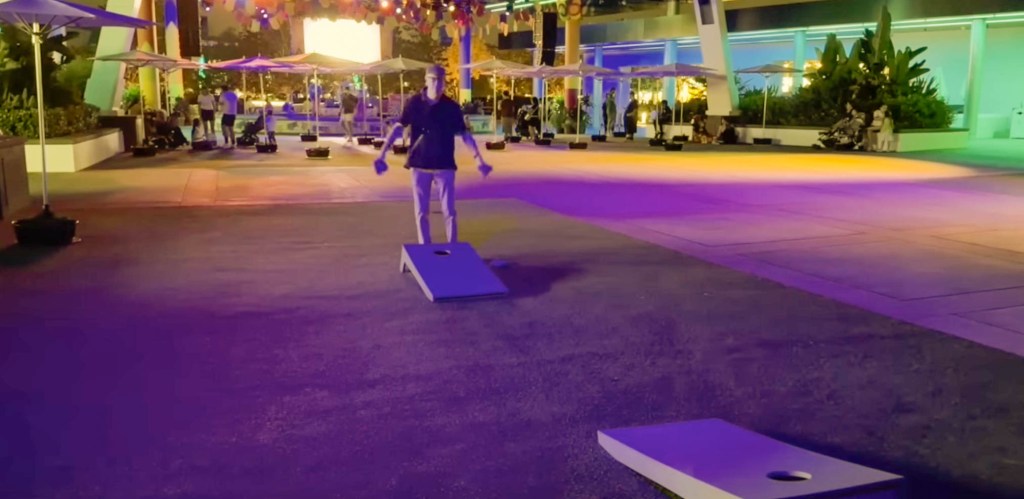
Playing the game of ‘cornhole’ at Celebration Hall
A Personal Connection to Epcot
As the park closed, I reflected on my long history with Epcot—stretching back forty years, even before I became an Imagineer. My first involvement was with Communicore, thanks to my previous work at the oil company in Los Angeles. Disney reached out to the Hydril Company for oil field equipment for a Communicore showcase exhibit and needed expertise to explain it to Imagineers in Florida. Soon I was on a plane and spent much time on the exhibit. I worked on several projects for Epcot and Communicore, but unfortunately, many creative ideas were never realized. This pattern of presenting exciting concepts and then moving the goalposts has been a constant throughout Epcot’s history.
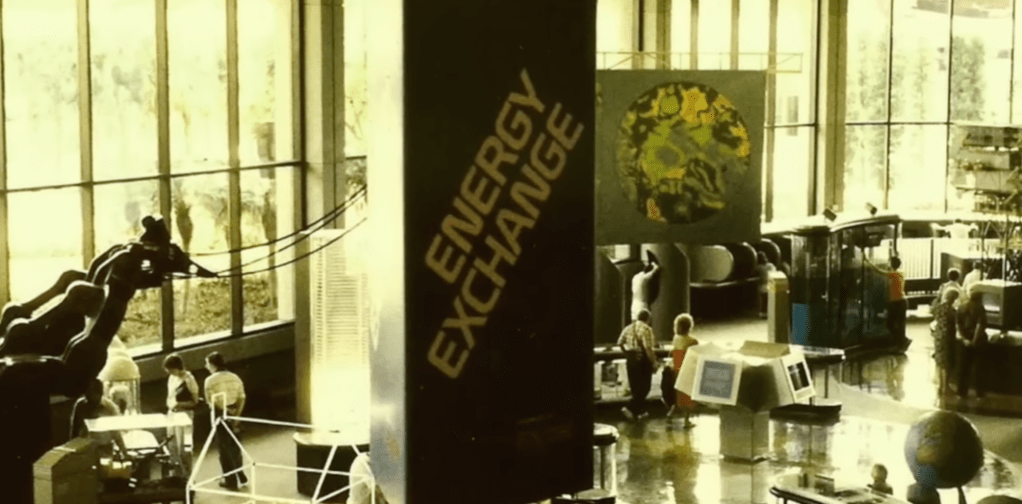
First WDI project was Energy Exchange in Communicore at Epcot Center
Changing Attractions
Early Epcot featured a spectacular central fountain, which was enhanced in 2000 but has since been removed. My first official Imagineering assignment at Epcot was “Wonders of Life,” a pavilion smaller and less grand than others, with attractions like Cranium Command and an educational health exhibit featuring Goofy. Despite creative elements, many attractions were modest, and some closed, hidden from guests today.
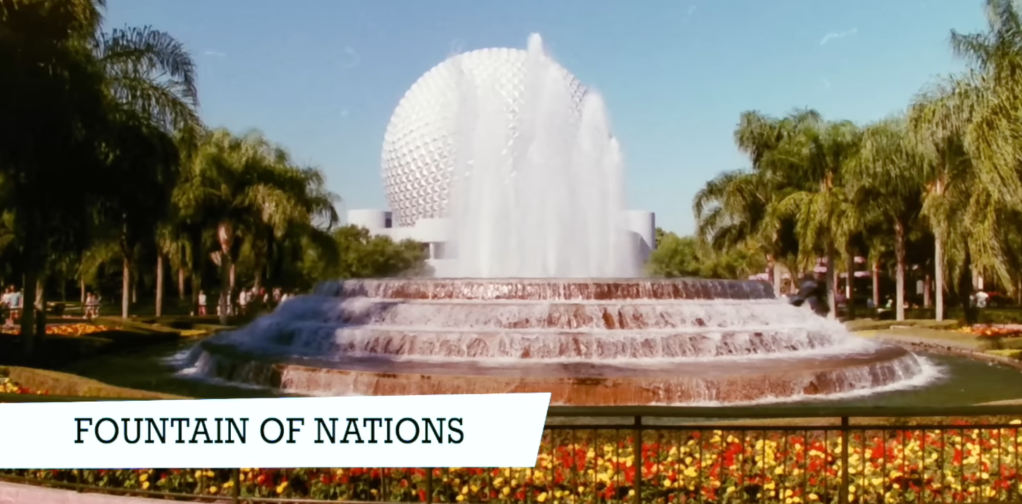
Long gone ‘Fountain of Nations’
I also worked on Horizons 2.0 and the first iteration of Mission: Space. Some ideas offered epiphany moments, such as feeling weightless in Mission: Space, but over time, technical and operational changes diminished the experience. The original Horizons eventually gave way to Mission: Space, and other interactive elements became outdated compared to modern technology.
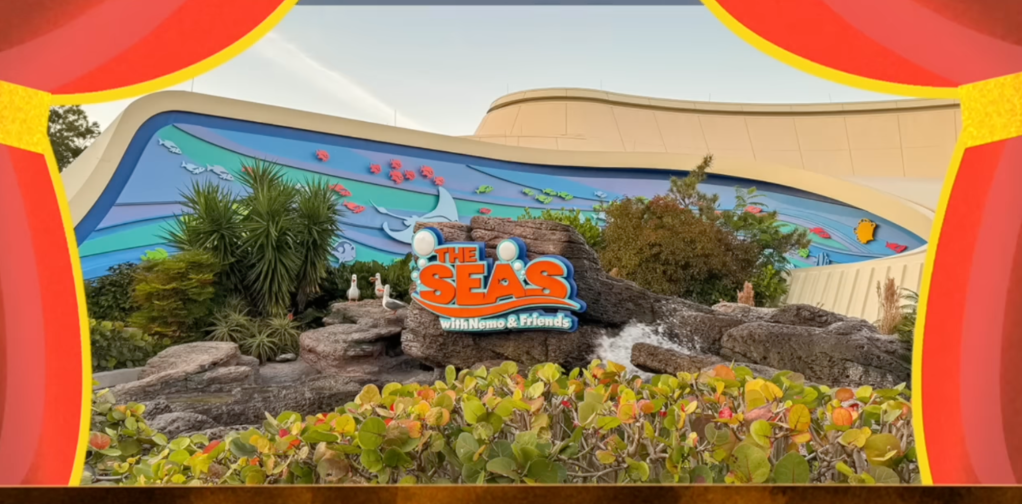
Working on the ‘Seas with Nemo’ was a challenge
Character Integration and Technical Challenges
Later, I worked on The Living Seas with Nemo, integrating popular Pixar characters into Epcot’s attractions. This made sense for both creative and technical reasons, leveraging experience from projects in France and Disneyland California. However, adapting existing ride systems presented unique challenges, restricting what could be shown and often resulting in modest updates rather than groundbreaking experiences.
Epcot’s Ongoing Struggle
Throughout my time at Epcot, I noticed a recurring theme: the park was constantly presenting new ideas but rarely delivering on them fully. For example, the use of cost-effective materials like roto-molded vehicles meant practical choices, but sometimes at the expense of guest experience. Still, moments of true “edutainment” could be found, such as engaging with cast members about marine life—echoing Walt Disney’s original intent.
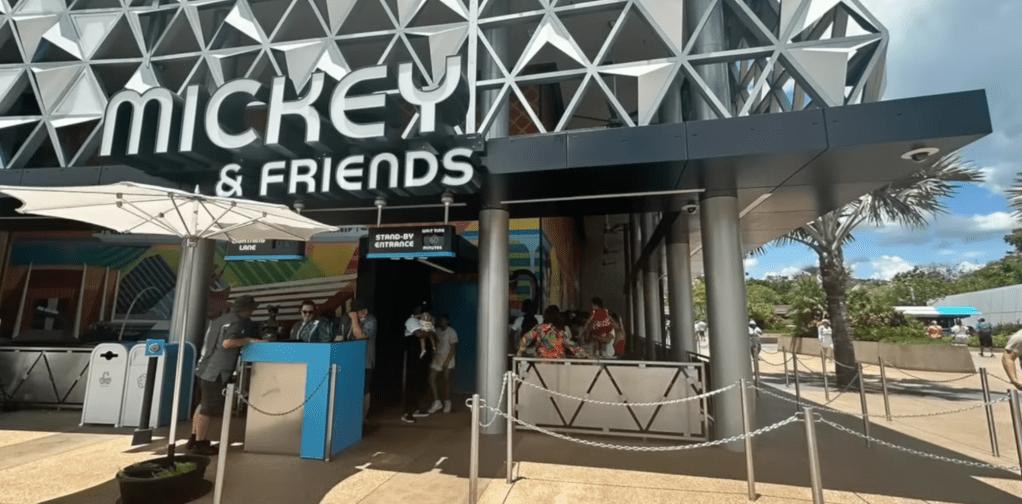
Character greeting location in the center of Epcot World Celebration
Conclusion: Epcot’s Legacy
Ultimately, Epcot is not a bad park, but it struggles to fulfill its original promise. Entering bland, generic buildings to meet Mickey or walking into spaces that resemble airport lounges does not capture the visionary spirit Walt Disney intended. The park tries—through attractions like a Mary Poppins teacup ride or a play pavilion replacing Wonders of Life—but falls short of its potential.

As I confided my thoughts to Walt’s statue, I was reminded that Epcot’s greatest failing is its inability to deliver on its grand vision. What exists is good, but what might have been could have been even better. My conversation with Walt ended but I look forward to returning and exploring what the future holds for Epcot.
 Disney Journey Blog
Real shame, From the 60’s in California. to the current over filled parks we have today, Epcot never has fulfilled it’s promise as envisioned by it’s creator. I can remember as a child, then a teen, then a Father, now a GGF, Disney always was a step ahead in innovation, crowd controls, tasty foods in the parks, programs and movies for us to remember our past and future coming. Not so much to me anymore. When Orlando opened, it had corporate sponsors, from our Greatness’ across America, then it went totally “wall street”, even the toys, novelties, “clothes design” was off in a corporate wasteland, prices to cause profits just by people looking it seemed. they had sold their souls to wall street. There was a hole in the kingdom, competitors saw it and the race for vacation dollars was on. Epcot was changed, it’s returns not showing major mickey dollars on the ledger, My own kids were tests for virtual reality headsets, They had the best eddy’s ice cream on a cookie, best burgers going, then the fish and chips to die for, not enough, turned it into a giant beer hall, drunks all over, sloppy spirits now on two feet not just over in the haunted mansion, real shame, could have been the “Showcase of tomorrow” Not a showcase of corporate greed hidden under piggies selling insurance. The fountain gone, the majestic tri falls, innovation reduced to a “old style server” showcase, those wisps of future tech, taken away for more “spending experience” hmm ok. good luck! Yes I was a beer drinker as well s my wife, we enjoyed the beers too with restraint. Hmm could it be????
LikeLike
Thanks for commenting. And for sharing your memories.
LikeLike