My confession is that I read comments posted here but even with the best of intentions I don’t get around to responding. I’m far better at responding to comments posted to my YouTube channel comment section. That’s over at YouTube.com/jimhshull
Everybody likes lists so I’m marking the 60th anniversary of it’s a small world by ranking all five versions of the attraction around the globe.
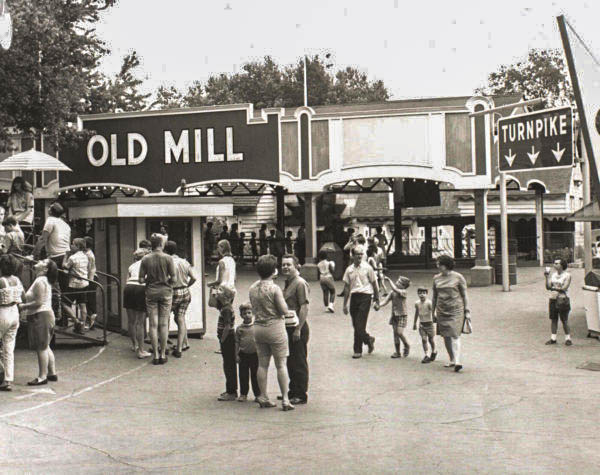
“Old Mill’ canal boat ride dates to 1901.
It’s a Small World is an Old Mill–style boat ride found in Fantasyland areas at Disney parks around the world, with versions at Disneyland, Magic Kingdom, Tokyo Disneyland, Disneyland Paris, and Hong Kong Disneyland. Although five versions operate today, the original debuted at the 1964 New York World’s Fair. The fair version sits at the bottom of my list but if Robert Moses (who led the fair) hadn’t invited Walt Disney to participate, there likely wouldn’t be any ‘small worlds’.
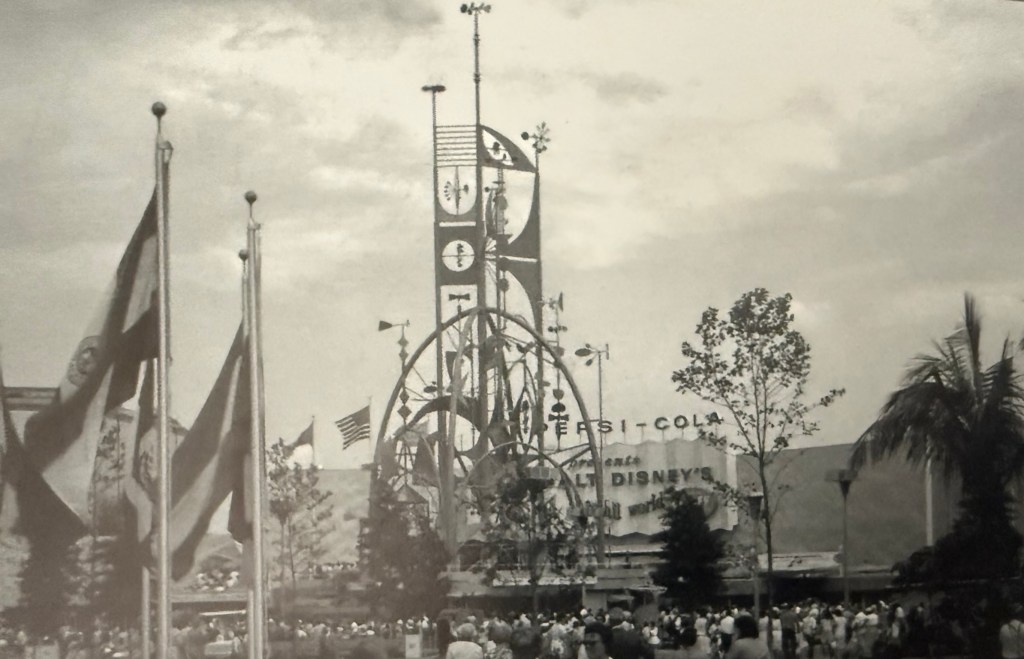
‘its a small world’ New York Worlds Fair 1964.
Walt Disney Productions created four attractions for the Worlds Fair. The one I want to focus on is it’s a small world, which used the Old Mill concept but improved the ride system. Instead of relying on a water wheel to move boats through a wooden flume, Disney partnered with Arrow Development to create a pump-driven system that carried boats at a steady, predictable pace.
That breakthrough allowed Disney to place show scenes along the flume with confidence, knowing guests would pass each moment at the right speed. It was a major innovation, and the company would use that controlled boat system many times afterward.
Classic ‘its a small world’.
At the World’s Fair in Flushing Meadows, it’s a small world featured and needed the Tower of the Four Winds, a bold marquee that drew guests to an otherwise plain pavilion. Without it, the building offered little visual interest beyond signage and sponsor branding. The tower of the four winds addressed the problem on the bland unappealing building with a giant mobile filled with colorful wind-driven shapes, including propellers, flying fish, butterflies, winged dragons, and a miniature carousel of animals such as giraffes, camels, and llamas. The ride was a gentle cruise which lasted over 10 minutes, and during the fair’s two-year run, the attraction carried more than 3,000 guests per hour. When the fair closed, it’s a small world had to sail on to a new home.
Next on my list is the Magic Kingdom version at Walt Disney World. It improves on the original in several ways, including a more expansive canal, water that surrounds the show sets, and a wonderfully groovy 1960s design sensibility. Still, I rank it lower because it lacks a meaningful exterior statement: no clock, no tower, and no true arrival moment. It is tucked inside Fantasyland, competing with the surrounding midway rather than announcing itself.
Tokyo Disneyland version has changed since it first opened.
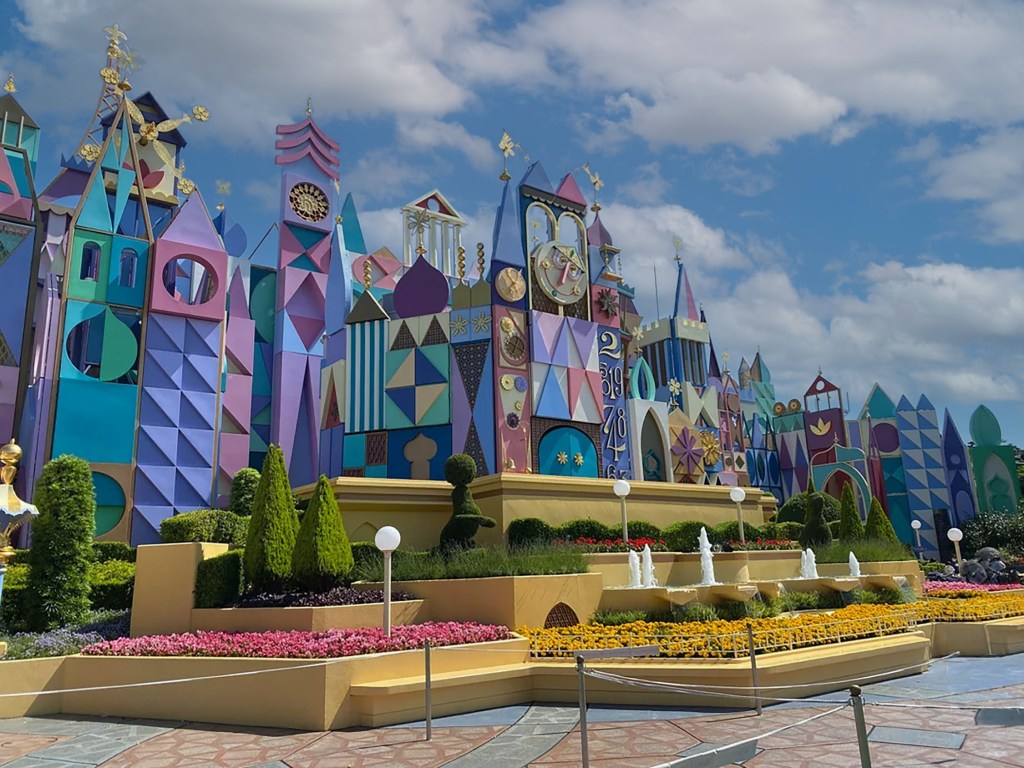
Tokyo Disneyland’s version should rank higher because it is beautifully maintained, but it also feels tucked away between nearby attractions. Bright and cheerful as it is, it lacks the theatrical impact of the stronger versions.
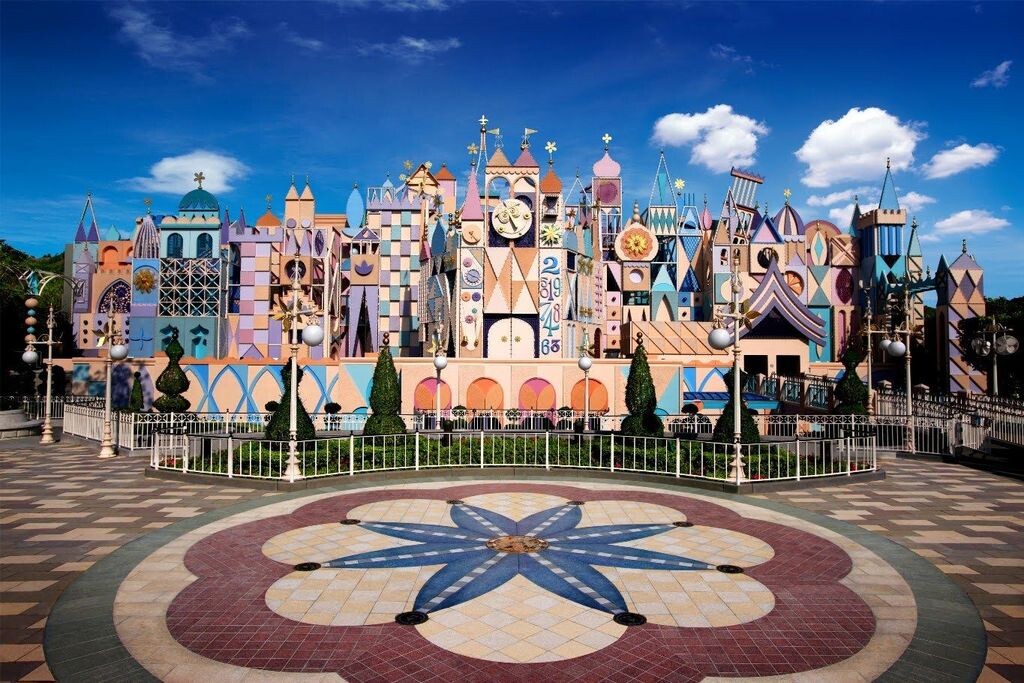
Hong Kong Disneyland’s version feels like a retro throwback, with a classic Anaheim-inspired exterior and a plastic flume that keeps the show sets dry and off to the side. Guests board a cozy boat for an approximately nine-minute cruise along the Seven Seaways canal, accompanied by the attraction’s familiar anthem of world peace and hosted by the children of the world. It also deserves credit for introducing Disney characters into it’s a small world, a bold experiment even if not everyone agrees with the choice.
‘small world’ at Hong Kong Disneyland sits on its own plaza.
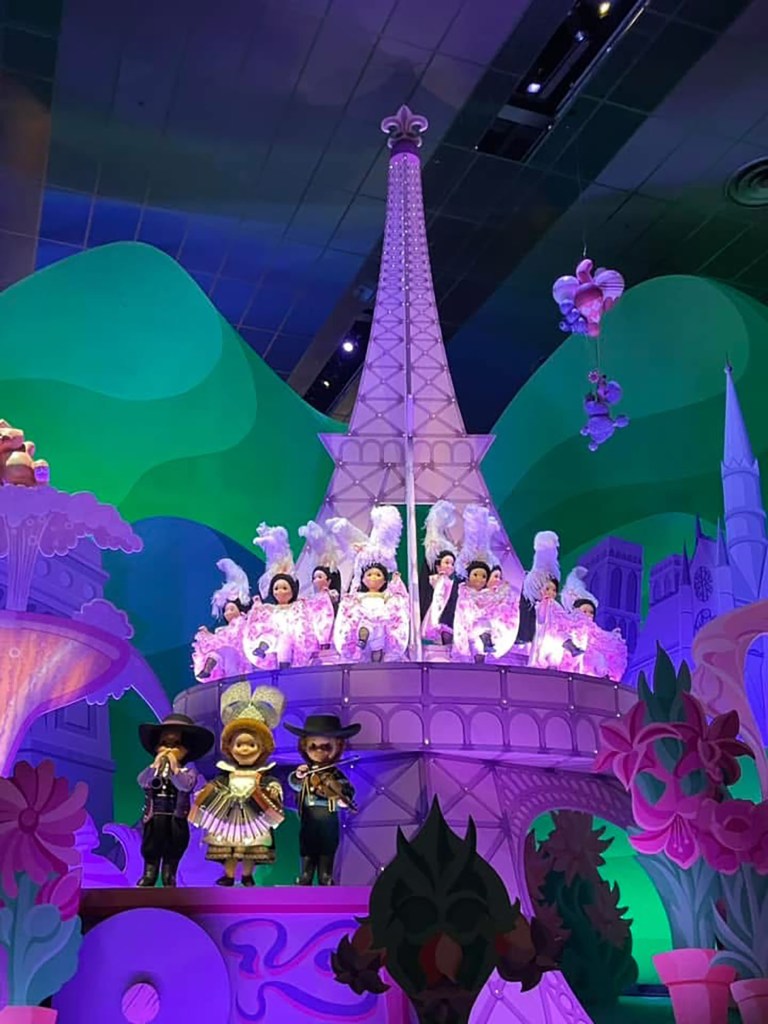
Coming in at number two is Disneyland Paris. It borrows directly from Anaheim’s classic DNA—the facade, clock, train, and front-facing station—while adapting the experience for a wetter climate with covered approaches and a fully enclosed design. It even once included a post-show sponsored by France Telecom, complete with original animation, show sets, and an extended musical message about global connection.
The Paris version has a blue painted ceiling which is unquestionably unique.
That post-show no longer exists, and the space now serves a different purpose, but the ambition was impressive. Disneyland Paris misses the top spot for one reason: the blue ceiling. It reflects too much light, making the show sets feel smaller and more visibly staged. If that ceiling were black, this version could easily be number one. It is charming, important, and beautifully conceived, but the best version remains the original Disneyland installation in Anaheim.
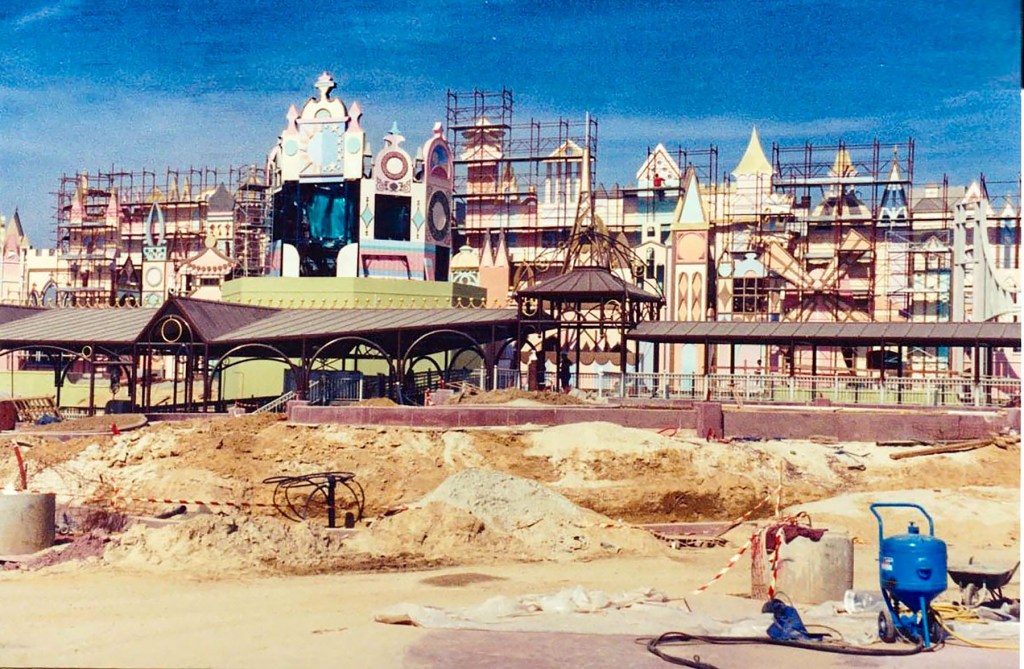
Image of the Paris version under construction.
When the World’s Fair closed, the show moved to California, Disneyland expanded its boundary, and the attraction received a new show building at the back of the park. The Small World Mall created a grand approach from Fantasyland, and the exterior transformed the graphic language of the original poster into a dimensional architectural landmark. Over the decades, the ride has evolved with new boats, added scenes, greater representation, character additions, holiday overlays, projections, and even a new musical lyric. The queue has changed, the surrounding land has changed, and the Toy Story shop was added, but the attraction remains lush, vibrant, high-capacity, and deeply tied to Disneyland’s identity.
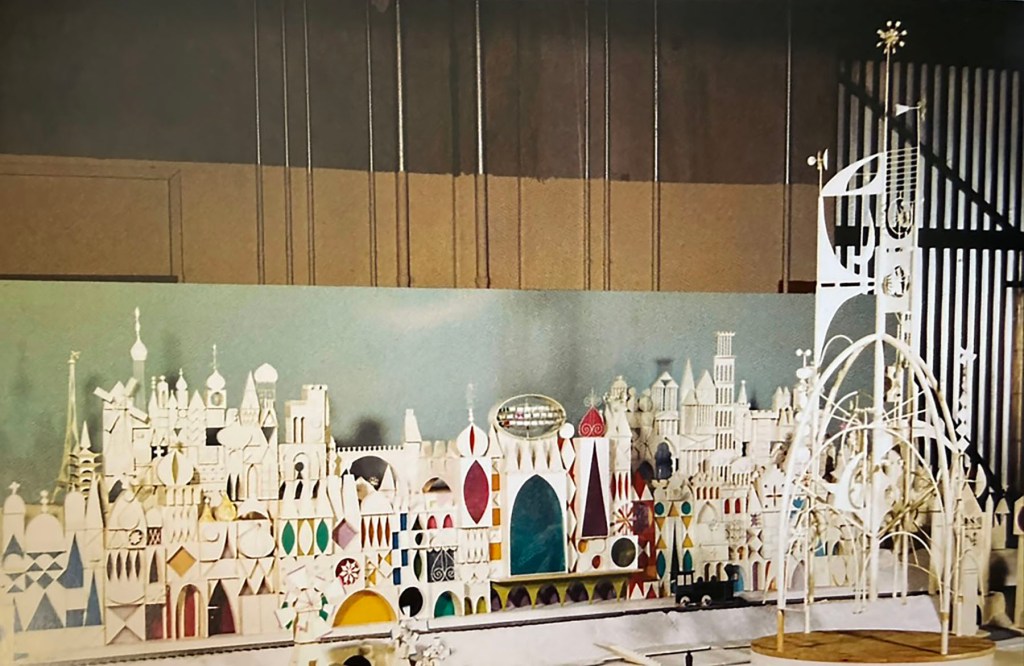
The Anaheim version also benefited from decisions made after the fair, including leaving the Tower of the Four Winds behind. In New York, the tower worked as a necessary marquee, but in Anaheim it would have felt out of scale and out of step with Fantasyland’s charm.
Disneyland’s version on the ‘small world’ mall. Note the rooftop trees.
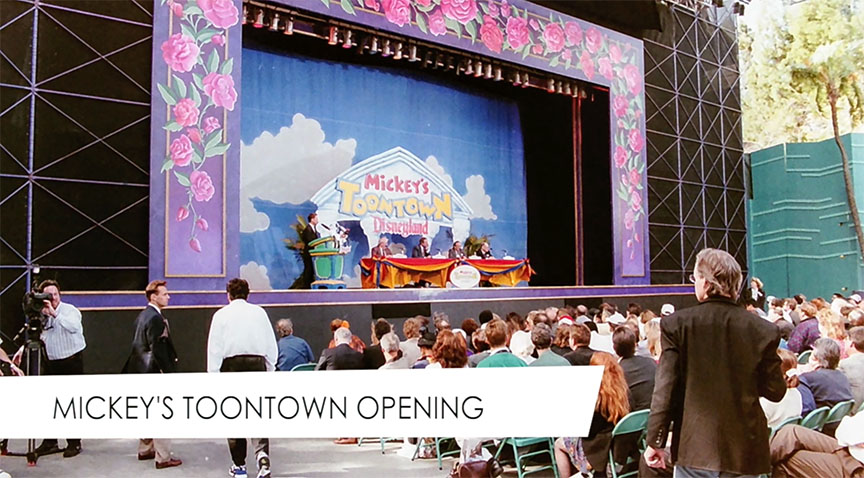
it’s a small world opened with a true mall-like approach and was promoted widely, including in Vacationland magazine. The land around it has changed repeatedly, from the arrival of Mickey’s Toontown to the loss ofrooftop trees that once suggested a forest setting. Later changes, including the reversed queue, Mattel-era facade updates, the Toy Story shop, and the remaining Light Magic towers, all reshaped the plaza into a stronger entry statement. Through every change, Disneyland’s it’s a small world remains the best version: iconic, flexible, charming, and inseparable from the park’s DNA. After all, who can deny the appeal of the dolls—or the enduring truth that it really is a small world?
That brings our happy cruise back to the dock. If you liked reading this then go watch my video about all it’s a small world. You will find the video over on YouTube.com/jimhshull
Disneyland study model with Tower of the Four Winds.
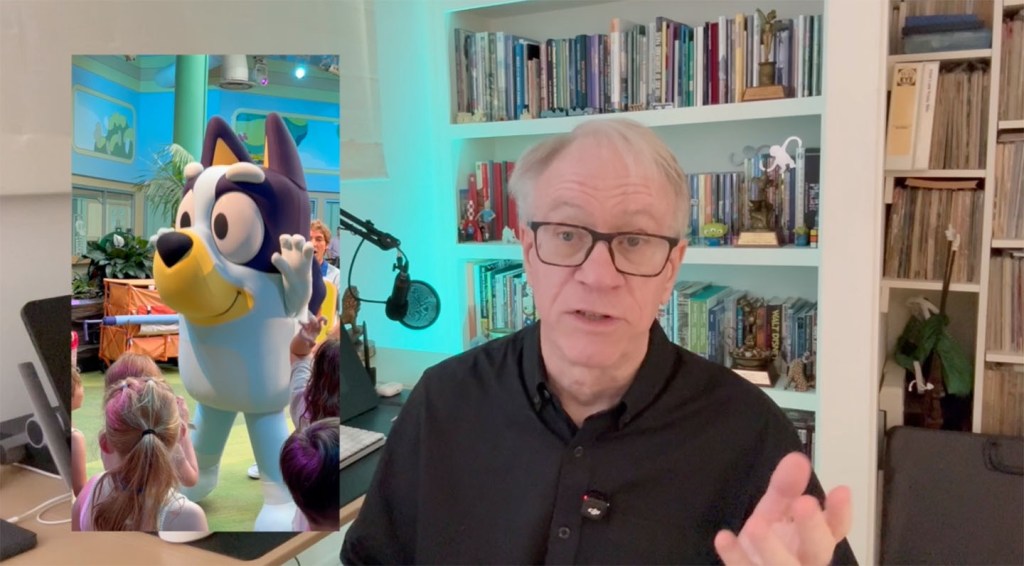
What links Walt Disney and Bluey? Both connect to dancing, though in very different settings. More importantly, both reflect Disney’s long use of adaptive reuse. Across the parks, buildings have often taken on new purposes over time. In Tomorrowland, for example, the Monsanto Hall of Chemistry eventuallybecame Star Tours. Spaces like these may start as temporary solutions, but they can last far beyond their planned end dates when they continue to serve a useful purpose. Spaces like these are examples of ‘Adaptive Reuse’ in the Disney Parks.
Why This Happens
Screenshot
Entertainment offerings are usually cheaper than building new rides.
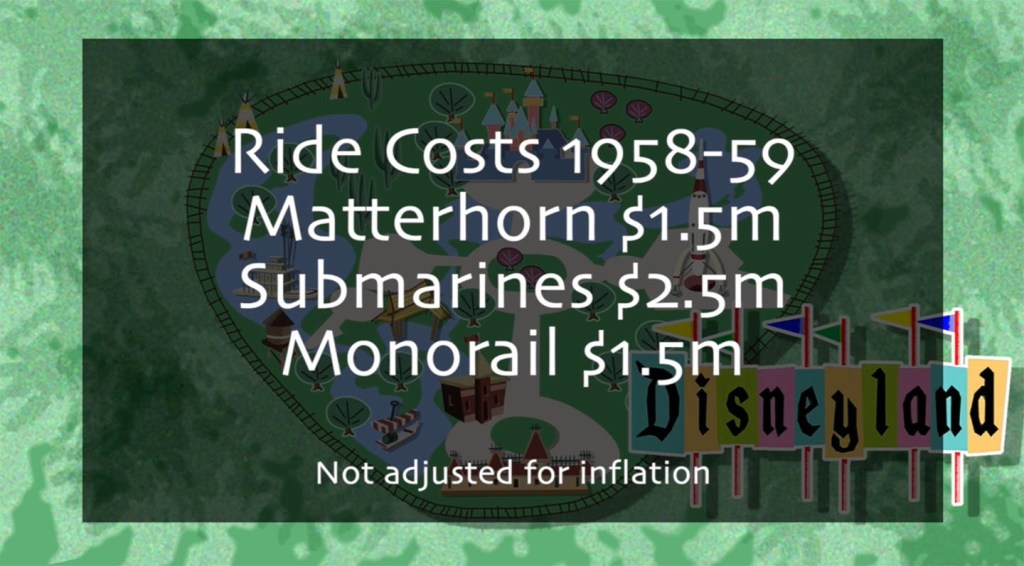
Cost of expanding Disneyland in 1958 – 1959:
Matterhorn Bobsleds — $1.5 million
Submarine Voyage — $2.5 million
Disneyland Monorail — $1.5 million
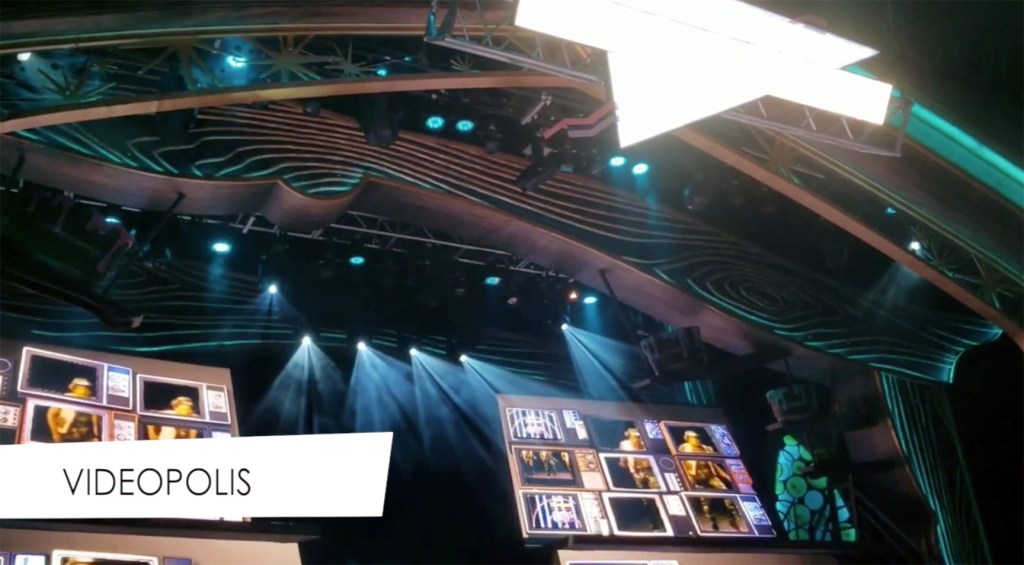
Videopolis in its prime
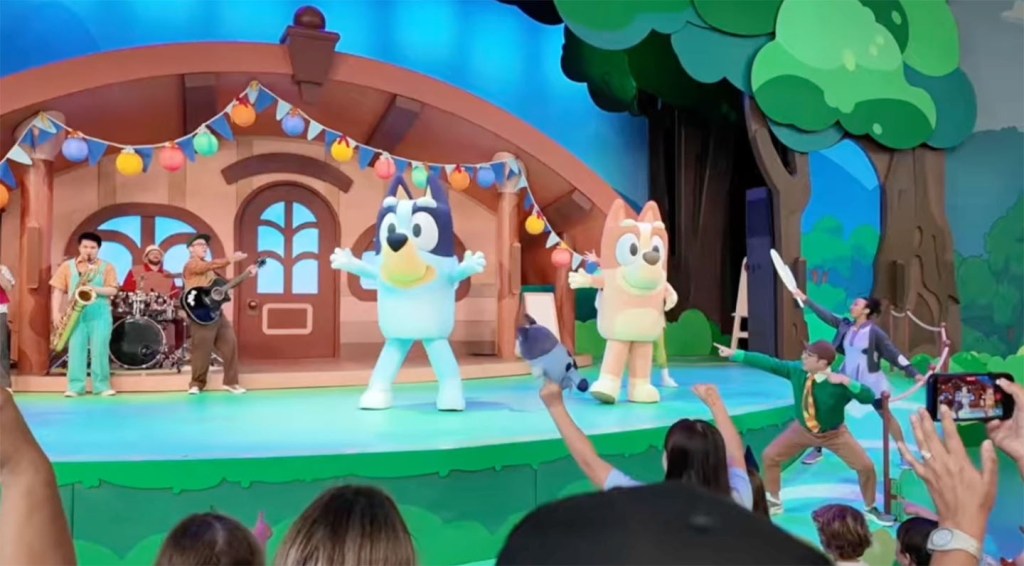
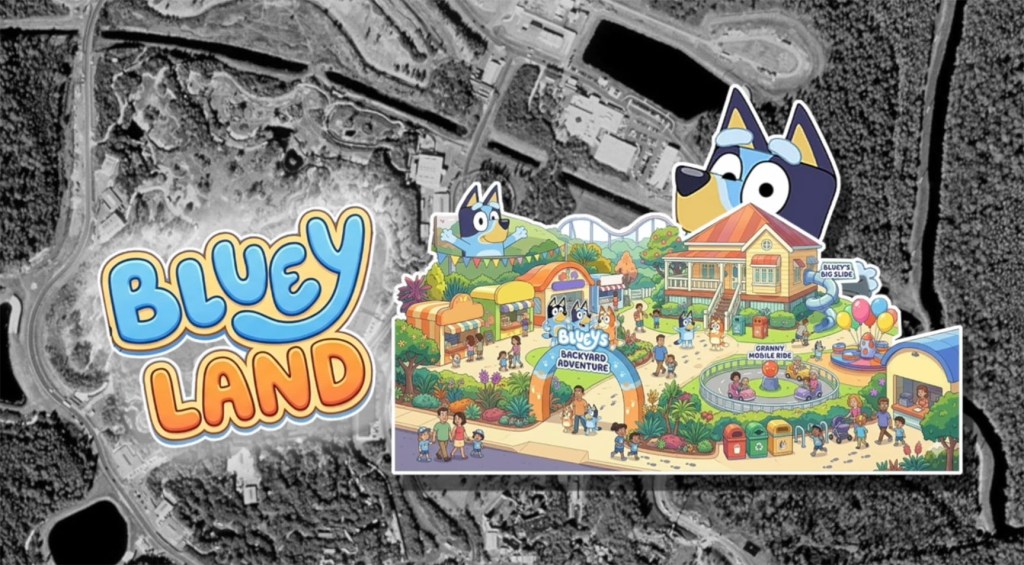
At Disney parks, rides require major investment, while entertainment can often be added at a lower cost. That makes flexibility valuable. The Hall of Chemistry, for example, became Adventure Through Inner Space and later Star Tours. When attractions such as the Matterhorn, Submarine Voyage, and Monorail cost millions to build, reusing existing spaces helps Disney stretch its resources. It also lets the parks react quickly when something unexpected becomes popular. Bluey shows how this can happen: although Disney does not own the property, the character found a place in the parks, became a hit, and began reshaping the surrounding space. At Disneyland, Bluey now uses the former Fantasyland Theater, a site that was once Videopolis and, before that, open land visible from the train.
Here are several examples.
Screenshot
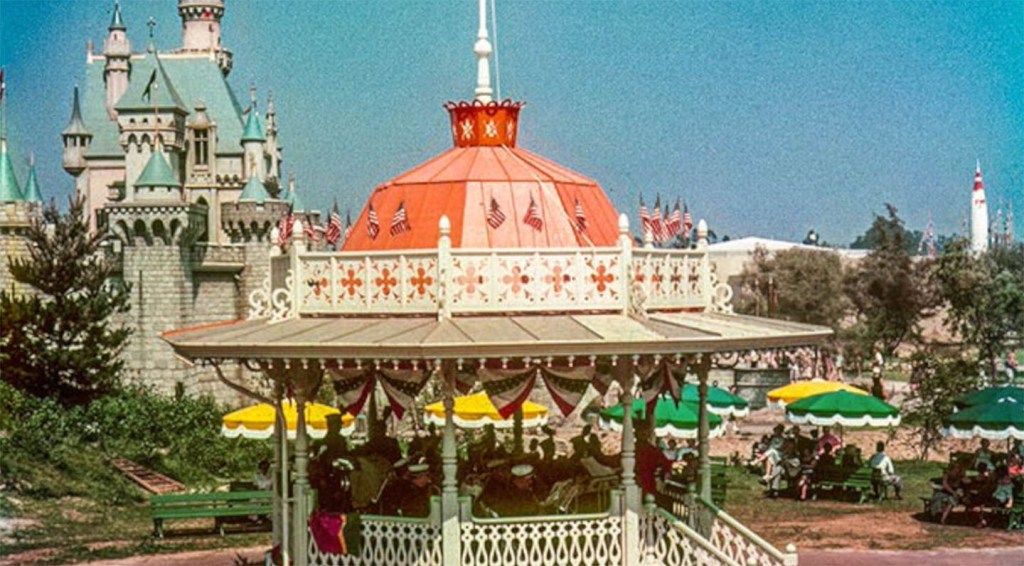
Carnation Gardens
Carnation Gardens opened as a popular venue for swing dancing and big-band performances, and Walt Disney himself was known to dance there. Though originally labeled temporary, it lasted for decades. Today, the area is Fantasy Faire, and the former theater space is the Fantasy Faire Theatre.
Videopolis in Disneyland California
Videopolis opened behind Fantasyland on June 22, 1985. Located near “it’s a small world,” the $3 million outdoor venue included a 5,000-square-foot dance floor and 70 video monitors. By day, it served as a performance stage; at night, it became a high-tech teen dance club.
The club was popular, but it didn’t last.
Videopolis was repurposed for events
The dance-club era ended in 1989, but the venue continued hosting daytime shows. On June 23, 1995, it was officially renamed the Fantasyland Theater.
Notable Fantasyland Theater productions include:
Tale of the Lion King (2022–2024): A vibrant, story-theater adaptation of The Lion King featuring a traveling troupe of storytellers.
Mickey and the Magical Map (2013–2020): A visually stunning stage show where Mickey Mouse interacted with various Disney characters through a magical, living map.
Princess Fantasy Faire (2006–2012): A royal, interactive meet-and-greet and stage presentation featuring Disney royalty.
Snow White: An Enchanting Musical (2004–2006): A Broadway-style adaptation of the classic animated film.
Animazment – The Musical (1998–2001): A Broadway-style revue celebrating classic Disney animated films.
The Spirit of Pocahontas (1995–1997): A live musical stage retelling of the 1995 animated film.
Today home to Bluey
The land that became Videopolis was once outside Disneyland, across Winston Road. When the park opened, Disneyland sat south of the road; the land to the north was outside the park. As Disneyland expanded with “it’s a small world” and the railroad area, that land was absorbed but remained vacant for a time, visiblefrom the train as future development space. When Michael Eisner and Frank Wells wanted a quick new offering, the empty site became Videopolis, a teen dance club built on a fast timeline.
A second Videopolis opened in Discoveryland at Disneyland Paris, combining a theater, dining, and, at one time, interactive displays for sponsor Philips.
Key details
Videopolis included a 5,000-square-foot dance floor, 70 television monitors showing popular music videos, and live performers such as Debbie Gibson, Janet Jackson, and New Kids on the Block.
After Videopolis closed, the space became Fantasyland Theater. Over time, Disney added the equipment, roofing, and support facilities needed for a full theater.
Today, that theater is home to Bluey. Bluey also appears in coaster form at Alton Towers in the UK.
Disney–MGM Studios WDW
The Backlot greeted guests some time after Disney MGM opened
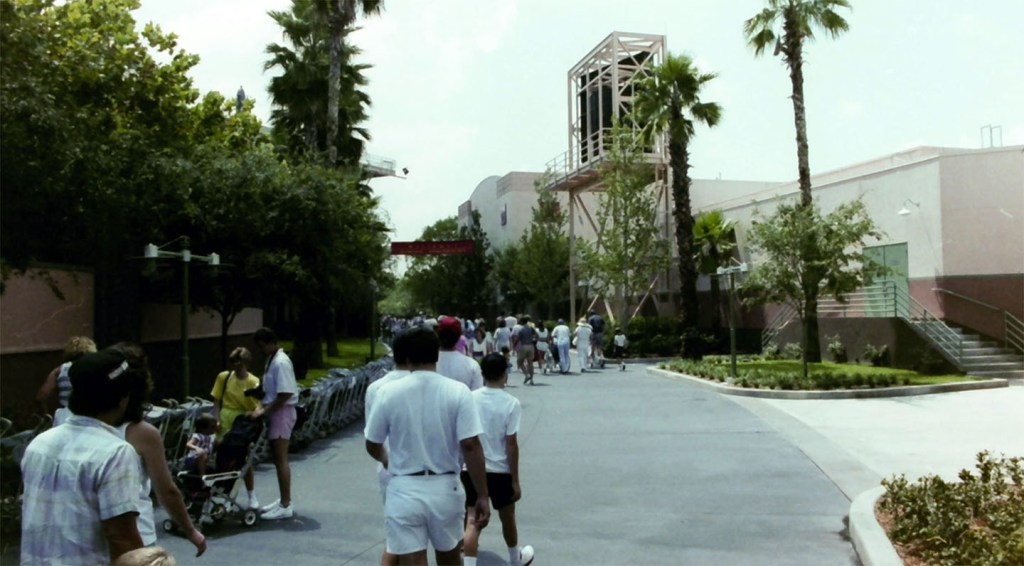
When Disney-MGM Studios opened, guests could only see the New York Street backlot from the Tram Tour. After the park became successful, Disney opened the area to pedestrians, but it offered little for guests to do. To activate it, Disneybrought in outside properties, including the Power Rangers, Ninja Turtles, Ace Ventura, and Goosebumps. New York Street became a flexible setting that could temporarily host whatever the park needed.
In that sense, New York Street became a template for temporary use: a space adaptable to different characters and experiences.
Alpine Gardens at Disneyland California
Alpine Gardens was home to the House of the Future
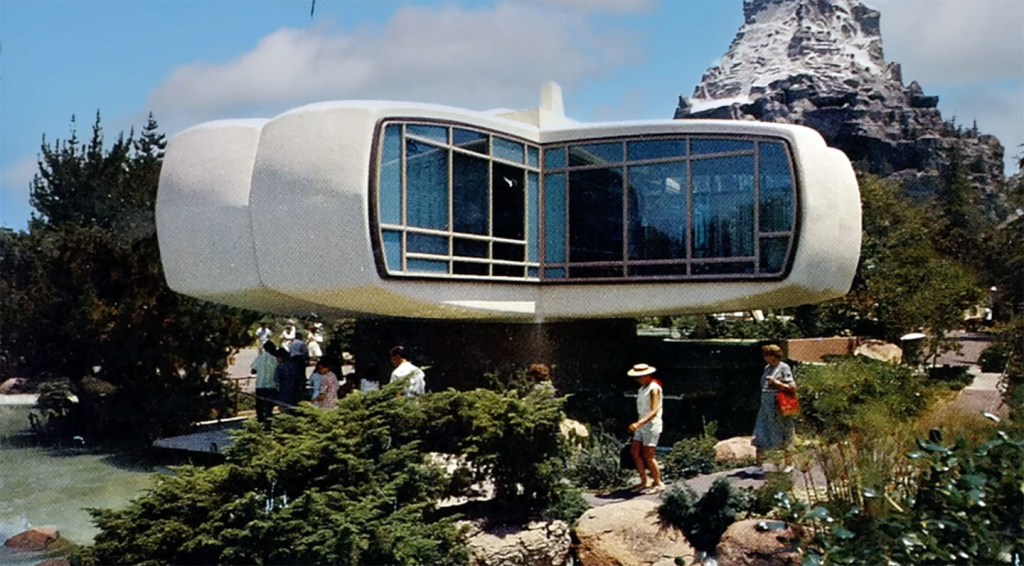
Near Disneyland’s hub was a site that began as bare ground when the park opened in 1955. Ruth Shellhorn designed the area. Monsanto’s House of the Future opened there on June 12, 1957, and closed on December 1, 1967. Afterward, the space was transformed into Alpine Gardens, named for its landscaped water feature. Later it became a Little Mermaid meet-and-greet area, and today it serves as the Tinker Bell character greeting location.
Bluey at Animal Kingdom Walt Disney World
Bluey at Walt Disney World is another example of reusing existing facilities. The characters could have been placed at EPCOT in Celebration Hall, which has indoor space and sits next to a theater, but instead they went to Animal Kingdom’s Conservation Station. That location originally focused on education, with some entertainment, and included a veterinary hospital, interactive exhibits, and a petting area at the end of a train ride. Over time, it became Rafiki’s Planet Watch, and today it also serves as a home for Bluey.
What’s the impact?
One drawback of temporary measures is that they often rely on licensed properties Disney does not fully own. That can limit flexibility. Pixar is a good example. Before Disney acquired Pixar, projects had to be coordinated through Emeryville, which made the process slower and less efficient. After the acquisition, collaboration became much easier because Disney had direct access to files, approvals, and answers.
What’s the future?
Will Bluey get an entire land?
Sometimes the result is a property being fitted into existing spaces rather than receiving a dedicated land. Duffy is a good example. Although Duffy originated in Orlando and later appeared in California, the character became especially successful in Asia, particularly at Tokyo Disneyland. Even so, there is still no dedicated Duffy land. Instead, Duffy appears across multiple areas and events, including strong presences in Shanghai and Hong Kong. Rather than anchoring a single themed land, Duffy has been woven into different parts of the parks.Adaptive reuse is not the same as new construction. For example, building Cars Land on a former parking lot at Disney California Adventure is park expansion, not adaptive reuse. Same with Camp Minnie Mickey where the land became Pandora.
Disney Parks are full of examples of Adaptive Reuse.
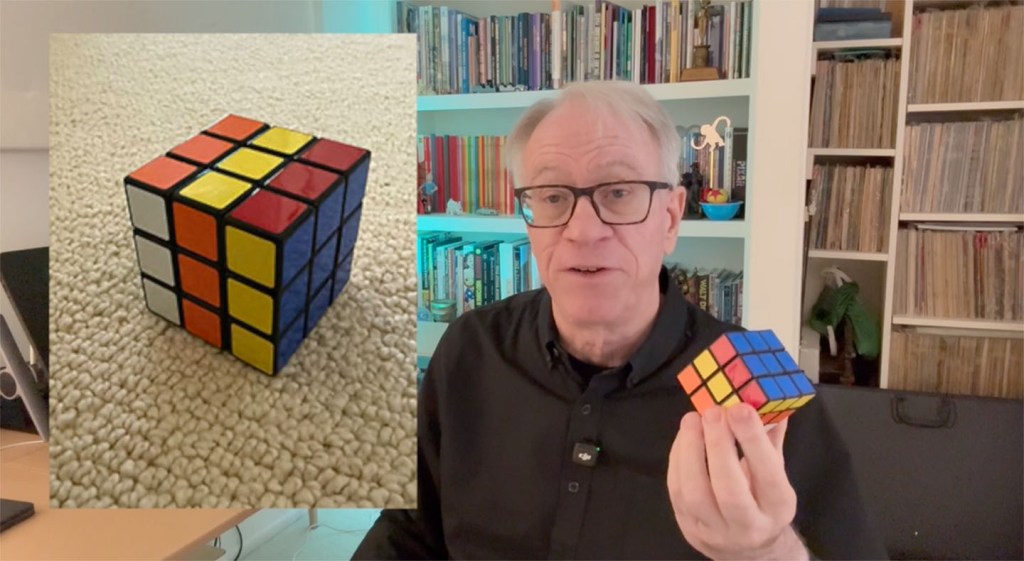
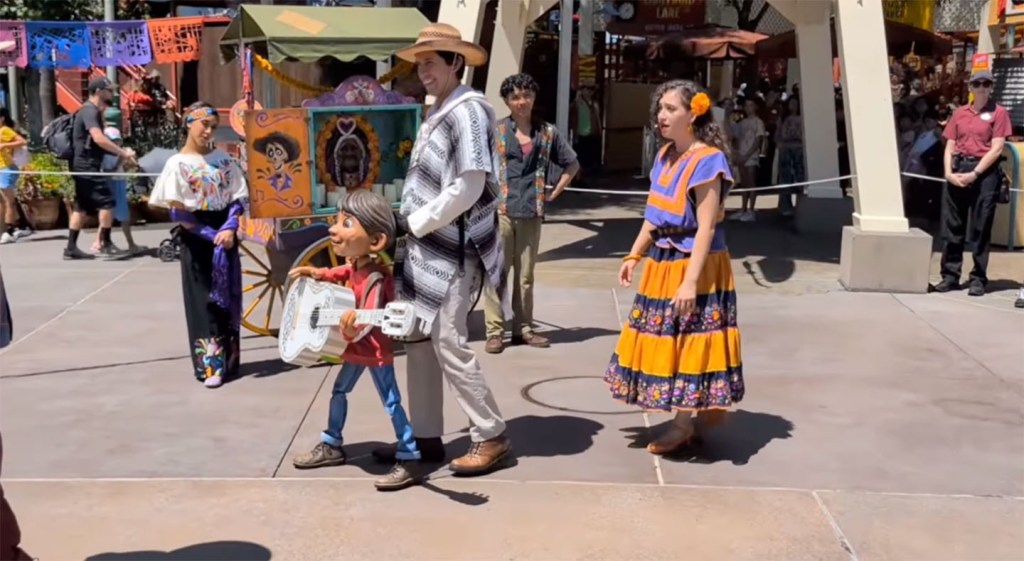
A Rubik’s Cube symbolizes Disney’s California Adventure due to its complexity and difficulty to alter. Coco will soon debut in Paradise Pier, fulfilling the original promise of a water ride themed around the park’s distinct districts, including one inspired by the Pacific Ocean.
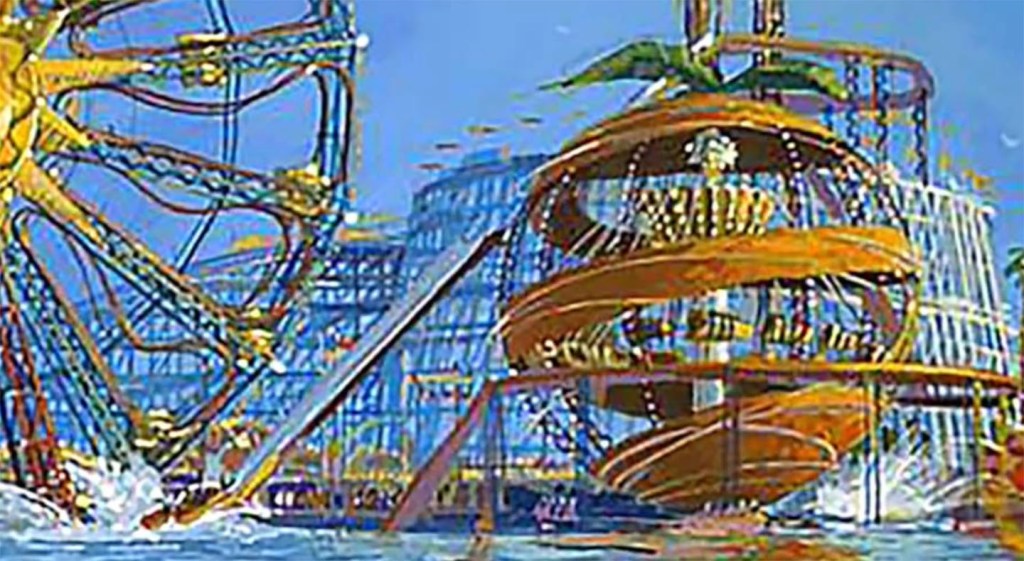
Surf City concept art.
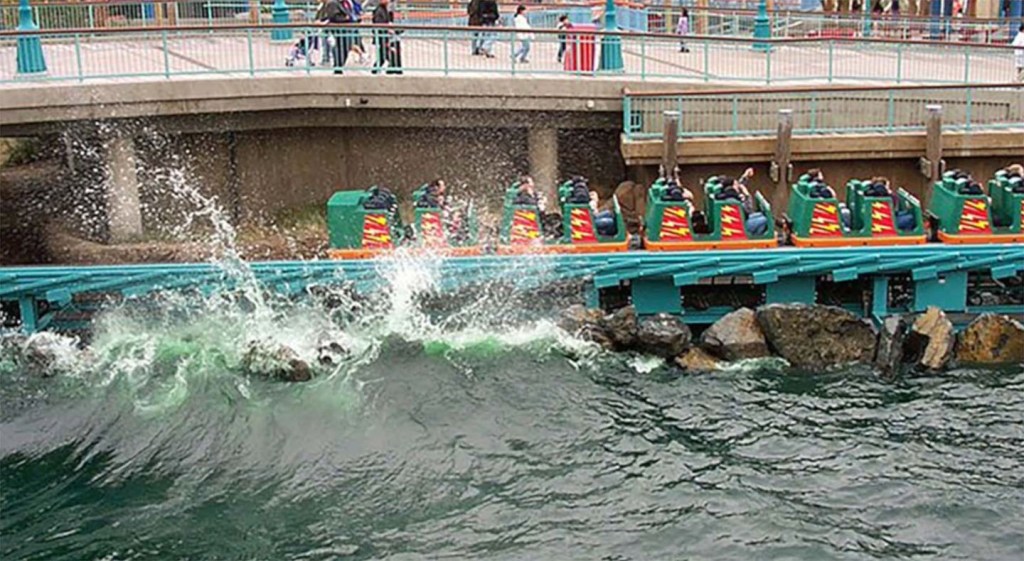
This area historically supported a significant portion of Disney California Adventure’s show capacity (World of Color) and was successful in that regard. However, it lacked distinct charm and featured few characters. A feature was the wave machine, which, when operational, was highly impressive. Unfortunately, creating waves proved expensive, and water from the wave machine interfered with the coaster’s launch mechanism.
Wave crashing in Paradise Bay.
Despite this, the notion persisted—given the extensive waterfront, there was continued interest in finding ways to utilize and enhance this unique space, rather than leaving it as an inactive beachfront adjacent to the water suitable for a water ride and that ride type is a key feature at Disney parks. Disneyland has several, while California Adventure has few by comparison.
This is a partial list of Disneyland water rides.
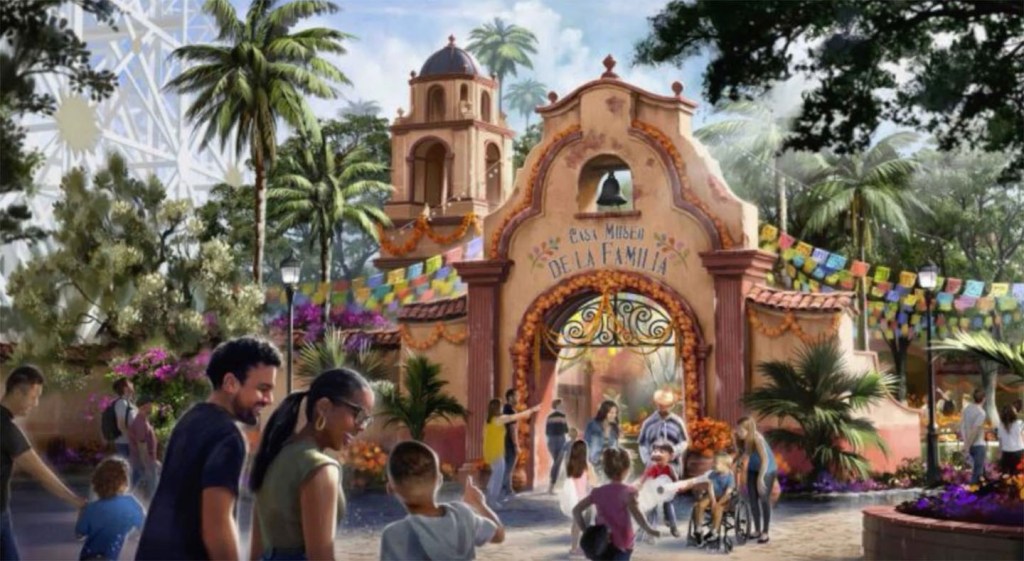
Pixar Pier features two distinct areas, and one is set to become Coco’s new home within Paradise Park. Technically, Coco isn’t located on Pixar Pier—it’s in Paradise Park, which is adjacent but not part of Pixar Pier. However, this detail isn’t crucial. The decision was made because the ride required a suitable property, space for the attraction, and a compatible ride system. Coco is an ideal character since it’s beloved, fits well with the water ride concept, supports a musical show, and there’s room to build it. Although the location isn’t perfect—as is often the case in Imagineering—it presents an opportunity: removing the wooden gate and creating an entrance into Coco’s vibrant village world.
Currently this is a access gate and future village gateway.
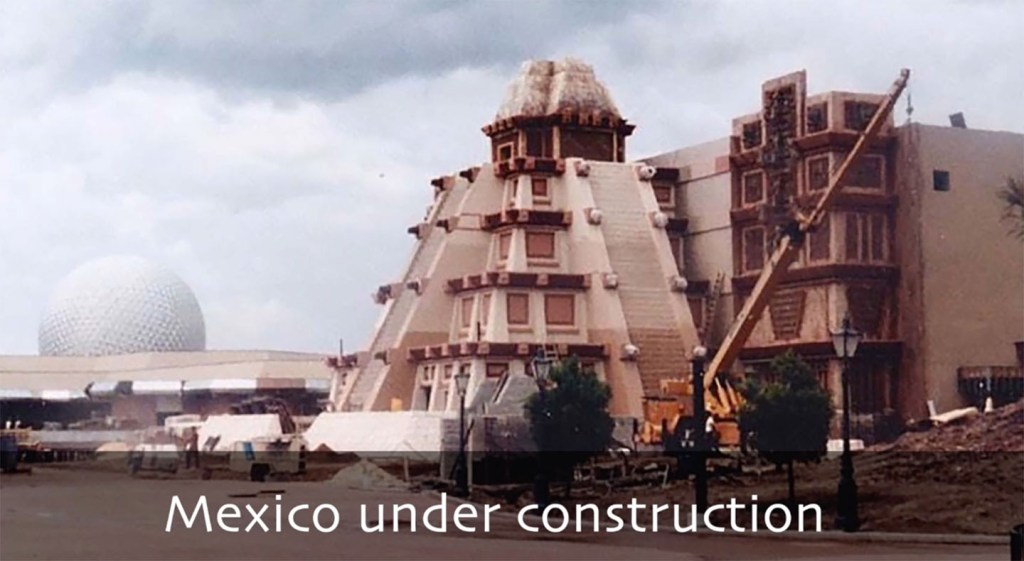
To understand what Coco might be like, consider Epcot’s Mexico Pavilion. Originally, its River of Time ride used mostly screens but also featured two notable physical scenes with real depth.
Image captured prior to opening of Epcot Center.
The original attraction drew inspiration from Blue Bayou and Pirates of the Caribbean in Anaheim, though it did not feature an old hermit. Instead, it included a pyramid and multiple hallways lined with screens displaying scenes of people enjoying vacations in Mexico. While this was partly due to a sponsorship agreement, the primary advantage was its high guest capacity. However, demand remained limited, likely due to the storyline and the attraction’s location. Although the location and capacity have remained unchanged, guest engagement increased significantly following the introduction of Donald Duck and Friends. This integration linked the attraction more closely to a classic Disney film and enhanced its appeal through memorable music.
Mexico pavilion in World Showcase.
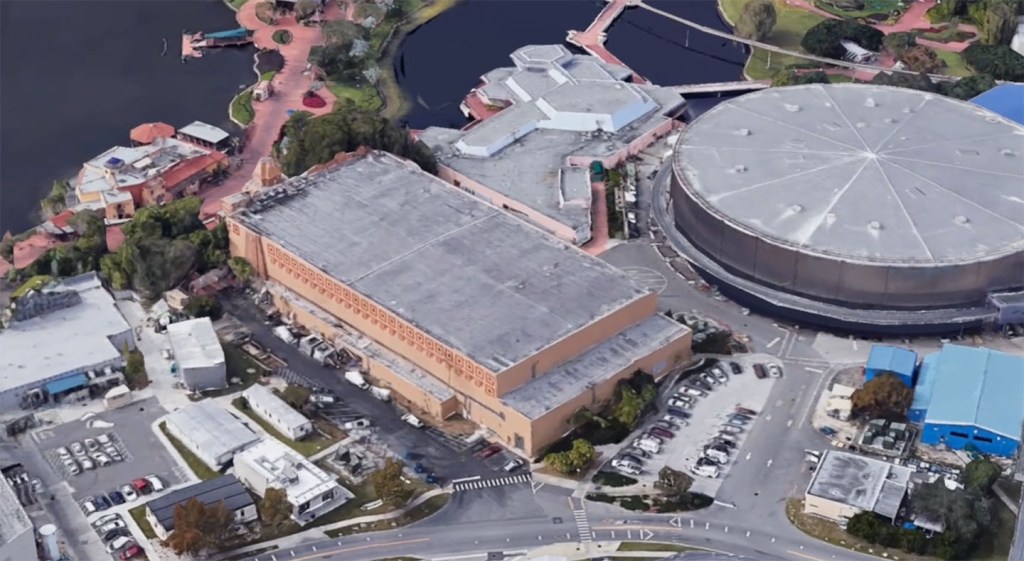
Given the compact yet distinct footprint, it is feasible to consider relocating it to available land within California Adventure designated for the Cocoa Ride and assess its compatibility with the site. Although the park was constructed on a modest scale—approximately 55 acres—including infrastructure such as a road linking the toll plaza to a parking lot, this particular road has been obsolete since the opening of Cars Land. Nonetheless, the land remains available for development, presenting an opportunity that had not previously been pursued. Until Coco.
Route of 2001 parking lot road.
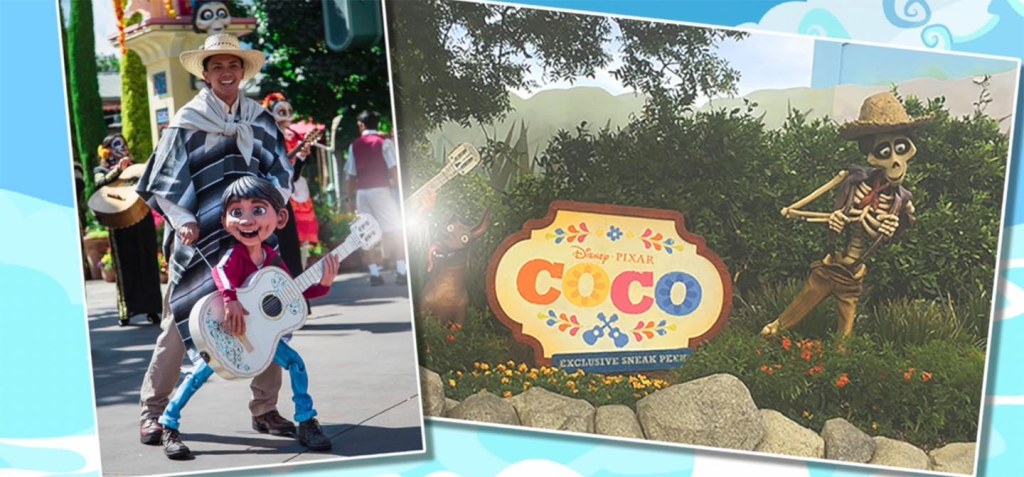
Coco’s seasonal event in DCA has been consistently successful, celebrating the film’s culture with food, music, and entertainment. The character’s popularity makes it a prime candidate for a new ride. Disney sees an opportunity to integrate Coco into the park by placing the ride and a Mexico scale pavilion on the available real estate, requiring only the land of a portion of the service road. This setup ensures that guests will soon enjoy Coco’s characters, music, and vibrant atmosphere.
Image of the seasonal event featuring Coco.
Disney’s California Adventure underwent years of planning and construction and continues to evolve with the addition of Coco.
The phrase “informed speculation” is helpful, and I use it because during a recent trip to Disney California Adventure, I assessed the progress of the four significant projects currently being developed to revamp the park. Although work is happening, nothing has been finalized yet for a couple of the announced projects.
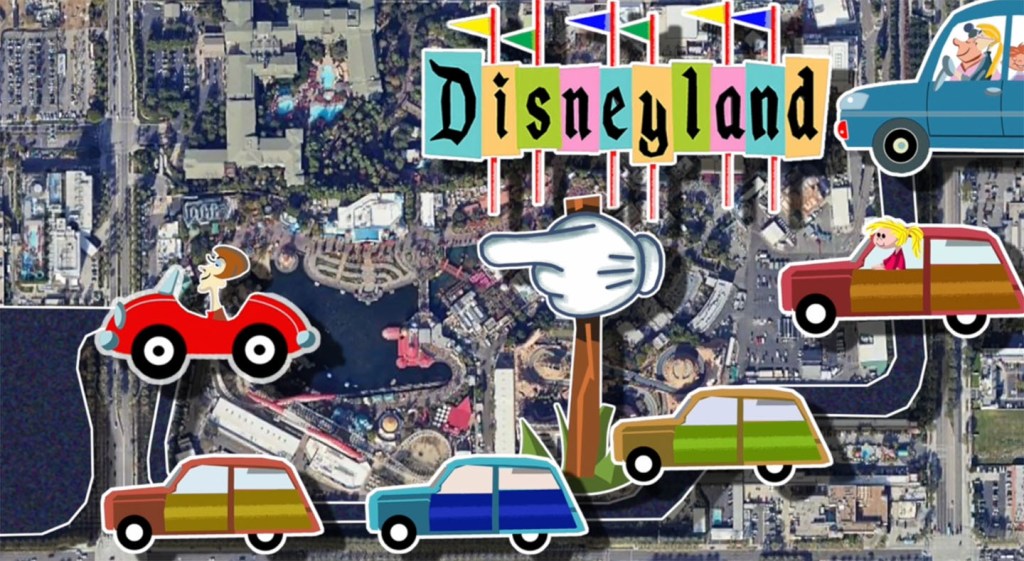
You may have visited Disney’s second gate when it was called Disney’s California Adventure—now it’s just Disney California Adventure. I worked on the team aimed at making DCA equal to Disneyland, a goal the team achieved. Currently, three major projects are in progress: a new parking structure, a Coco ride, and Avengers Campus expansion.
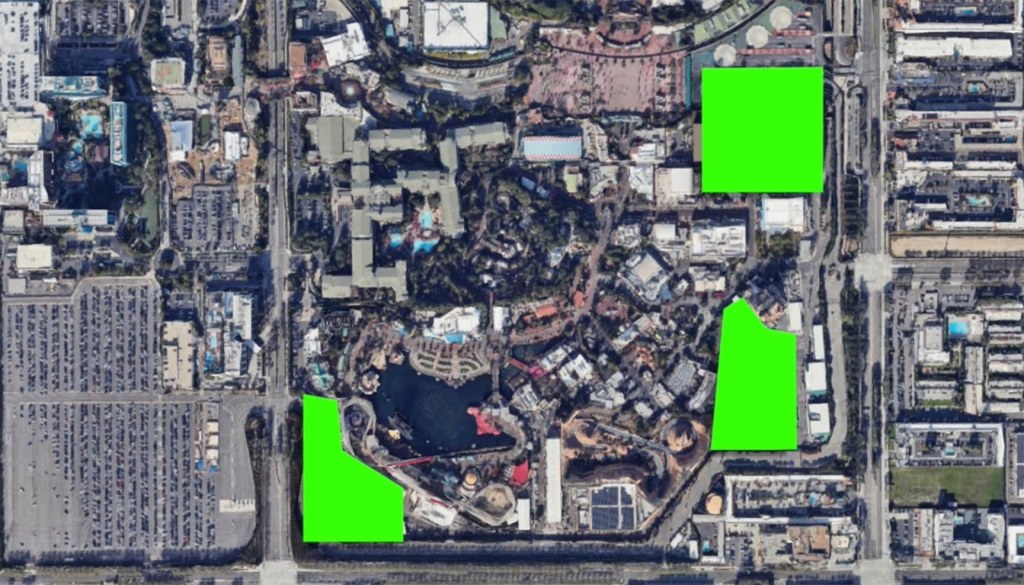
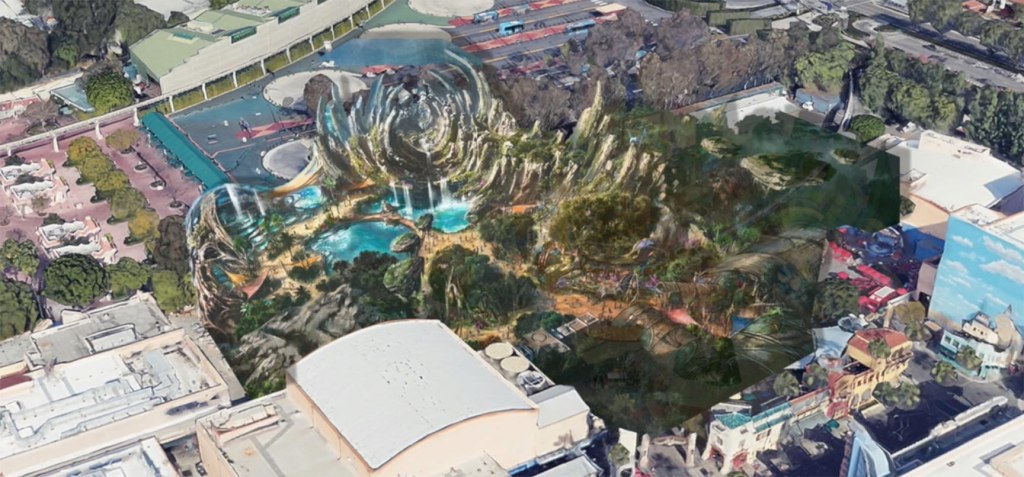
Site of three new projects at Disney California AdventureAvatar in the Hollywood Studios at DCA
There’s another project, a fourth one, that is the most complex of the four because the biggest project in Disney California Adventure expansion can’t happen without the parking structure coming on line. But first, about casting. Disney Imagineering designers are type cast. There are those who do Epcot, there are those who do Animal Kingdom, and there are those who do cute. I found myself in the cute category and I think I did it well. To that end, as I look around Disney California, that in the location that WDI have the Navi penciled in to occupy. Well, the Navi are impressive, but cute, they are not. Putting Zootopia and Bonnie and all the little cute furry animals in that location would check the cute box at DCA, a park that since opening day has really lacked cute.
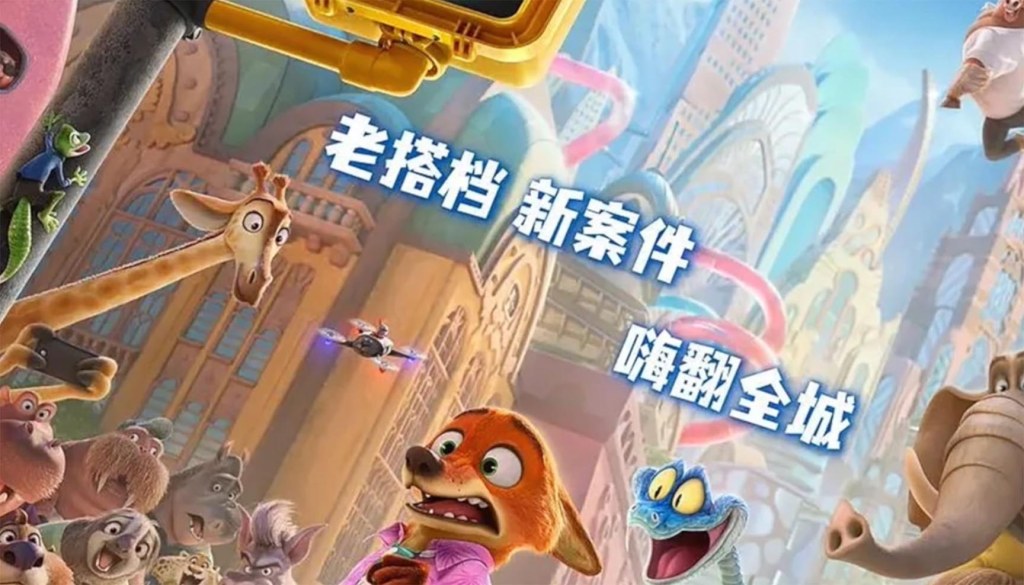
Zootopia 2 was hugely popular in China
Not everyone loves cute things, but visitors to Shanghai Disneyland do. Many come specifically for Zootopia Land, which saw massive success—its movie sequel earned over $100 million in a day, and the land itself drew crowds for its rides, entertainment, shops, and merchandise. While there’s interest in expanding Zootopia Land in Shanghai, the real question is whether it could be brought to California Adventure—and the answer is yes.
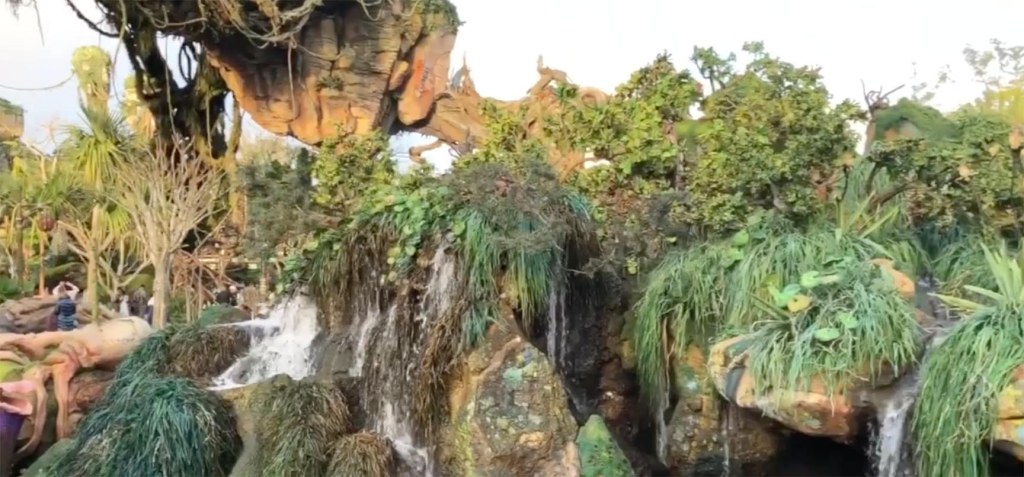
Avatar is successful at Disney’s Animal Kingdom
Although Avatar has been announced, progress remains limited to early planning stages—no construction has started yet. The new east side parking structure, part of Disneyland’s upcoming entrance, will offer 6,000 additional spaces, adding to the existing Mickey and Friends and Pixar Pals lots with about 16,000 spaces. Preparations and planning are ongoing, including changes for arrivals via South Clementine Street off the five. Disney owns property at this location, which I visited recently to better understand the area. Has anything been done to understand what is going to happen? what has to happen in order for any of the other projects to occur. Because one thing is aside from the fact that Disneyland Forward has been approved, all the new rides, shows, and attractions are going to be happening within the boundaries of DCA as it currently exists. When the parking structure goes in, there’ll be an elevated bridge that’ll dump people at the new entrance, which is kind of like the old entrance. But in any event, once they’re inside the gate, they can go to Hollywood Land. And that’s where the story gets interesting.
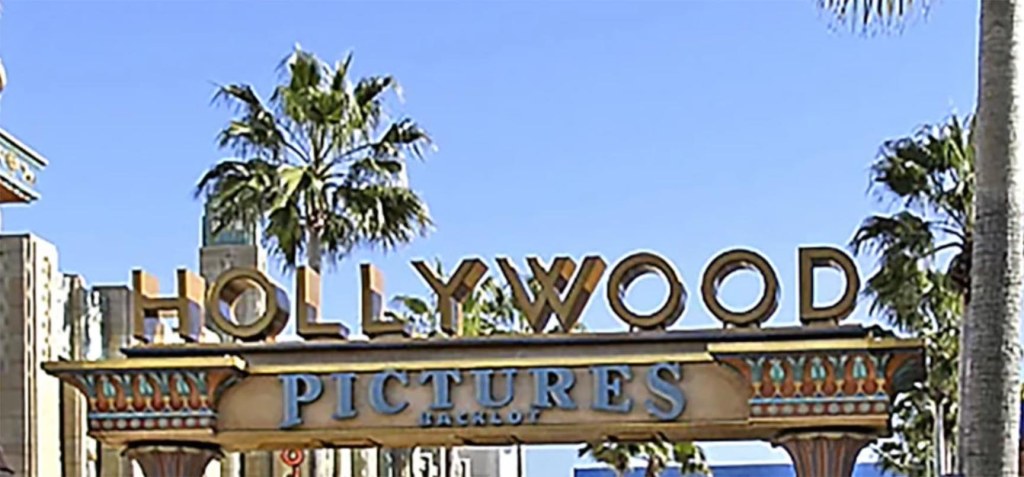
Hollywood Pictures Backlot opened at DCA in 2001
On February the 8th, 2001, California Adventure opened, and it was not a land, but a district. There were no lands in DCA as part of its charm. But there was the Hollywood Pictures backlot. And that was very unusual because it took its cues from the Disney MGM Studios in Orlando, but on a fraction of the space. As a result, you had a lot of concrete. You had not much shade, and you had some rides, well, a ride that failed to connect with the guests. I remember riding behind a group, a family group for uh his superstar limo and when we got out of the load station, unload station, the pre-teen son turned to his parents and said, “What was that?”
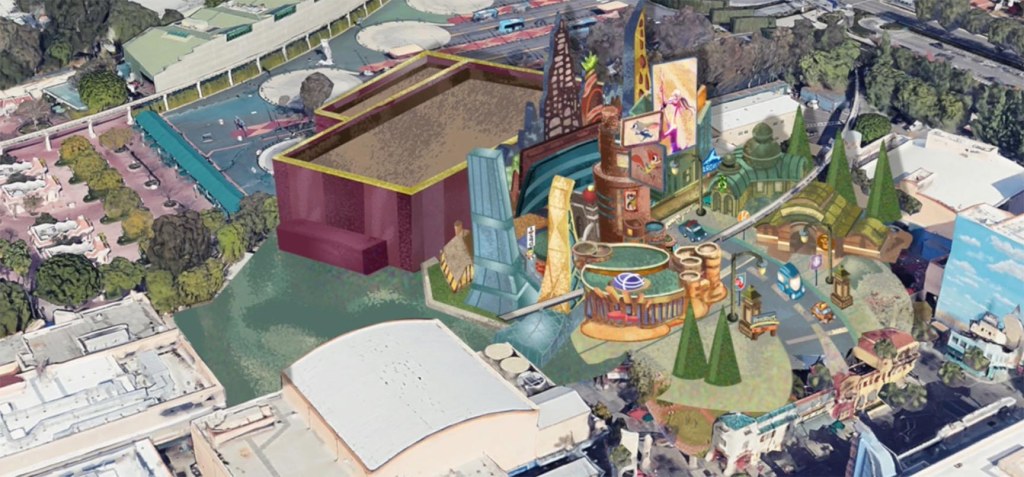
Concept art of Zootopia at DCA
Avatar vs. Zootopia: The Future of the Expansion
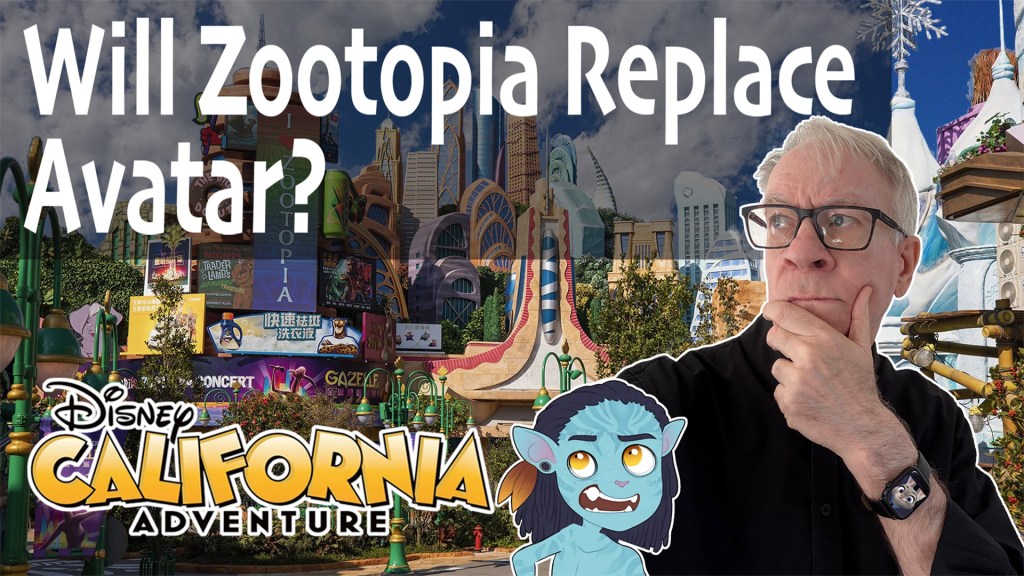
To that end, the land needs some greenery, some lushness, or at least a presence. And obviously Avatar would give them that because Pandora, if nothing else, has got mountains and water and trees and bushes. Great. And DCA would benefit from all of that. But if you have a choice between going with Avatar in Pandora or going to Zootopia that also has some opportunities for green water, why not go that direction? So, for my purposes, I look at this as a piece of empty land where anything could be built. I’m not aware if the Tween ever returned to DCA to experience the Monsters Inc. Overlay on Limo, but if they haven’t, they should make tracks because it’s going to go away in one form or another. And it’s been announced that Avatar from that was proven popular at Animal Kingdom DCA is coming to that park in Anaheim. And it makes sense. It’s green. It’s lush. It’s a popular IP. It makes sense. But so does Zootopia and maybe for other reasons, stronger reasons than Avatar.
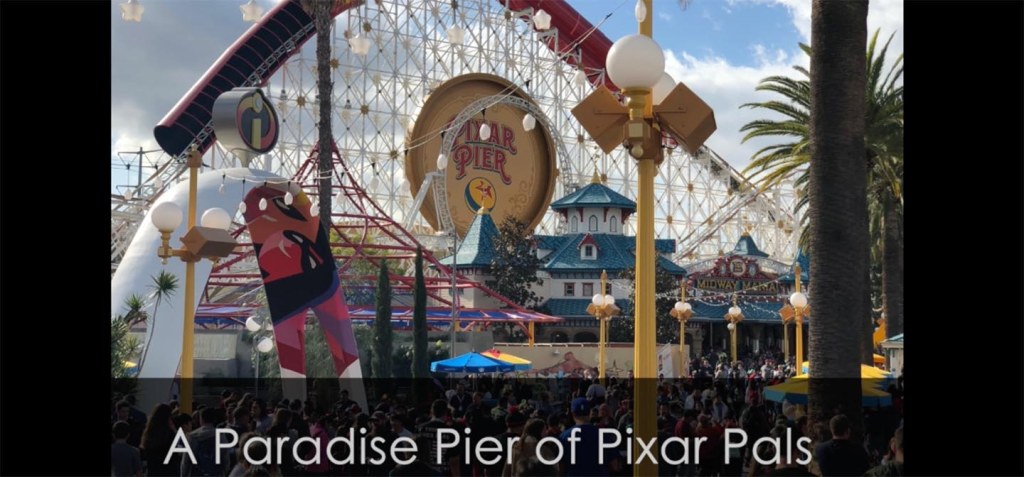
Pixar Pier features a collection of Pixar characters
The area today is a land of substitutions and plugs and fill-ins. Mickey’s PhilharMagic is a good show, but it’s not the show that premiered at Disney Hollywood Studios. It’s a plug into the theater for another show. It was the old Muppets Show. And we’ve already covered the fact that Limo gave way to Monsters, Inc. a dark ride, a very big dark ride, a very ambitious dark ride. And right next to it is a kitchen, a restaurant that opened as Hollywood and Dine, which has since been used for pin training and character greetings. And then the park build a temporary quick building that’s not so temporary and well, not quick because today, well, it’s closed, but before it’s been used for lots of things like millionaire or a shop. So, let’s get back to Zootopia. Zootopia is a cityscape and it’s been built in Shanghai and it’s been proving successful. So, if you brought that program here to California, you could bring in Hot Pursuit, and it fits. You could bring in the Zootopia Zoo better together and it fits and you’d have something popular and proven and it would be cute. It’d be family friendly.
Coco is a seasonal character in Paradise Gardens at DCA
And those are a some of the check boxes that DCA needs to check in order to be successful because as far as characters, they have Pixar Pier, but that’s a collection of characters. They don’t have a dedicated land of one brand, one franchise. And besides that, if you opened a Zootopia Land, the Big Donut alone could pay for the entire project. Where do you want to do? I’ve been asked many times for the list of tools for any concept designer, anybody at WDI, how should they approach their work?
For work tools are employed, and tools are like hammers and chisels and saws. They serve a purpose. Once you understand what the problem is you’re trying to solve, then you can pick out the appropriate design tool. And so, it is. When I look at the Hollywood Pictures backlot, now Hollywood Studios or Hollywood Land, whatever you want to call it, it still lacks in one monumental area. It doesn’t have queue. It doesn’t have presence. It’s a lot of stuff, but it really doesn’t sell itself as one big idea or definitely not a place you want to go to. You don’t want to make it your trip to DCA in order to see back there. And this is an opportunity to create a new land. And honestly, with the amount of land left at DCA, it’s the last time you’re ever going to be able to create a new land there in Anaheim in Disneyland Second Gate. I’ll make a note that whenever I would work on a project, I would always come up with the idea and it starts with lines on paper, but then it progresses to is it feasible? Can we afford it? Can we meet a schedule? Now, very often the idea never succeeds. It doesn’t get opened. It just simply goes into a drawer or vault to come back at another day. But that doesn’t mean the idea didn’t have merit, which is the reason why it went into the vault in the first place.
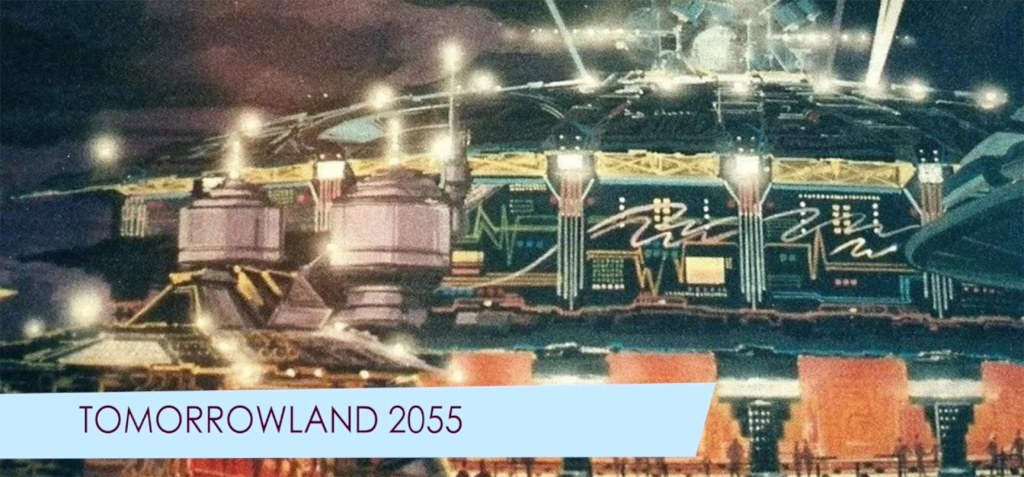
Tomorrowland 2055 was announced but never built
Speculation and Precedents
A question comes up about Zootopia: Has Disney ever announced something and then cancelled it? And yes, yes, indeed they have. Tomorrowland serves as a notable example, with various concepts publicly shared for both Lucas Port and Tomorrowland 2055 that ultimately were not realized. California Adventure, built on roughly 55 acres, has evolved and is currently being expanded within its original boundaries. Initially designed to showcase the best of California in a single day, the park’s focus is shifting beyond just California. Insights from the last D23 event in 2024 suggest more changes ahead, though plans like Avatar remain uncertain until finalized. Overall, the park appears to be transitioning from Disney California Adventure to Disney’s Adventures in California.
Is this the future of what began as Disney’s California Adventure?
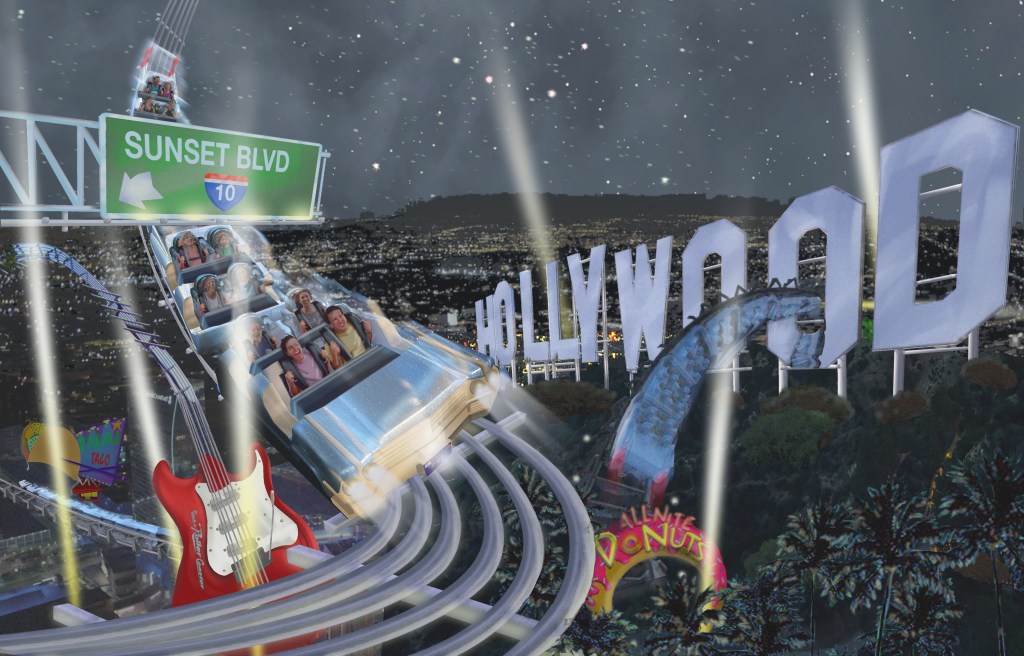
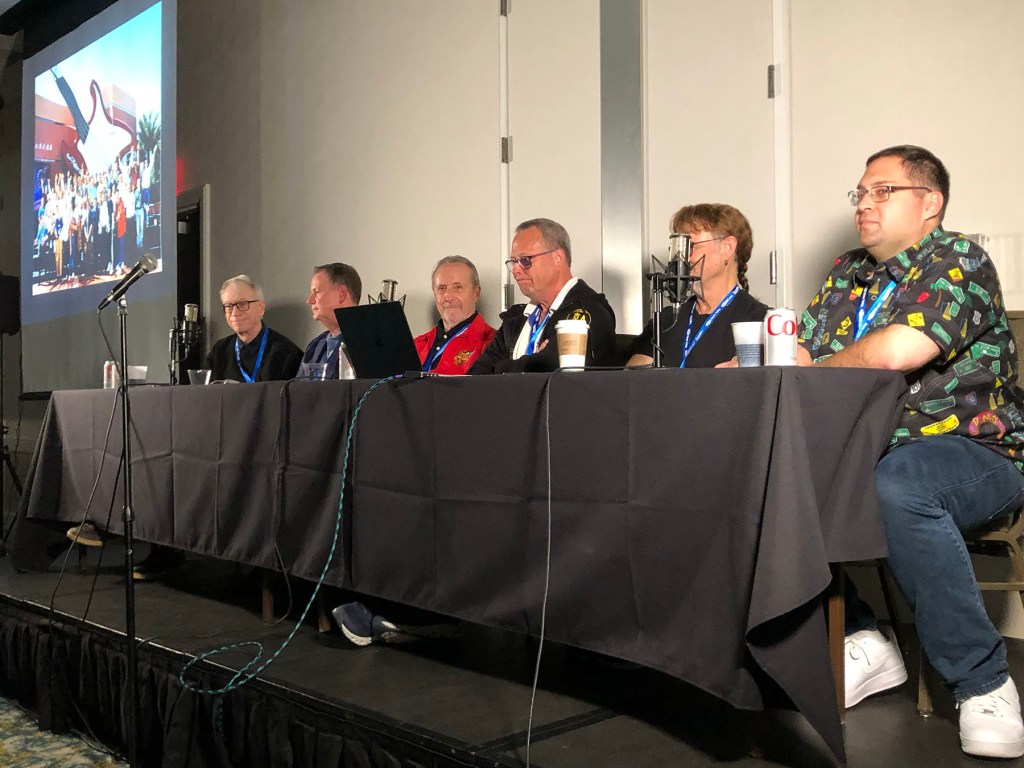
As an Imagineer, I am frequently asked about my preferred ride, show, or themed land. My response has consistently been Rock and Roller Coaster. Upon learning of its upcoming closure, I boarded a plane and traveled to the event to meet with several team members to reflect on our shared history and exchange memories.
Rock n’ Roller Coaster team members February 28, 2026
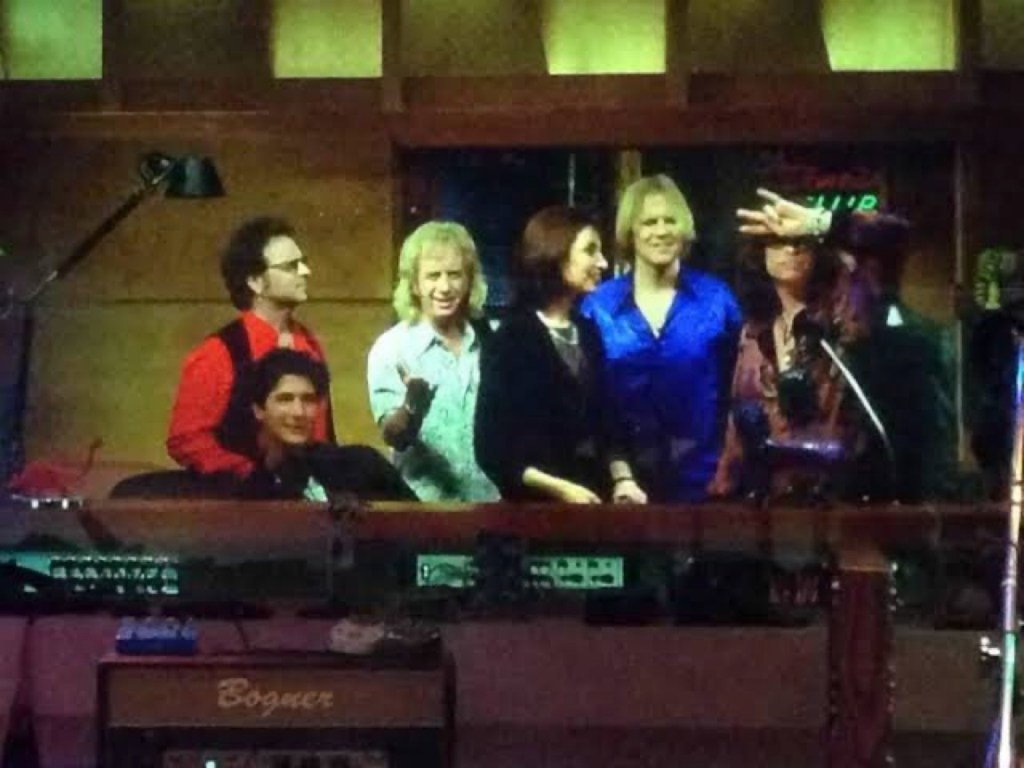
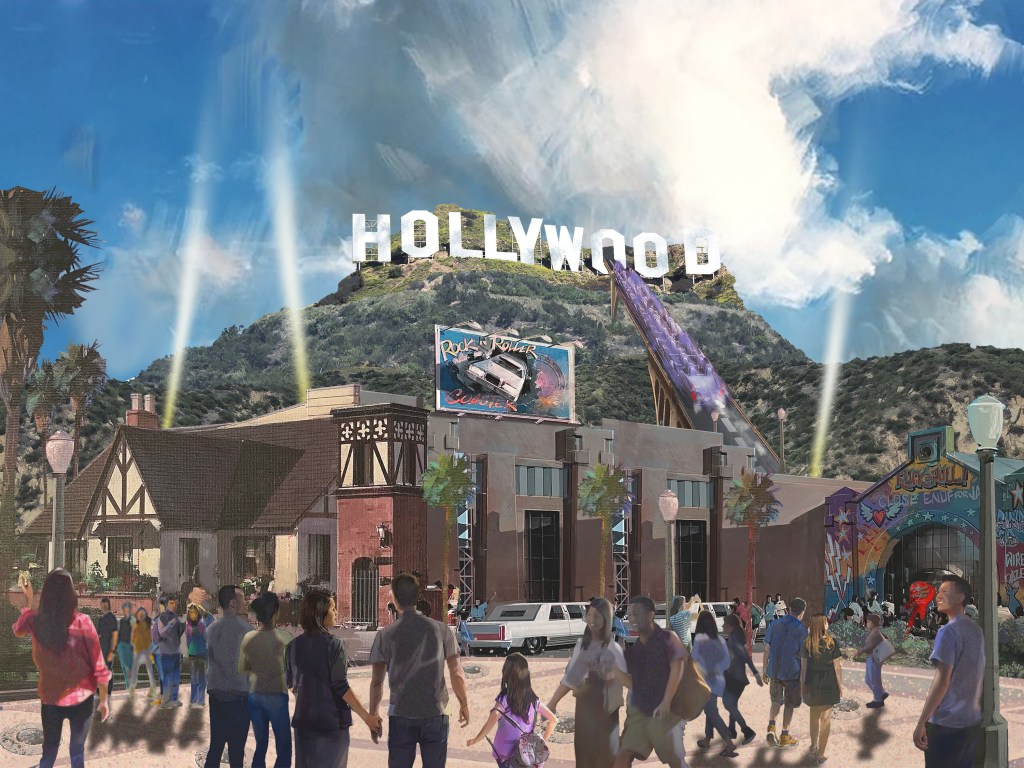
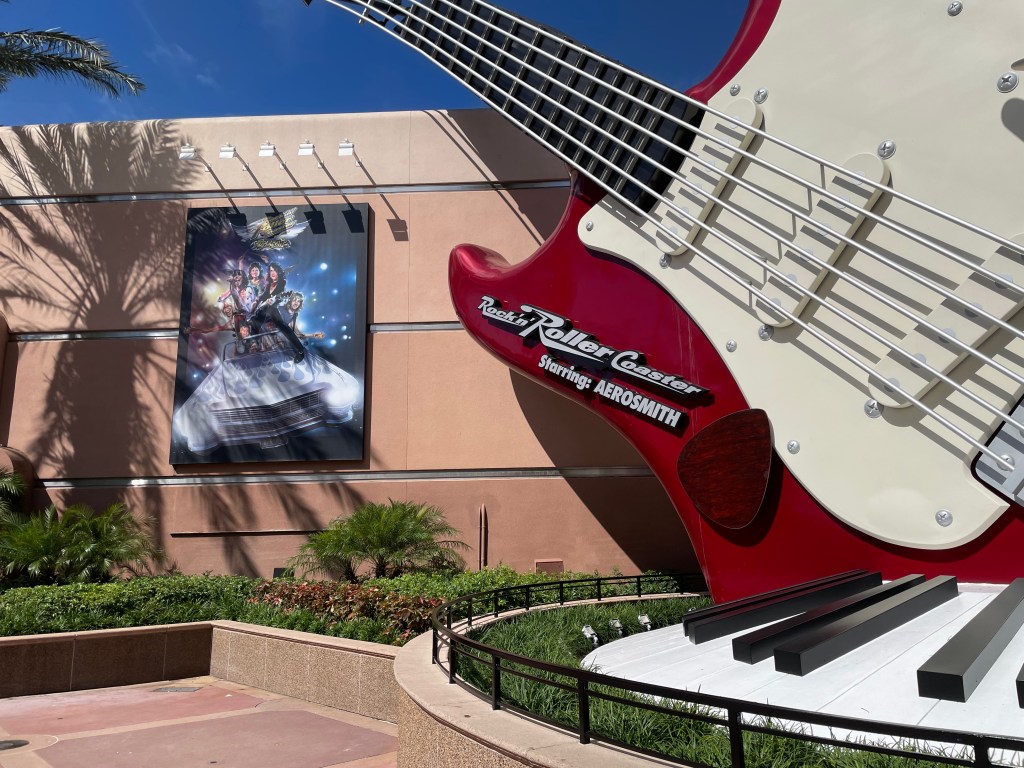
As with all good stories this one starts in an expected place. Whether one enters Disneyland or Magic Kingdom, the guest experience is rooted in narratives inspired by fantasy—sometimes whimsical, sometimes elevated—but always imaginative. Other Disney parks similarly embrace this tradition. Notably, Disney MGM Studios (now Disney’s Hollywood Studios) exemplifies this approach through Rock and Roller Coaster, featuring Aerosmith. In the idealized recording ‘Studio C’, guests encounter the band preparing for a concert, and through the immersive storyline, they are cast as VIP fans invited to a special event by limousine, encapsulating the essence of fantasy.
Studio ‘C’ video filmed using the Showscan system
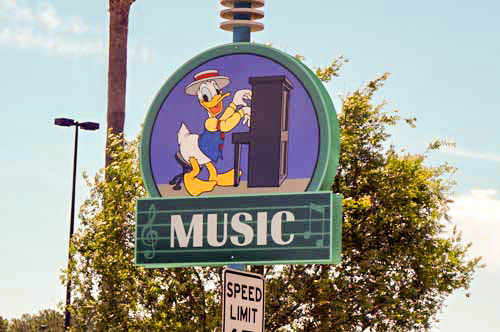
The origins of Rock and Roller Coaster can be traced to signage in the Disney MGM Studios parking lot, which included a “Music” section despite the park opening with an absence of music-themed attractions. Entertainment yes, but not attractions or rides. Having identified this gap, musical innovation was prioritized, particularly as the park sought to transition from primarily educational offerings—such as insights into movie and television production—to more dynamic rides.
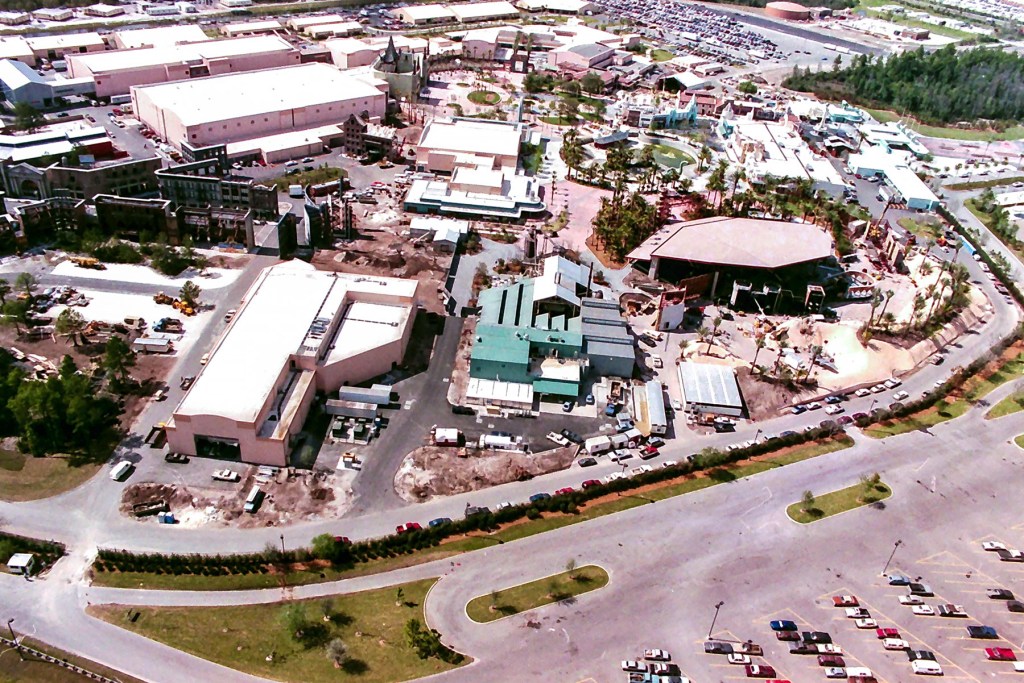
Disney MGM Studios Theme Park in 1989
Tower of Terror provided the initial shift, but further development led to the concept of integrating a high-speed roller coaster with a musical motif, thus initiating the journey towards Rock and Roller Coaster.
DMGM Studios parking lot had a section named “Music” in 1989
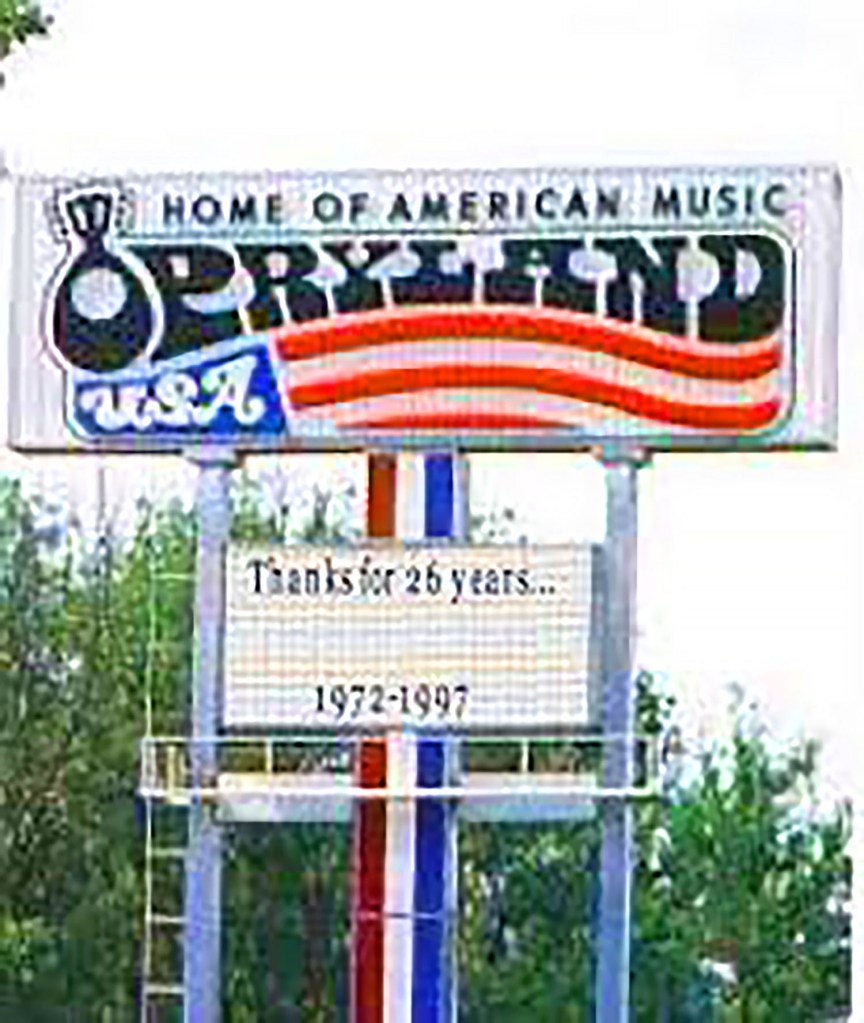
Space Mountain’s success in Paris demonstrated the appeal of combining rapid launch mechanisms, multiple inversions, and onboard audio. While adaptation for Orlando seemed promising, logistical constraints prevented its direct implementation. The narrative continued to evolve, drawing inspiration from Premier Rides’ Outer Limits: Flight of Fear. This ride located in Ohio was notable for its pre-show and launch vehicle, though it lacked onboard audio and featured an intricate indoor track layout. These elements informed the Florida project for the ride, but as typical in the development of a new Disney ride, it faced challenges. Among the challenges was securing naming rights. Although “Rock and Roller Coaster” was readily understood among project stakeholders, there are another company in front of Disney because Universal Studios initially held a claim. Subsequent research revealed Opry Land in Tennessee had previously used the name, but with the park’s closure by Gaylord Entertainment, Disney was able to acquire the rights. Had circumstances differed, the attraction might have proceeded under another designation; however, “Rock and Roller Coaster” ultimately became exclusive to Disney Imagineering.
Disney secured the name ‘Rock n’ Roller Coaster’ from Gaylord Entertainment
Pulling from my background in animation and storytelling, I directed efforts to create a compelling environment that conveyed the ride’s narrative prior to entry. Inspiration was derived from Los Angeles recording studios, notably locations such as the former Charlie Chaplin studios (later A&M Records and subsequently Jim Henson Company headquarters) and RKO Records. The interiors of these facilities prioritized functionality, characterized by narrow corridors, sound booths, and stages. Early design iterations considered replicating Space Mountain from Paris but eventually evolved towards a music studio aesthetic. The addition of a prominent guitar was deemed essential; dimensional design utilized real instruments as templates, culminating in a large-scale installation fabricated in Tampa, Florida, with complementary components developed in Logan, Utah, and Daytona Beach.
Art credit: Jim Shull 2026
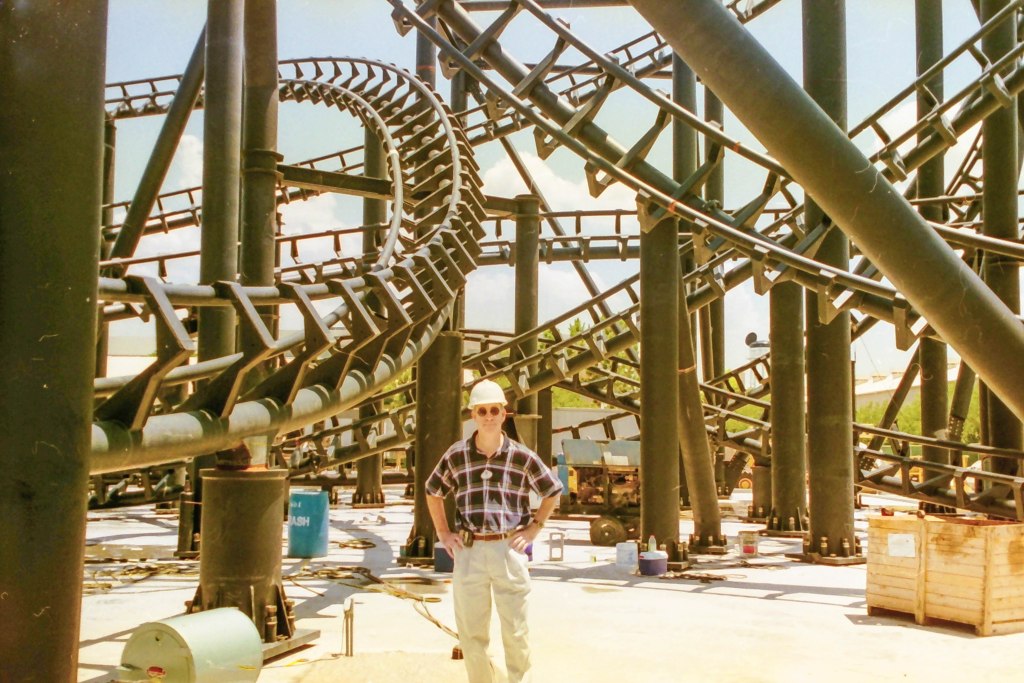
The roller coaster train and track was constructed in the Netherlands, incorporating rigorous testing and safety evaluations. During the project’s construction phase in Florida, extensive oversight was maintained, including practical solutions for site-specific challenges such as utility placement and theming adjustments. Building an attraction typically requires three to five years, while a new park demands five to seven years, underscoring the complexity and commitment involved.
The author in the field during construction
Upon completion, the project was handed over to park operations, and the ride opened on June 29, 1999.
Rock n’ Roller Coaster opened July 29, 1999
On February 28, 2026, the Rock n’ Roller Coaster Project Team reconvened at Walt Disney World to commemorate the closing of Rock and Roller Coaster, reflecting on how conceptual elements—including the acquisition of a guitar, billboard artwork, and prop integration—contributed to an innovative and memorable guest experience. Through collaborative effort, a small, dedicated group succeeded in realizing a unique attraction that fulfilled the creative intent associated with the music-themed parking sign: an exhilarating VIP concert experience headlined by Aerosmith and delivered via super stretch limousine.
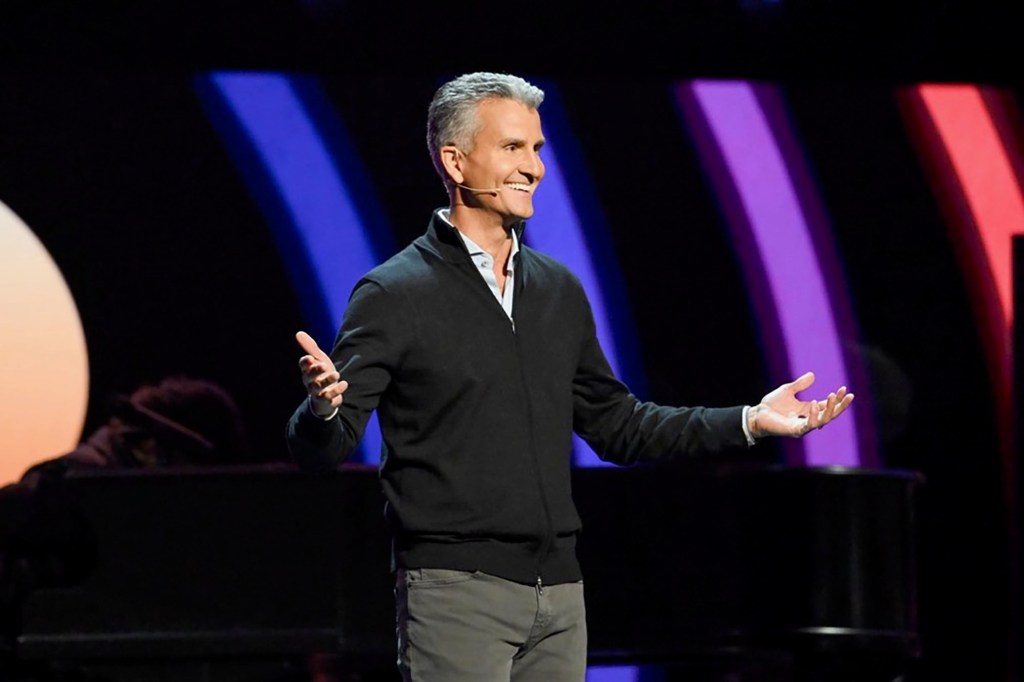
The announcement that Josh D’Amaro is the next CEO of The Walt Disney Company came as a surprise, even though he was considered a likely candidate. Reflecting on a personal anecdote, I recall driving to D23 2024 event with Jim Hill. As we entered the Anaheim Convention Center parking lot, we saw Josh jogging ahead, quick on his feet. He noticed us, smiled, waved, and continued on his way. This encounter now seems fitting, given his new leadership role.
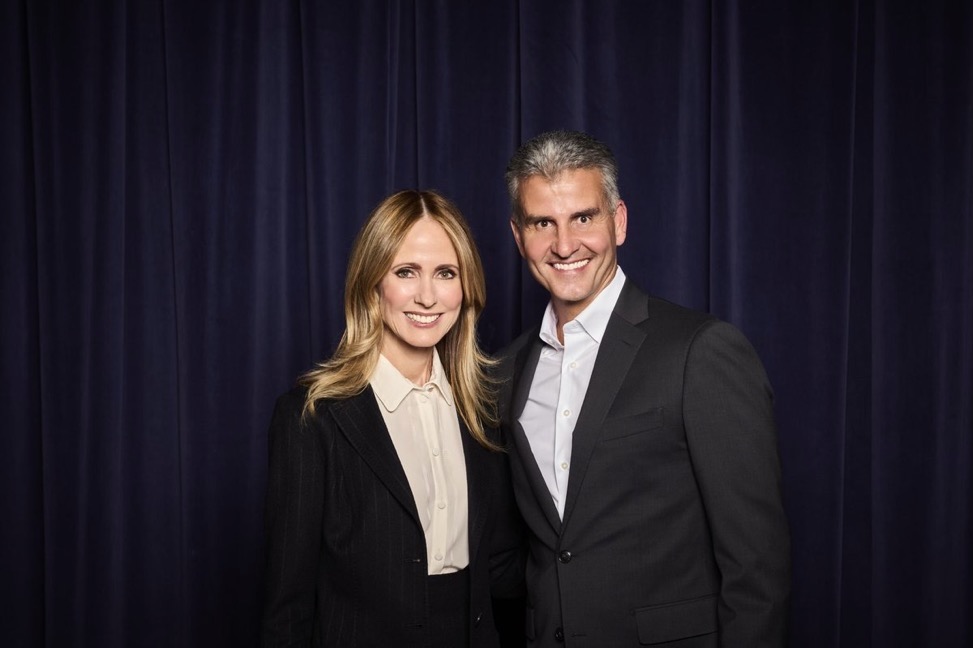
Josh D’Amaro and Dana Walden
New Leadership Team
Josh will be working alongside Dana Walden, who will serve as president and chief creative officer. This partnership is promising, as Disney’s most successful eras have been led by strong teams—such as Walt and Roy Disney or Michael Eisner and Frank Wells. The role of CEO is immense, requiring collaboration and support. With Dana’s experience, Josh gains both a partner and an advisor. Notably, Dana Walden will become the first companywide female chief executive officer in Disney’s 103-year history.
Disney’s Strategic Focus
Disney is focusing its future on theme parks and cruise ships, which have been highly successful but require significant investment. The company plans to invest $60 billion into new rides, shows, and attractions in U.S. parks, as well as the soon-to-be-reopened Disney Studios Paris, which will become Disney Adventure World.
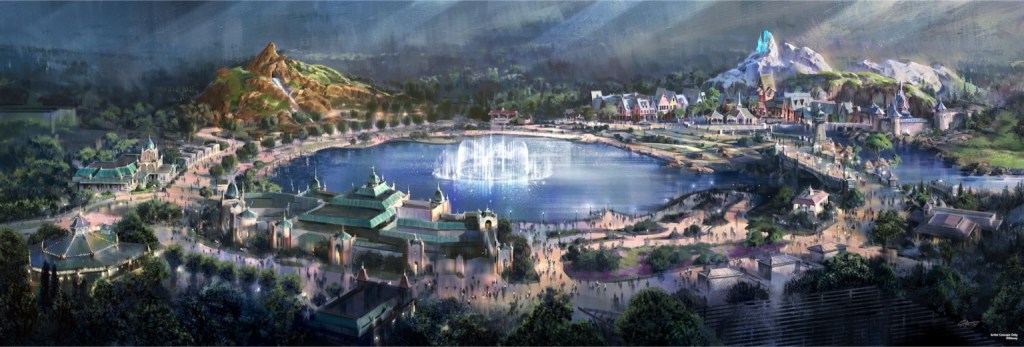
Adventure World concept art
Potential Developments and ESPN
Looking ahead, there is speculation that ESPN could eventually spin off as a standalone company. Recently, ESPN acquired the NFL Network and the Red Zone brand for about a billion dollars, which will be integrated into Disney’s portfolio by year-end. This deal also grants the NFL a 10% stake in ESPN and helps expand the ESPN brand, which has begun exploring the gaming space. If ESPN’s growth continues, Disney may choose to maintain an interest in ESPN without it being part of the company’s core operations.
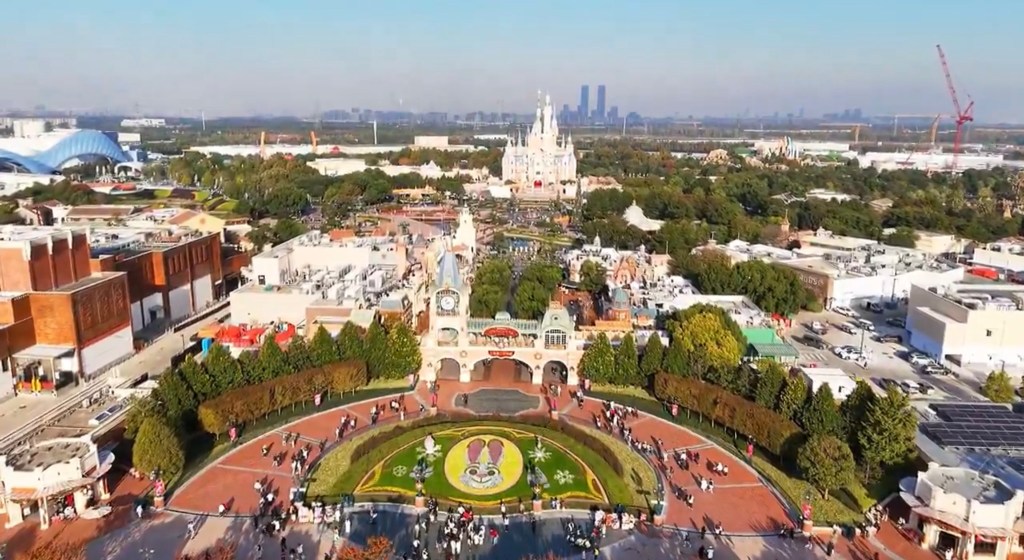
Shanghai Disneyland
International Expansion and Second Gate Projects
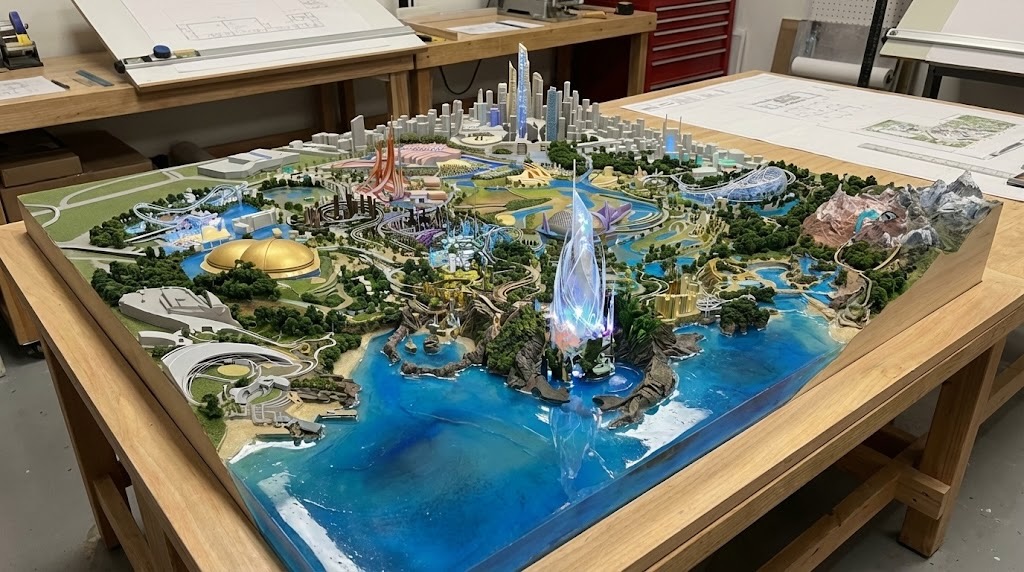
Disney is also considering additional “second gate” parks, with Shanghai possibly next in line. Hong Kong faces challenges due to lapsed rights for expansion, while the Abu Dhabi project remains in early stages with limited details released. The only concept art for Abu Dhabi has been vague, notably lacking the traditional Disney touches like fireworks or balloons.
Abu Dhabi model (not Disney authenticated)
Succession and Key Candidates
With Josh’s promotion, his previous role needs to be filled. While there is no clear frontrunner, Michael Moriarty stands out as a strong candidate. Currently CFO of Disney Parks and Resorts Experience Division and former president of Hong Kong Disneyland, Moriarty brings valuable international experience—especially relevant if Disney pursues expansion in Shanghai or Abu Dhabi.
Upcoming Events
Key dates are approaching for Disney. The annual shareholders meeting is scheduled for March 18, when Josh will formally step into the CEO role, deliver a presentation, answer questions, and be introduced to shareholders. By then, the new head of Parks and Resorts Experience Division may be announced, along with any related leadership changes. Shortly after, Disney’s Adventure World in Paris will open on March 29, giving Josh the opportunity to inaugurate the new park—a parallel to Bob Iger’s early success with Disney’s California Adventure.
Industry Reactions and Josh’s Qualities
Industry insiders have responded positively to Josh’s appointment, seeing him as a leader who truly represents Disney’s core values. Unlike leaders brought in from other divisions, Josh’s experience is rooted in the heart of the company. Personal interactions with him have always been positive—he is approachable, welcoming, and seems perfectly cast for this role. His time at Disney has prepared him well, and while challenges undoubtedly lie ahead, there is optimism about the company’s future under his leadership.
Welcome to Disney Journey. With 12 Disney parks around the globe, it’s inevitable that one will find itself at the bottom of the list. As someone who worked on the park that in my opinion, is at the bottom, I have stories to share about why it often disappoints. The park in question is Epcot, and here is its story.
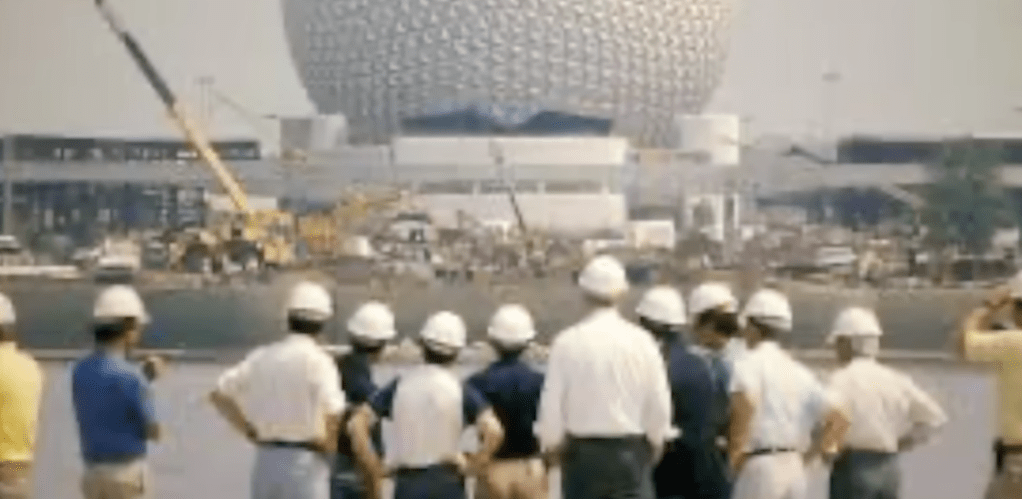
Epcot Center construction image
Journey to Epcot
Disney Imagineering, based in Glendale, California, is just a short drive from the corporate headquarters in Burbank. As a project-based company, WDI receives assignments from Burbank and brings them to life. That’s how I found myself involved in several projects, starting with Epcot Center—a park that fascinated me long before I became an Imagineer.
Hydril Company Downtown Los Angeles early 1930s image
While working for a Oil Service Company, I often traveled to Florida on business. When I was at Walt Disney World, I would take the elevator and then the stairs to the rooftop of the Contemporary Hotel. I watched from the rooftop Epcot Center rising during its construction, never imagining that I’d someday join the team building it. At the time and in the future, Epcot captivated me as a showcase of technology and an optimistic vision of the future—right around the corner.
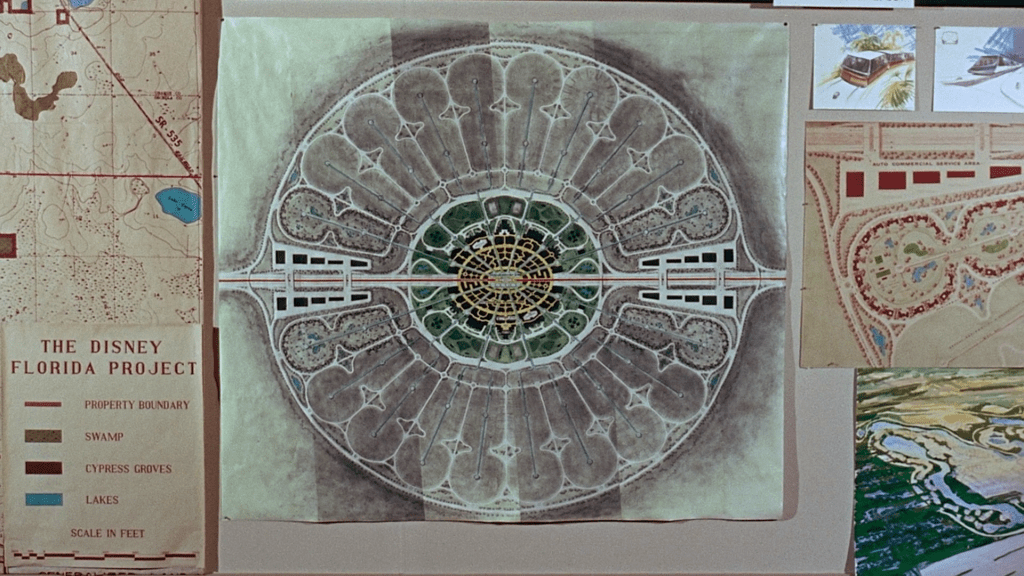
Early Epcot Center unbuilt master plan
Epcot’s Promise and Reality
Epcot Center was conceived as a celebration of the future, promising a technology showcase for the world. Although the park has undergone many changes, the most recent “Epcot Experience” displayed ambitious plans, many of which were never delivered. This led me to figuratively consult Walt Disney himself—represented by his statue in the park he envisioned but never saw completed. I reflected on my confusion, not just disappointment, because the Epcot of today feels far removed from Walt’s original vision. It seems to continually promise something that never quite materializes.
Unbuilt Celebration Center concept art
Unfulfilled Promises
During the Epcot Experience, bold concepts like Celebration Center—a multi-story building with views of the lake and nighttime fireworks—were presented but never built. Instead, Celebration Center became Celebration Hall, a much simpler structure. Over multiple visits, I watched Celebration Hall rise, only to realize it was a pared-down version of what was promised. While not bad, it was certainly disappointing.
A shopping center or a Disney theme park?
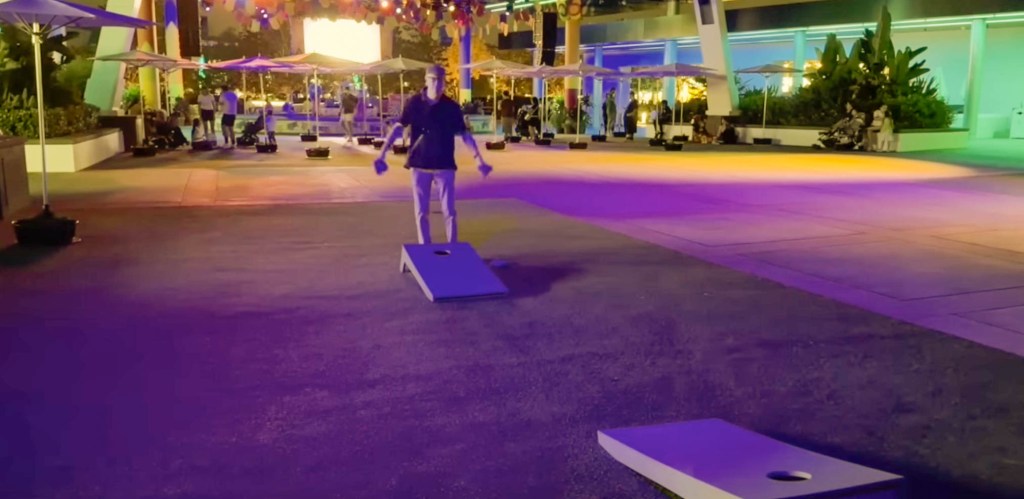
I soon experienced that disappointment firsthand. Walking through what felt like a corporate business park filled with tables, chairs, and artificial trees sculptures, I arrived at Communicore Hall—a one-story building with flashing lights mounted behind a grill. It looked fine, but nothing special. To make matters worse, it was closed to guests, violating the Disney principle that nothing in the park should feel “closed for business,” especially at the entrance. The stage behind had no entertainment, and the only activity available was playing cornhole—a fun game, but not what one expects at Epcot Center.
Playing the game of ‘cornhole’ at Celebration Hall
A Personal Connection to Epcot
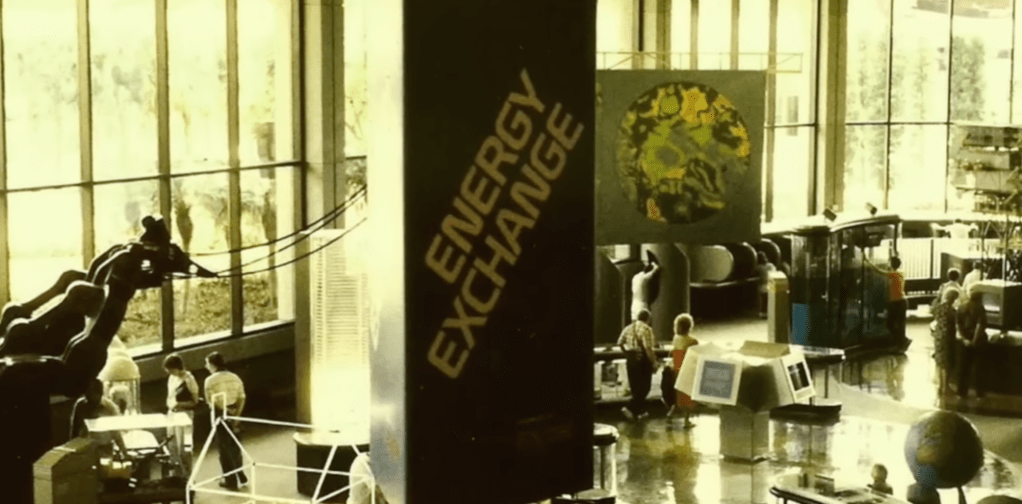
As the park closed, I reflected on my long history with Epcot—stretching back forty years, even before I became an Imagineer. My first involvement was with Communicore, thanks to my previous work at the oil company in Los Angeles. Disney reached out to the Hydril Company for oil field equipment for a Communicore showcase exhibit and needed expertise to explain it to Imagineers in Florida. Soon I was on a plane and spent much time on the exhibit. I worked on several projects for Epcot and Communicore, but unfortunately, many creative ideas were never realized. This pattern of presenting exciting concepts and then moving the goalposts has been a constant throughout Epcot’s history.
First WDI project was Energy Exchange in Communicore at Epcot Center
Changing Attractions
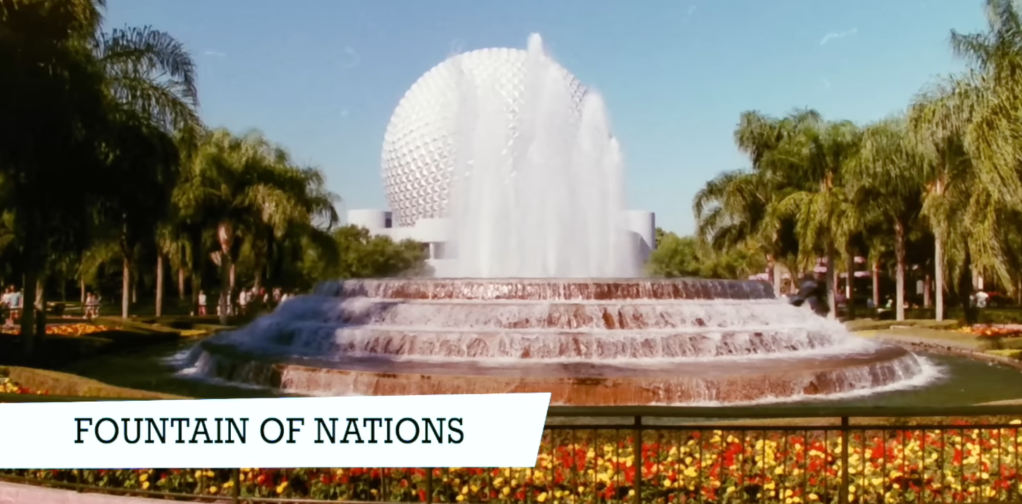
Early Epcot featured a spectacular central fountain, which was enhanced in 2000 but has since been removed. My first official Imagineering assignment at Epcot was “Wonders of Life,” a pavilion smaller and less grand than others, with attractions like Cranium Command and an educational health exhibit featuring Goofy. Despite creative elements, many attractions were modest, and some closed, hidden from guests today.
Long gone ‘Fountain of Nations’
I also worked on Horizons 2.0 and the first iteration of Mission: Space. Some ideas offered epiphany moments, such as feeling weightless in Mission: Space, but over time, technical and operational changes diminished the experience. The original Horizons eventually gave way to Mission: Space, and other interactive elements became outdated compared to modern technology.
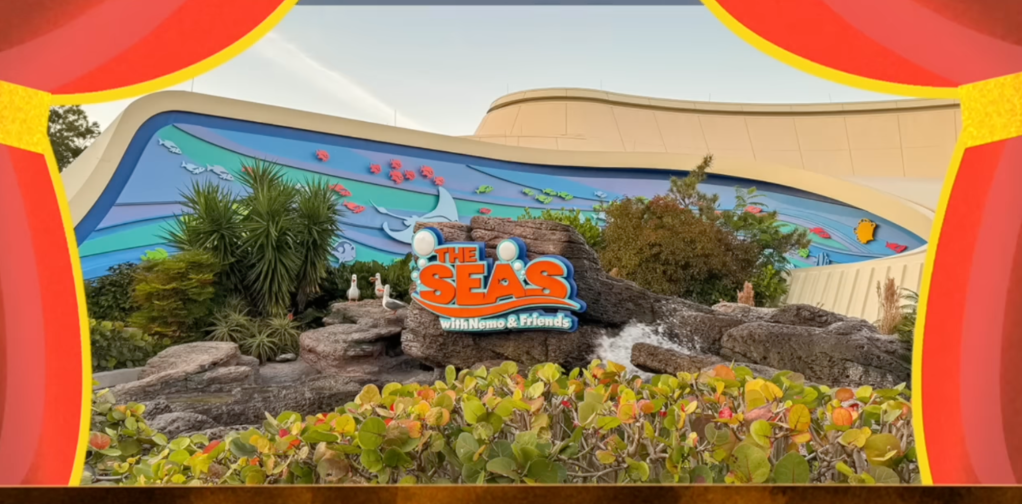
Working on the ‘Seas with Nemo’ was a challenge
Character Integration and Technical Challenges
Later, I worked on The Living Seas with Nemo, integrating popular Pixar characters into Epcot’s attractions. This made sense for both creative and technical reasons, leveraging experience from projects in France and Disneyland California. However, adapting existing ride systems presented unique challenges, restricting what could be shown and often resulting in modest updates rather than groundbreaking experiences.
Epcot’s Ongoing Struggle
Throughout my time at Epcot, I noticed a recurring theme: the park was constantly presenting new ideas but rarely delivering on them fully. For example, the use of cost-effective materials like roto-molded vehicles meant practical choices, but sometimes at the expense of guest experience. Still, moments of true “edutainment” could be found, such as engaging with cast members about marine life—echoing Walt Disney’s original intent.
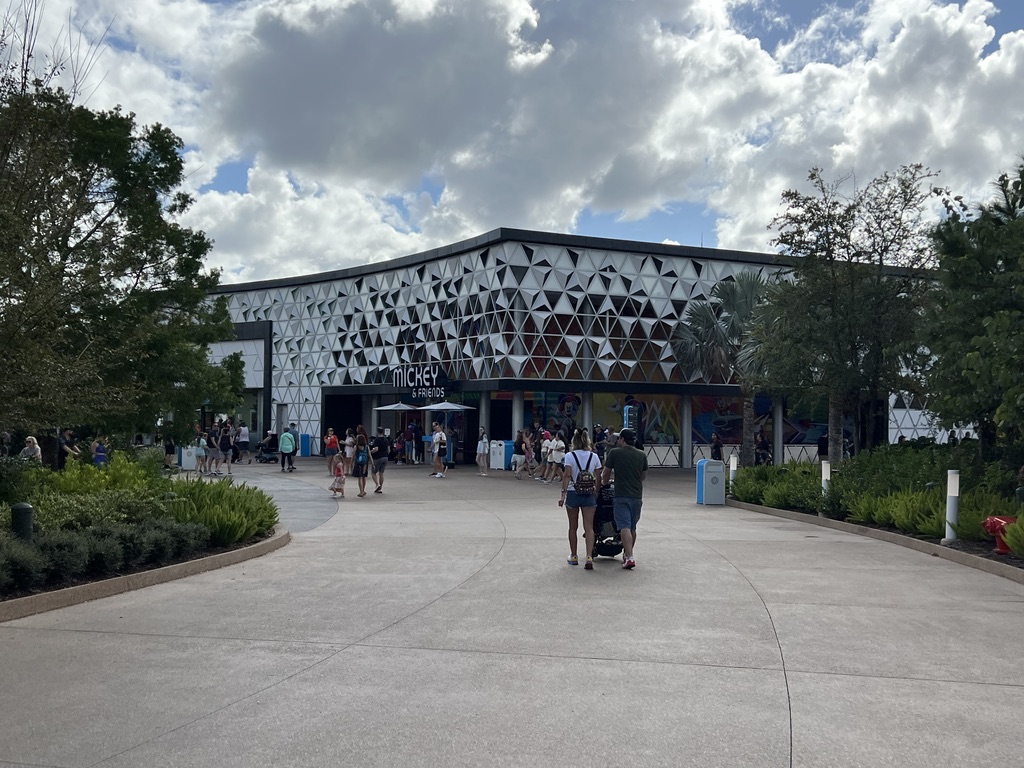
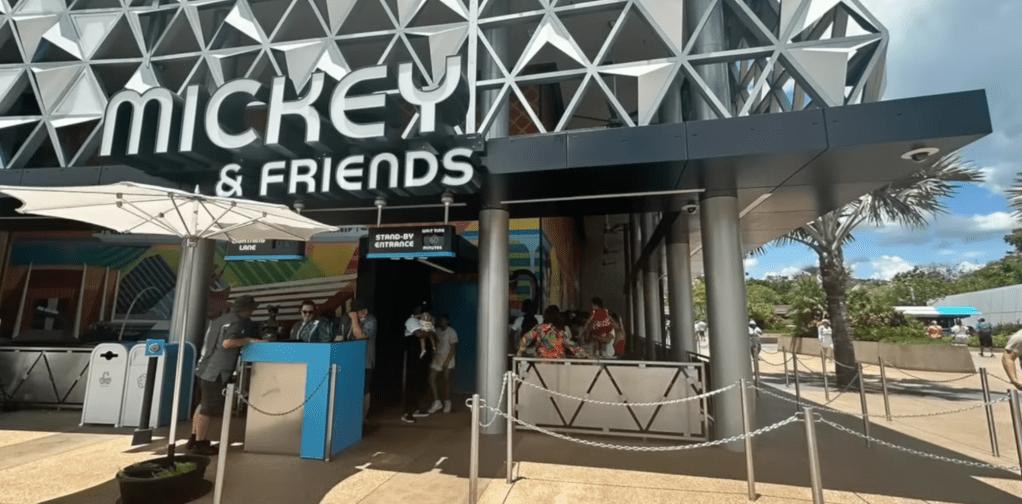
Character greeting location in the center of Epcot World Celebration
Conclusion: Epcot’s Legacy
Ultimately, Epcot is not a bad park, but it struggles to fulfill its original promise. Entering bland, generic buildings to meet Mickey or walking into spaces that resemble airport lounges does not capture the visionary spirit Walt Disney intended. The park tries—through attractions like a Mary Poppins teacup ride or a play pavilion replacing Wonders of Life—but falls short of its potential.
As I confided my thoughts to Walt’s statue, I was reminded that Epcot’s greatest failing is its inability to deliver on its grand vision. What exists is good, but what might have been could have been even better. My conversation with Walt ended but I look forward to returning and exploring what the future holds for Epcot.
This is the first time since starting Disney Journey that I am sharing a story that weighs heavily on my heart: the recent announcement of the passing of legendary Imagineer Eddie Sotto. Eddie is an essential figure if you wish to truly understand Disney and the work of Disney Imagineering during the late 1980s and early 2000s. He accomplished so much, and his talents were truly exceptional.
Main Street Euro Disneyland
Remembering Eddie Sotto: Colleague and Friend
Eddie was more than a colleague; he was a friend. He was someone I could call upon for feedback, always generous with his time. Time he could have spent creating incredible drawings, like those that led to the development of Euro Disneyland, now known as Disneyland Park in Serris, France. The beautiful hotel that serves as the park’s entrance and the iconic train station at Main Street USA are among his notable contributions. Eddie’s name appears on one of the windows on Main Street, alongside other creative directors.
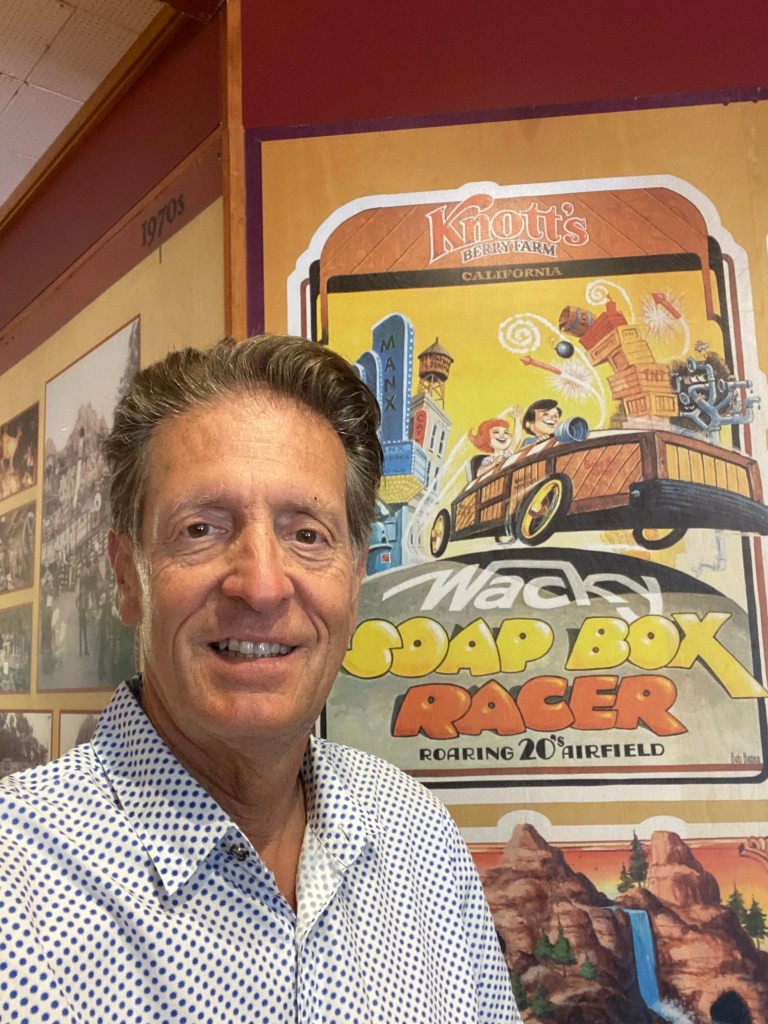
When I joined Walt Disney Imagineering in 1988, Eddie was already there, having come from Knott’s Berry Farm where he brought creative ideas to life. I especially remember his reimagining of an existing ride into the Soapbox Racers. He transformed the ride system, making it fun and lively with great music and unforgettable characters. Working within a small park with limited resources, Eddie wore many hats and delivered magic on a tight timeline. Every time I rode the attraction, I’d congratulate him, and he’d respond with a trademark cockeyed grin—sometimes dropping into his radio announcer voice to say, “Thank you. Thank you very much.”
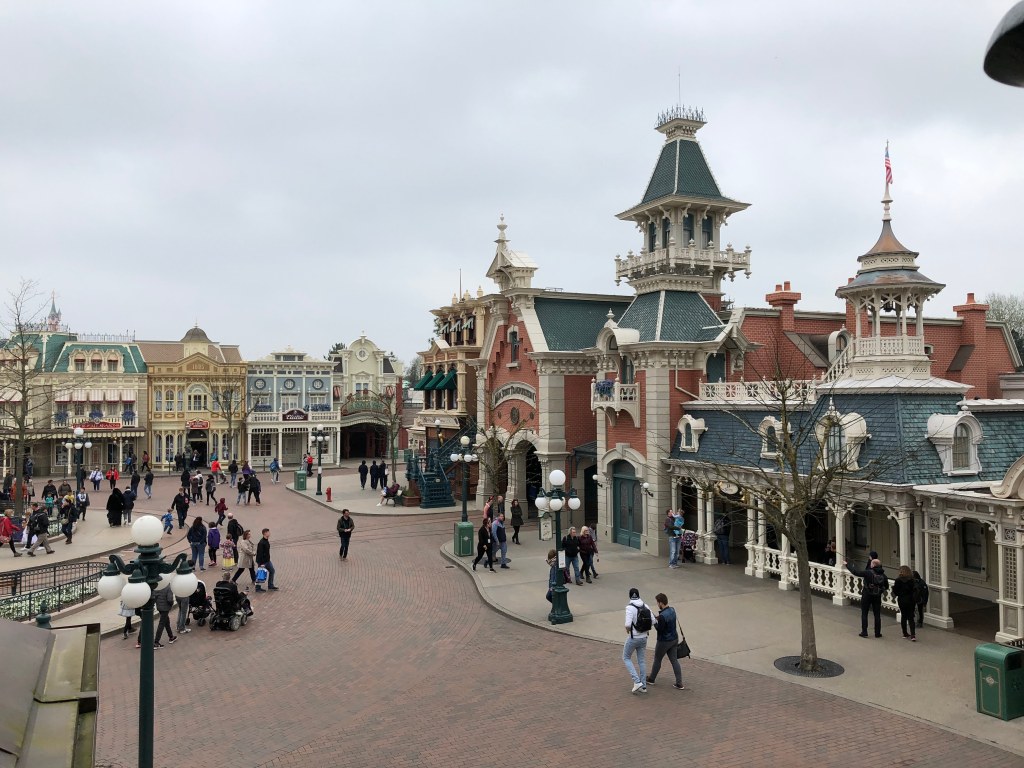
The Euro Disneyland project team operated out of a converted warehouse on Rodier Street. While the building retained much of its original character, Eddie’s vision set him apart. His concept for Main Street USA was rooted in the 1920s, featuring an elevated streetcar, though that idea did not come to fruition. What did emerge, however, was a uniquely beautiful Main Street—arguably the finest in any Disney castle park.
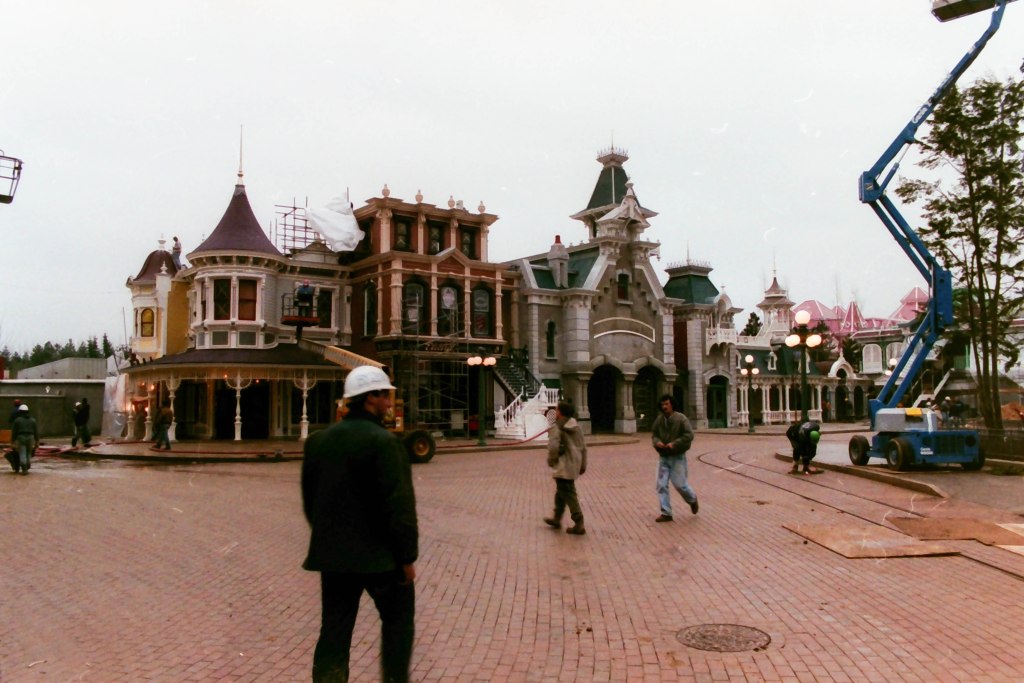
Main Street construction Euro Disneyland 1991
Creating Magic: Main Street USA and Beyond
The farmland and beet fields of Serris France were transformed into a construction site, and over months and years, Main Street USA rose from the ground. Its Victorian style was enhanced with cinematic touches, creating the perfect fantasy. Today, visitors—many of whom are unfamiliar with the historical period—walk those streets and smile, enchanted by the views Eddie helped create.
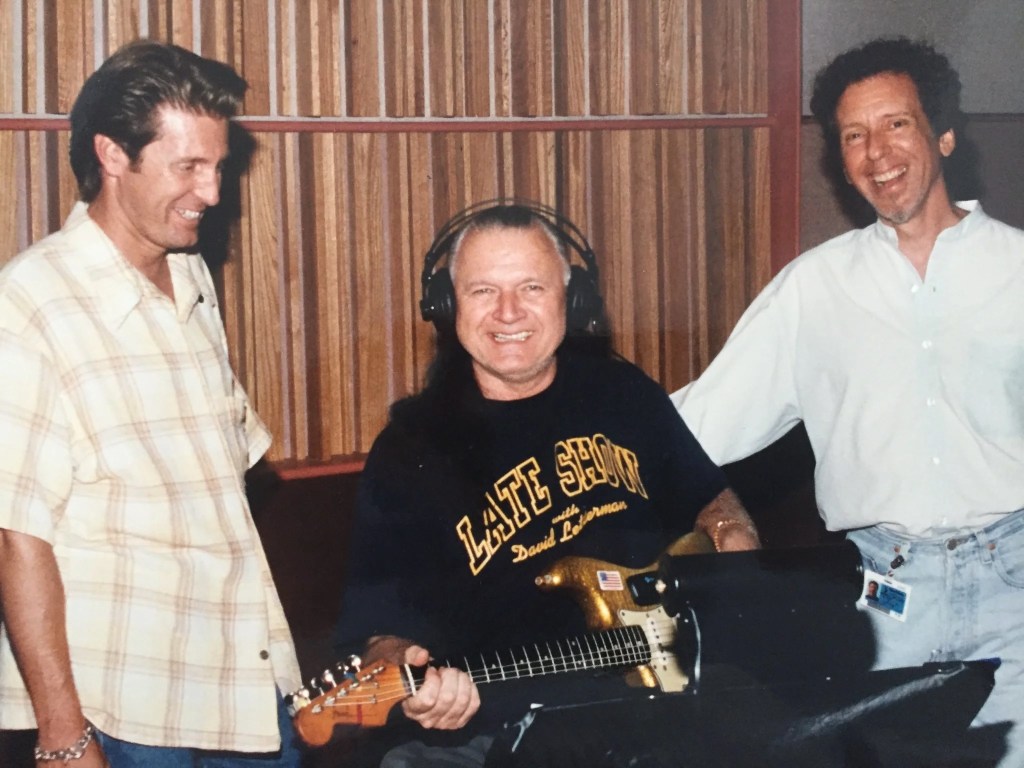
Eddie Sotto, Dick Dale and person unknown during Space Mountain session
Eddie’s Passion for Rock and Roll
Eddie Sotto’s love for rock and roll was evident in his work. His visionary idea to collaborate with legendary surf guitarist Dick Dale resulted in a new soundtrack for Space Mountain in Tomorrowland. Few would have thought to pair surf guitar with a space-themed attraction, but Eddie did—and the result was a resounding success.
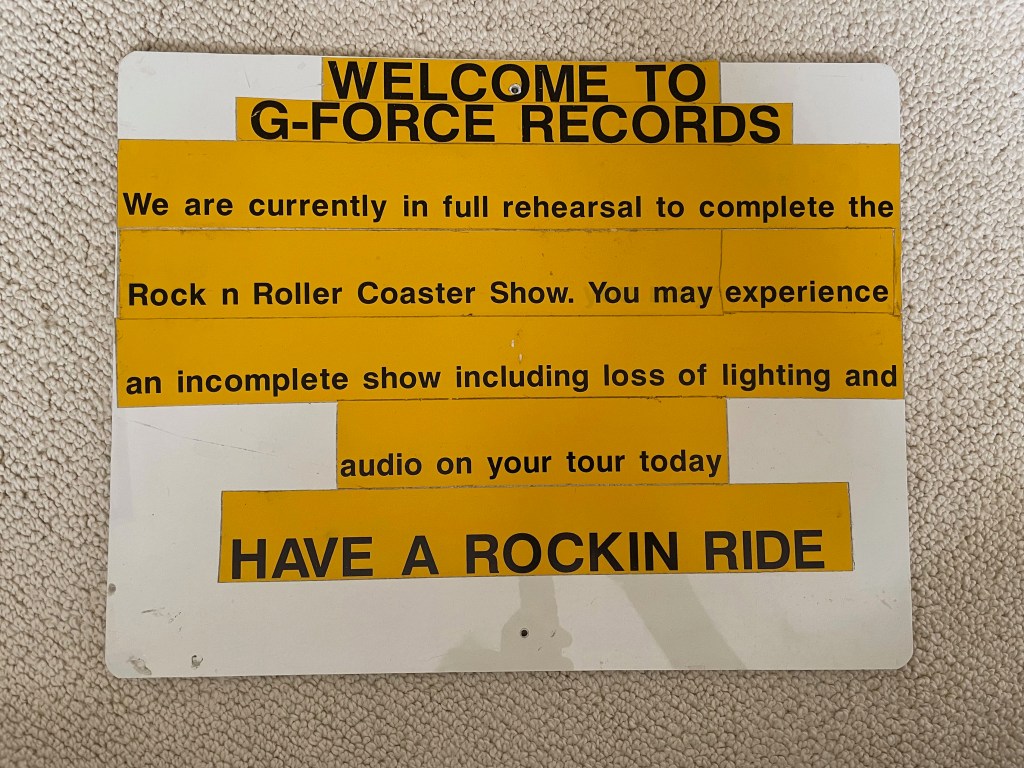
Safety sign Rock n Roller Coaster during test phase
Mentorship and Support
While living in Florida for Rock n Roller Coaster, Eddie phoned me and we met to walk my project and share a meal in the rooftop restaurant in the Contemporary Hotel. Eddie was in Florida for his own projects. Despite his busy schedule, he was generous with his time, reviewing notes and walking through Rock ‘n’ Roller Coaster with me. He reassured me about my creative decisions and encouraged me, saying, “Your ideas about rock and roll are classic. They’re good. They have energy.” His encouraging words were heartfelt and sincere.
Pooh’s Hunny Hunt Tokyo Disneyland
Pioneering Ride Systems: Pooh’s Honey Hunt
Eddie was inspired by innovative ride systems, such as the trackless system in Universe of Energy. He led the creative team to develop Pooh’s Honey Hunt in Tokyo Disneyland’s Fantasyland. Even knowing what to expect, I was surprised when the fleet scattered into the Hundred Acre Wood, weaving through scenes with Heffalumps and Woozles. The ride was delightful, family-friendly, high-capacity, and, though ambitious, a tremendous success. Its success laid the groundwork for Remi’s Ratatouille Adventure at Disney Studios Park in France.
Tokyo Disneyland Queen of Hearts restaurant
Creative Landmarks: Queen of Hearts Banquet Hall and More
Eddie’s impressive resume includes projects such as the Alice in Wonderland-themed Queen of Hearts Banquet Hall at Tokyo Disneyland. The innovative use of forced perspective made the space feel much larger than it was. Eddie’s meticulous attention to detail manifested in hours spent refining drawings for Main Street USA, always providing clear instructions for the project team on how to bring his vision to life.
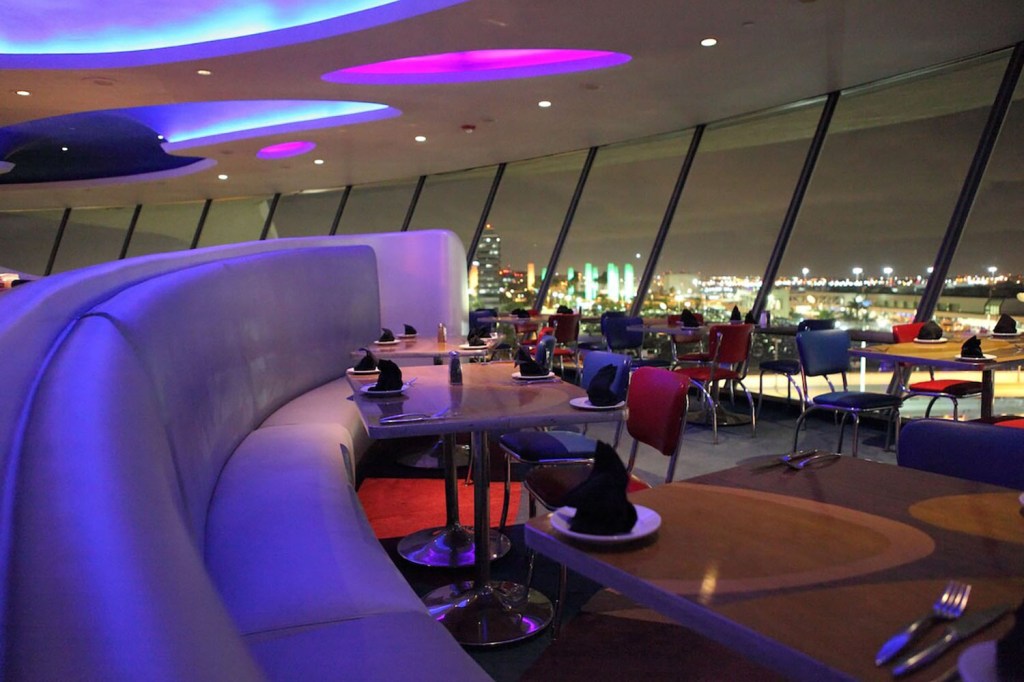
LAX Encounter restaurant
Legacy Across Parks and Beyond
Eddie’s expertise extended to countless other projects, including Mission Space, the proposed Sci-Fi City for Tomorrowland at Tokyo Disneyland, a revamped Jungle Cruise for Indiana Jones, and Shrunken Ned. His creative influence reached beyond Disney parks. At Los Angeles International Airport, he led the team that created the Encounter Restaurant in the iconic Theme Building, imagining a retro-futuristic space reminiscent of an alternate universe, complete with his love for lava lamps. Although the restaurant is now closed, the memories of those creative sessions with Eddie and his team remain vivid.
Eddie and team during Main Street construction.
Conclusion: A Lasting Tribute
Looking back on Eddie Sotto’s legacy, I am filled with gratitude for his ideas, the people he inspired, and the lasting impact he made on themed entertainment. While I hope we may see another Eddie in the future, I truly believe his influence is one of a kind.
Welcome to Disney Journey. As many are already aware, the Rivers of America in the Magic Kingdom have closed for a major project that has been underway for several months. Now, the scale and magnitude of this transformation are fully apparent, and this episode is dedicated to exploring those changes in detail.
Arrival and First Impressions
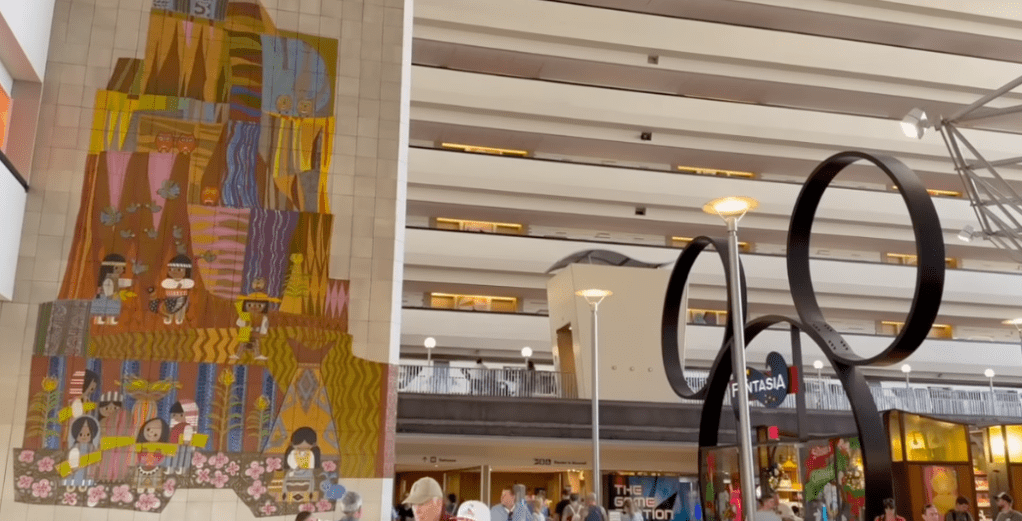
I prepared myself for this trip, knowing it would be my first time seeing the Rivers of America since its closure. My journey began at the Contemporary Hotel, where I parked. The walk from the hotel’s parking lot to the Magic Kingdom’s front gate is short and pleasant, providing an opportunity to enjoy the Contemporary’s inviting lobby. There is a wonderful coffee bar and striking artwork on the walls, and the cast members are always eager to share stories about the imagineers and the history behind the Contemporary Hotel’s creation.
The Contemporary Hotel: A Design Marvel
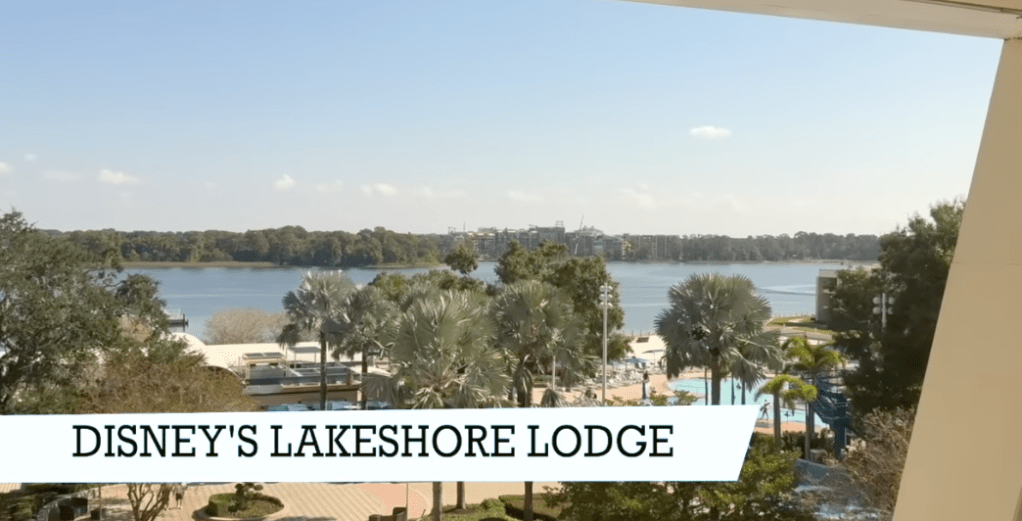
While facts and rumors often intermingle, it’s worth noting that US Steel played a significant role in the hotel’s groundbreaking design. In 1971, hotel atriums were not as commonplace as they are today, making the Contemporary truly ahead of its time. The galleries showcase artwork that reveals the thought process of the architects and designers, offering a rare glimpse into their creativity. The interior design remains stunning and timeless, and the views from the hotel are exceptional—especially the view of the new “Reflections” hotel, which now stands where Wilderness Lodge once was. Its scale is impressive, redefining what it means to be ‘huge,’ and its presence has permanently altered the skyline.
Entering the Magic Kingdom
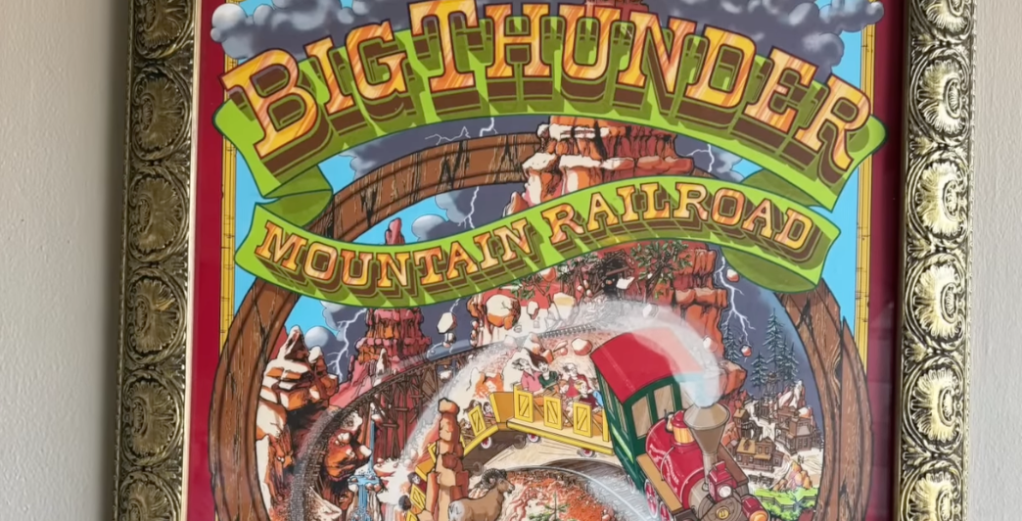
After admiring the Mary Blair mural on my way through the atrium, I made the short walk to the Magic Kingdom. The Main Street train station was festively decorated for the holidays, and I took time to appreciate the attraction posters inside. Personally, I favor the old silk screen posters for their evocative qualities over the newer digital prints, which, while functional, lack the same artistic impact.
Main Street USA and City Hall
Next, I proceeded to Main Street, USA. I recommend a visit to City Hall during your trip—the space is dark and quiet, staffed by knowledgeable cast members, and offers amenities such as a phone charging station and helpful literature. It’s a peaceful spot close to the hub, perfect for a quick break, especially if you’re with family. As a collector of Disney paper memorabilia, I always take a moment to thank the cast members for maintaining printed materials and for providing kid activity brochures, noting that many parks are transitioning to purely digital resources.
Window Displays and Liberty Square
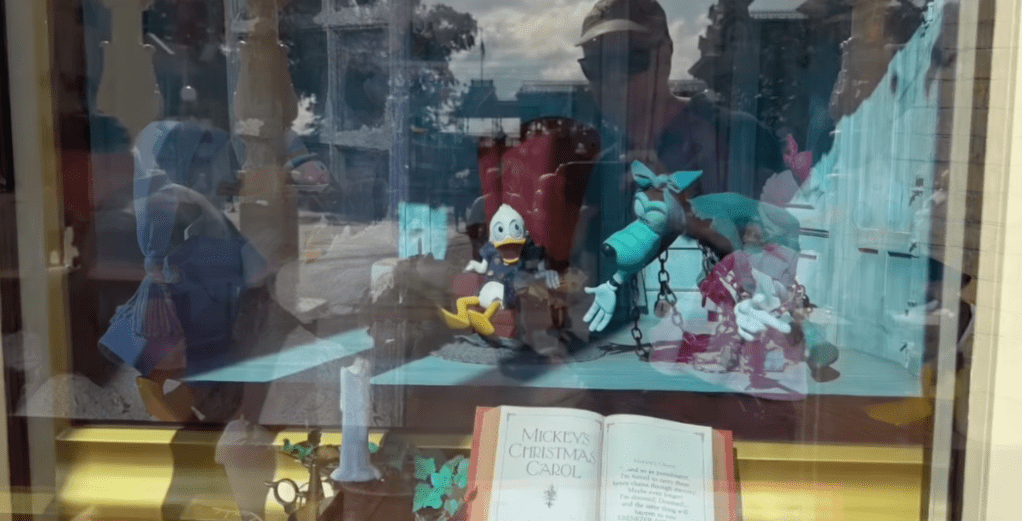
Outside, I enjoyed the ever-impressive window displays at the Emporium, though as a long-time Angelino, I still prefer Disneyland’s windows to those in Florida. Continuing to Liberty Square, I observed the windows where the Muppets have performed and noted the old steamboat loading dock, which is expected to become the future entrance to Cars Land. This new entryway will likely function similarly to the Adventureland portal in Caribbean Plaza that leads to Frontierland.
Observations on Construction and Change
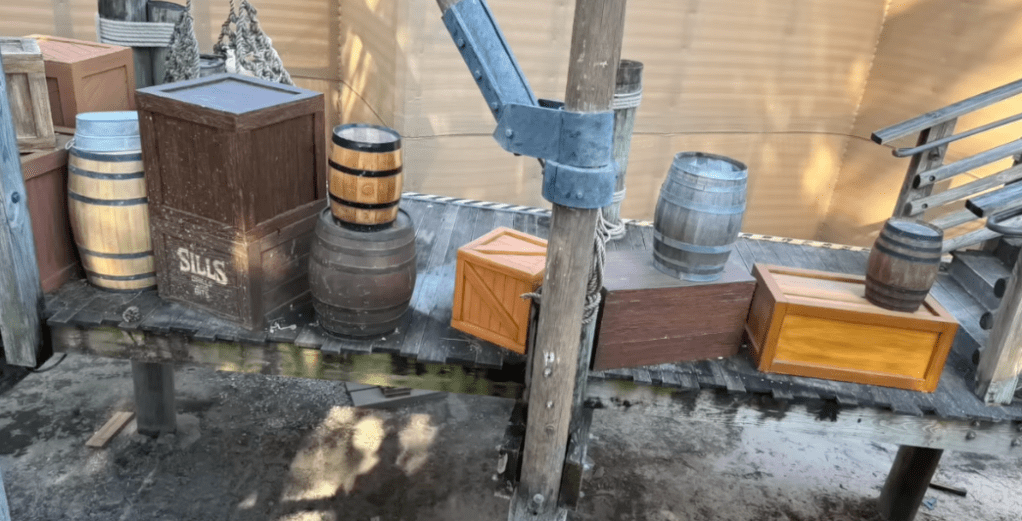
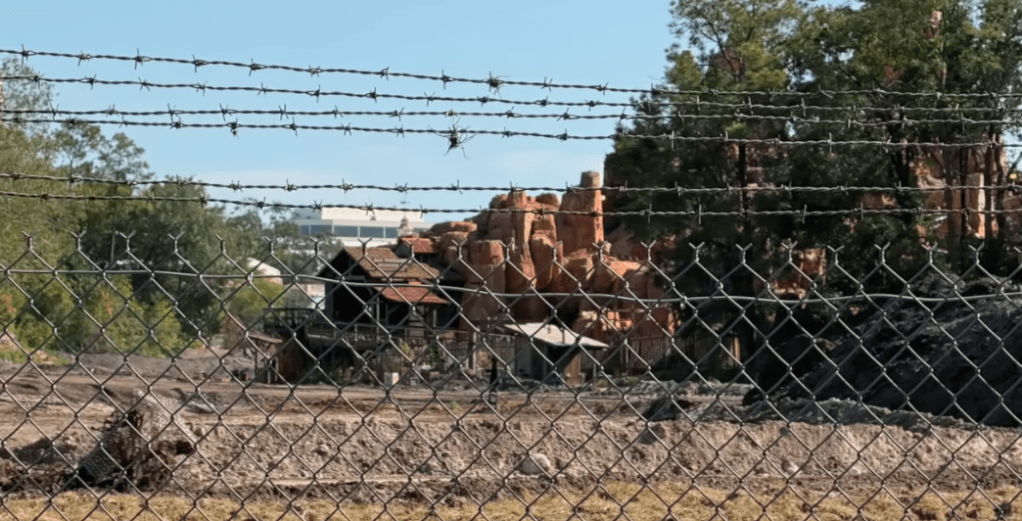
Throughout the park, construction walls are prevalent, each marked with the participant PPG’s stamp. Notable signage now warns guests about alligators and snakes. The drained river exposes the dock and, next to it, the reimagined Splash Mountain—now Bayou Adventure. The absence of water reveals raw concrete that was previously hidden, stripping away some of the old illusion. It’s unclear what will ultimately be done with this area, but it remains a work in progress.
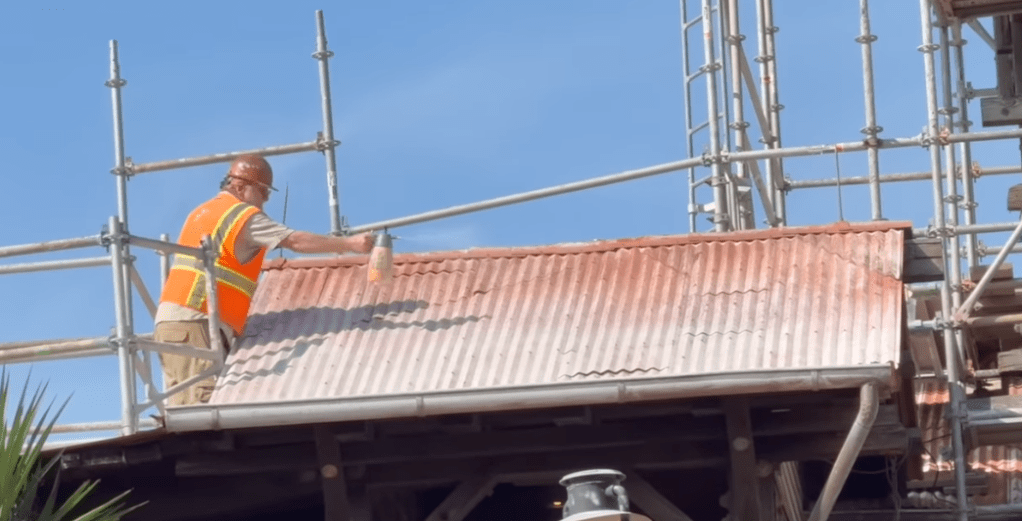
My walk was limited because access to the land near Thunder Mountain was restricted, but I did witness an Imagineer skillfully aging pristine metal roofing to make it look authentically rusted, a fascinating display of scenic artistry.
Dining Experiences in Adventureland
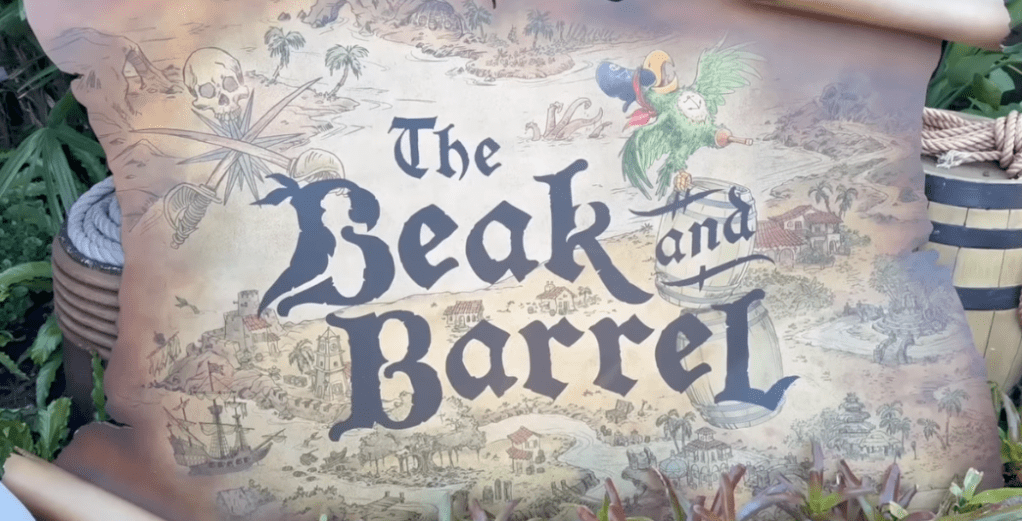
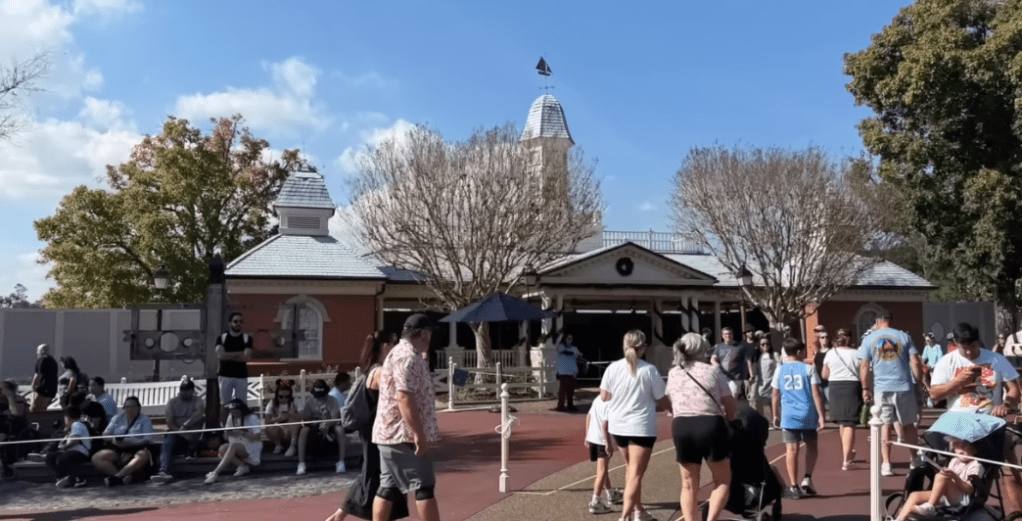
Adventureland has introduced a range of new dining options in recent years, from the Orange Bird to Club 33. The latest addition, the Beak and Barrel, requires a reservation but is well worth the effort. Inside, the atmosphere is intimate and richly detailed, with cast members in character and a varied menu. Guests are allotted 45 minutes, making for a brief but memorable experience that beautifully ties into the adjacent ride. The Imagineers have truly excelled in their storytelling through the restaurant’s design.
Transitional Spaces and Hidden Details
Just outside, the entrance from Caribbean Plaza into Frontierland illustrates how the old boat dock in Liberty Square might serve as a future portal for Cars Land. Back at the hub, I noticed an alleyway intended for a major attraction that never materialized, and the presence of a less-than-ideal fall protection wall.
I always make a point to visit the Leaky Tikis, unique to Florida (with counterparts in Hong Kong Disneyland), and enjoy interacting with these playful features—they’re a source of lighthearted fun.
The Scope of the Transformation
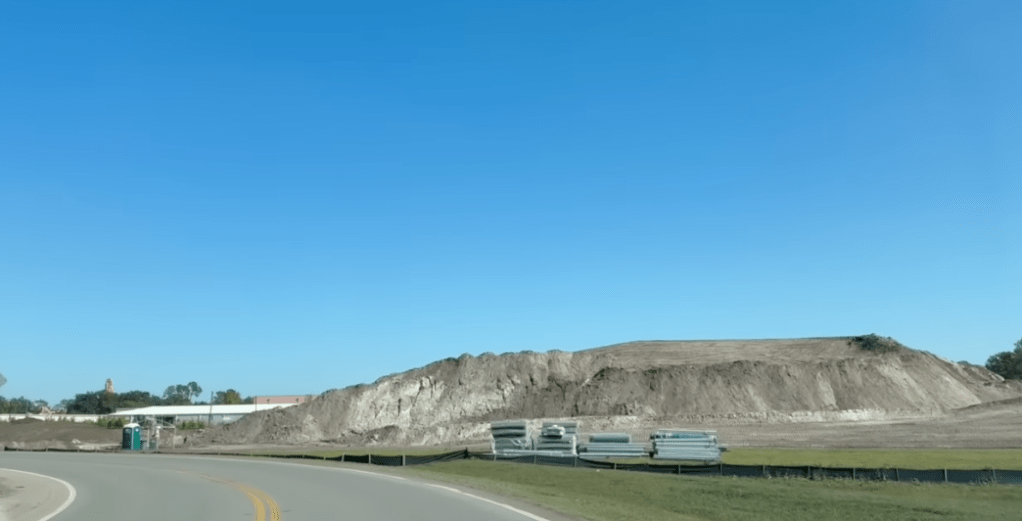
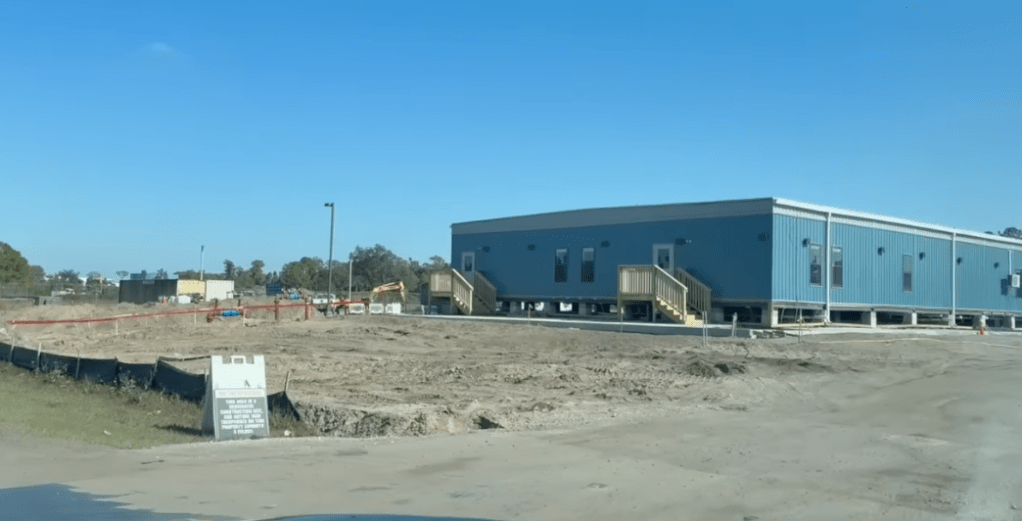
One of the most striking changes is the drained river and the removal of a significant portion of the forest. Although construction on Cars Land or Villains Land has not officially begun, site clearing is underway. This phase reveals unexpected aspects of the land and marks the beginning of a massive, complex transformation.
Driving along the public road nearby, I was reminded of how the landscape has changed over decades. Once a secluded, tree-lined country road, it now feels open and exposed, with visible signs of ongoing development. The presence of construction trailers for the teams and Imagineers hints at the longevity and scale of the project—anticipated to last five to seven years, though no official schedule has been released. The area behind the trailers is rapidly evolving, with Bayou Adventure taking shape and significant laydown areas established for contractors.
From above, the dramatic reduction in tree cover underscores the permanent impact of these changes. The view now stretches from the canal, past the railroad and Thunder Mountain, all the way to the Contemporary Hotel. It’s a landscape in flux, one that will continue to change and shape the Magic Kingdom experience for years to come.
Conclusion
With this visit to the Magic Kingdom complete, this episode draws to a close. Stay tuned for new episodes soon. In the meantime, check out the show notes, subscribe, like, share the content with friends, and consider supporting the channel as a member to help it thrive. Until next time, this is goodbye from Lost Canyon.