Disney Journey Transcript Show #89

Exploring the Magic Kingdom: A Firsthand Account

Welcome to Disney Journey. As many are already aware, the Rivers of America in the Magic Kingdom have closed for a major project that has been underway for several months. Now, the scale and magnitude of this transformation are fully apparent, and this episode is dedicated to exploring those changes in detail.

Arrival and First Impressions

I prepared myself for this trip, knowing it would be my first time seeing the Rivers of America since its closure. My journey began at the Contemporary Hotel, where I parked. The walk from the hotel’s parking lot to the Magic Kingdom’s front gate is short and pleasant, providing an opportunity to enjoy the Contemporary’s inviting lobby. There is a wonderful coffee bar and striking artwork on the walls, and the cast members are always eager to share stories about the imagineers and the history behind the Contemporary Hotel’s creation.

The Contemporary Hotel: A Design Marvel

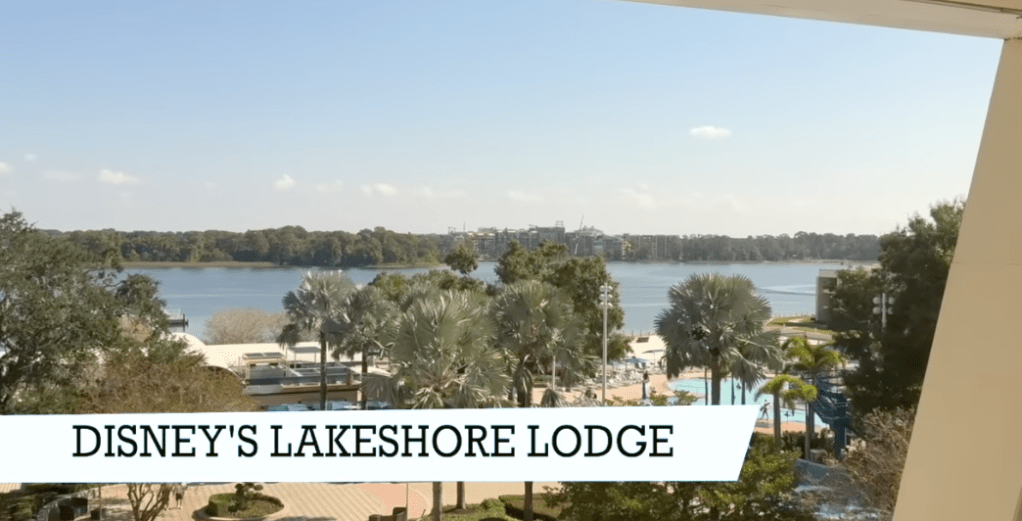
While facts and rumors often intermingle, it’s worth noting that US Steel played a significant role in the hotel’s groundbreaking design. In 1971, hotel atriums were not as commonplace as they are today, making the Contemporary truly ahead of its time. The galleries showcase artwork that reveals the thought process of the architects and designers, offering a rare glimpse into their creativity. The interior design remains stunning and timeless, and the views from the hotel are exceptional—especially the view of the new “Reflections” hotel, which now stands where Wilderness Lodge once was. Its scale is impressive, redefining what it means to be ‘huge,’ and its presence has permanently altered the skyline.

Entering the Magic Kingdom

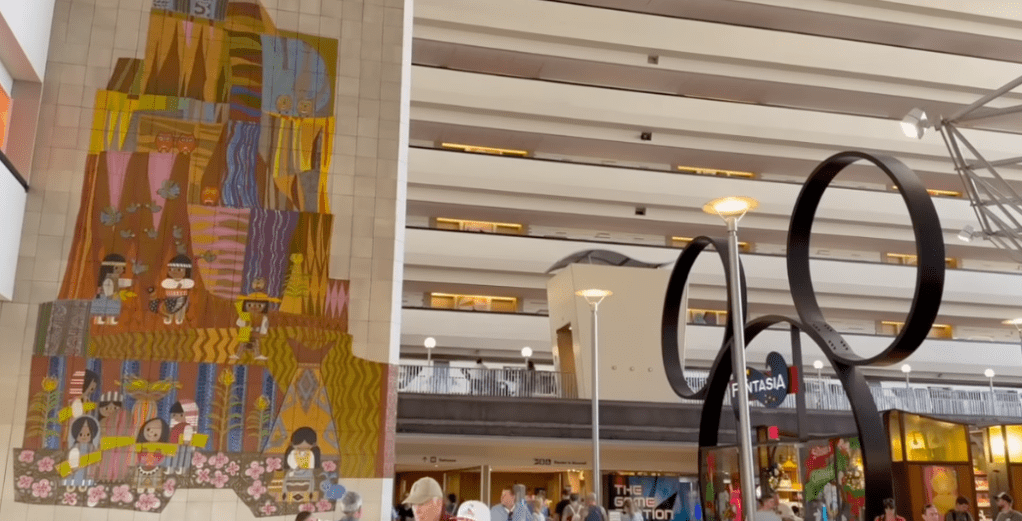
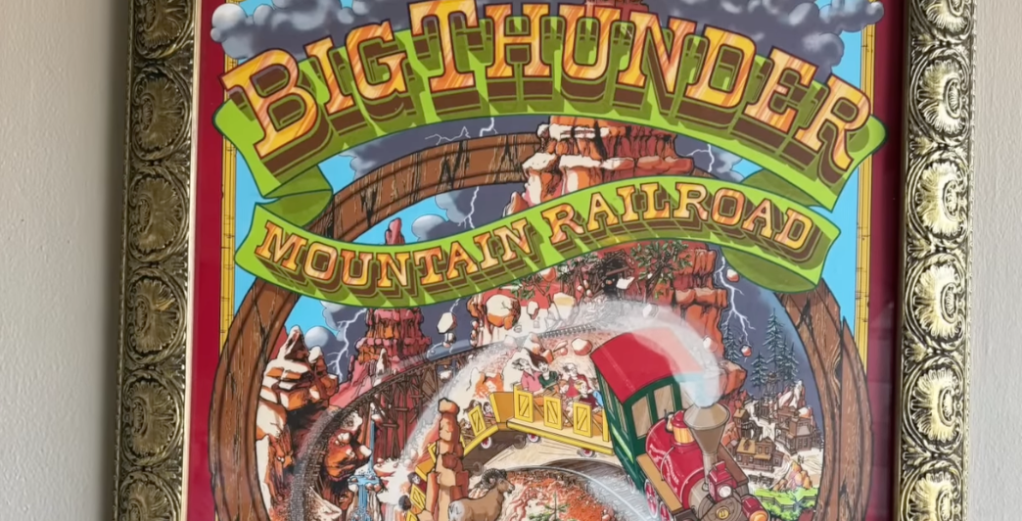
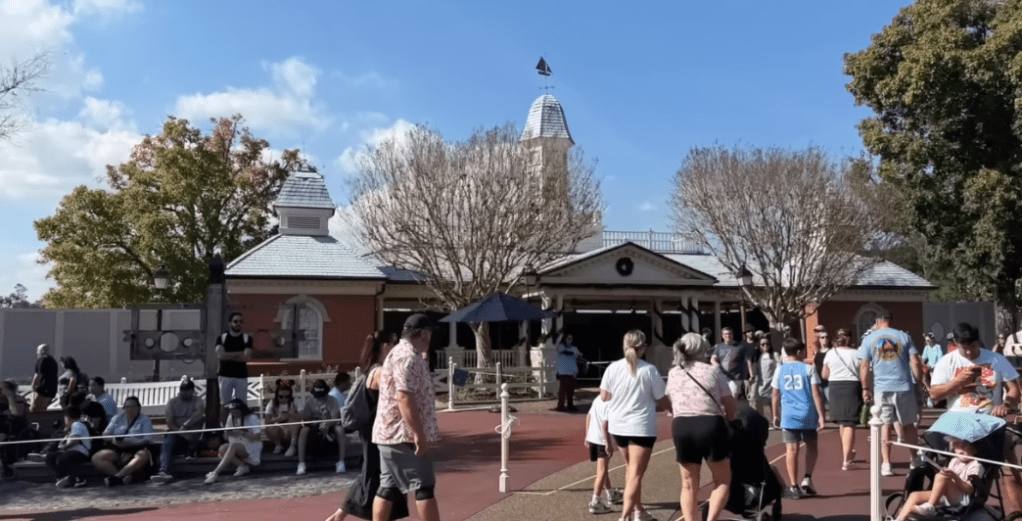
After admiring the Mary Blair mural on my way through the atrium, I made the short walk to the Magic Kingdom. The Main Street train station was festively decorated for the holidays, and I took time to appreciate the attraction posters inside. Personally, I favor the old silk screen posters for their evocative qualities over the newer digital prints, which, while functional, lack the same artistic impact.

Main Street USA and City Hall

Next, I proceeded to Main Street, USA. I recommend a visit to City Hall during your trip—the space is dark and quiet, staffed by knowledgeable cast members, and offers amenities such as a phone charging station and helpful literature. It’s a peaceful spot close to the hub, perfect for a quick break, especially if you’re with family. As a collector of Disney paper memorabilia, I always take a moment to thank the cast members for maintaining printed materials and for providing kid activity brochures, noting that many parks are transitioning to purely digital resources.

Window Displays and Liberty Square

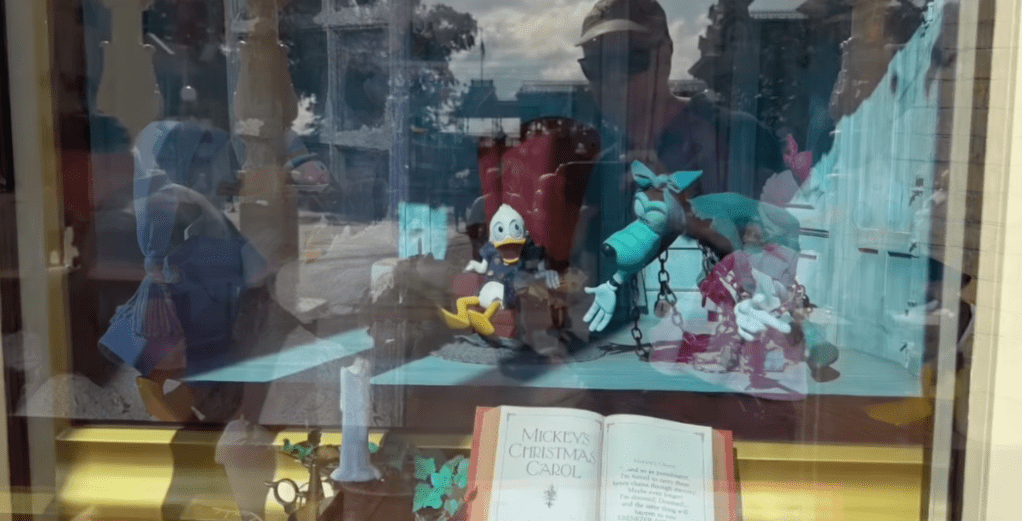
Outside, I enjoyed the ever-impressive window displays at the Emporium, though as a long-time Angelino, I still prefer Disneyland’s windows to those in Florida. Continuing to Liberty Square, I observed the windows where the Muppets have performed and noted the old steamboat loading dock, which is expected to become the future entrance to Cars Land. This new entryway will likely function similarly to the Adventureland portal in Caribbean Plaza that leads to Frontierland.

Observations on Construction and Change

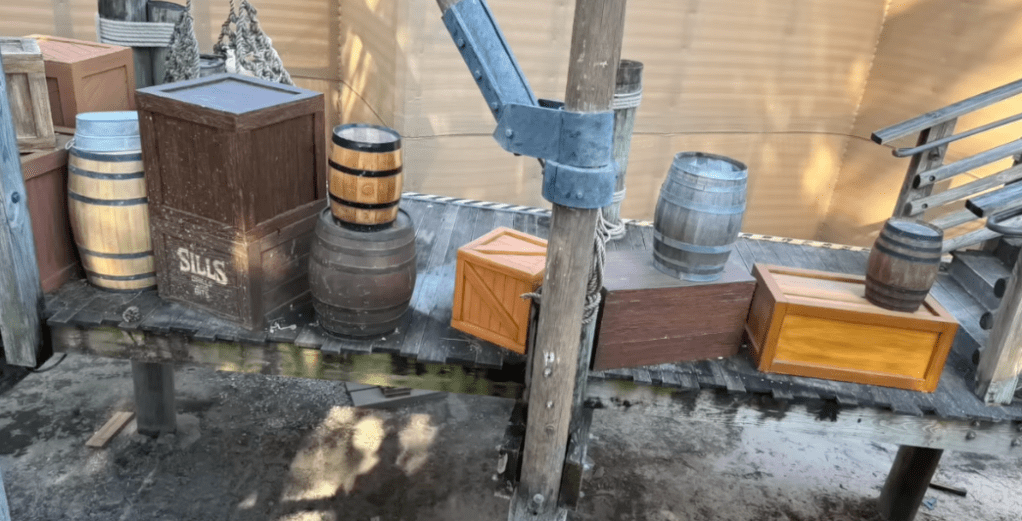
Throughout the park, construction walls are prevalent, each marked with the participant PPG’s stamp. Notable signage now warns guests about alligators and snakes. The drained river exposes the dock and, next to it, the reimagined Splash Mountain—now Bayou Adventure. The absence of water reveals raw concrete that was previously hidden, stripping away some of the old illusion. It’s unclear what will ultimately be done with this area, but it remains a work in progress.

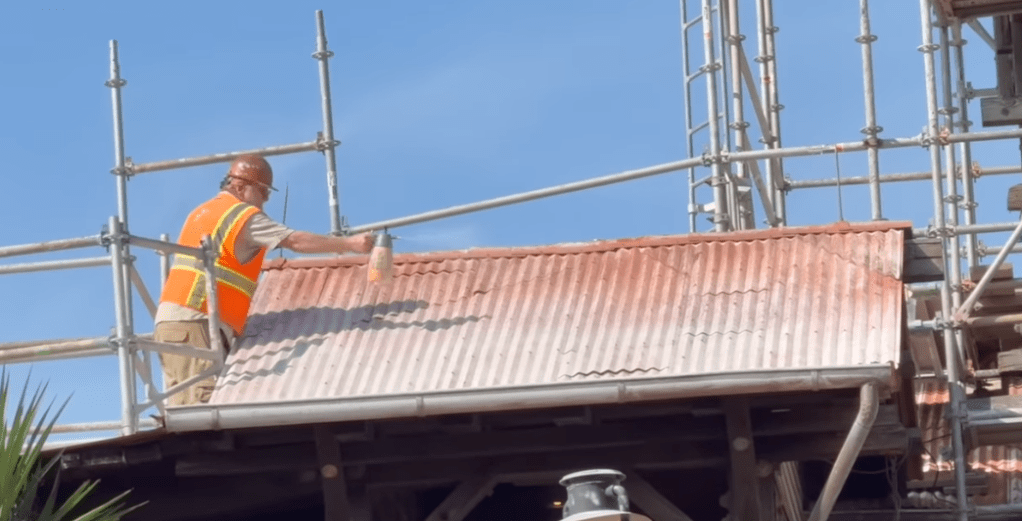
My walk was limited because access to the land near Thunder Mountain was restricted, but I did witness an Imagineer skillfully aging pristine metal roofing to make it look authentically rusted, a fascinating display of scenic artistry.

Dining Experiences in Adventureland

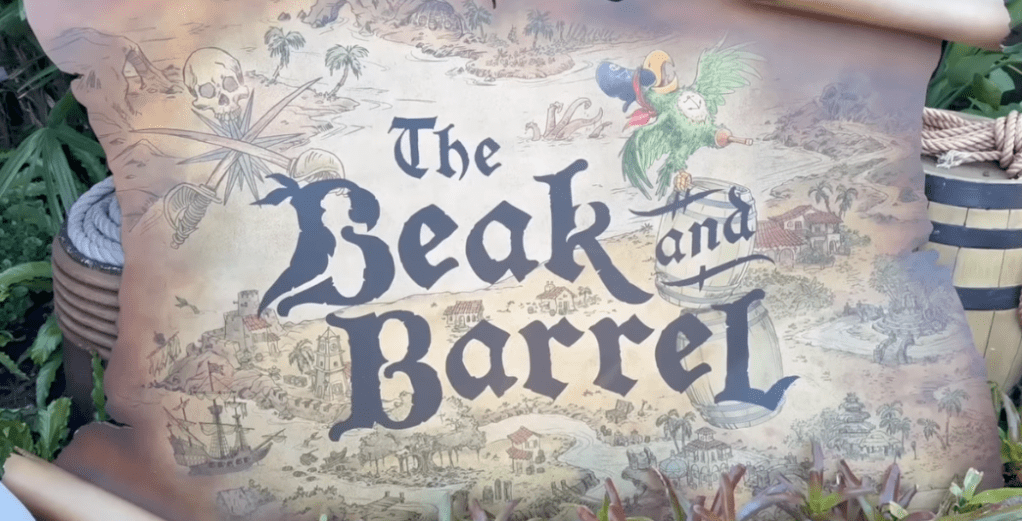
Adventureland has introduced a range of new dining options in recent years, from the Orange Bird to Club 33. The latest addition, the Beak and Barrel, requires a reservation but is well worth the effort. Inside, the atmosphere is intimate and richly detailed, with cast members in character and a varied menu. Guests are allotted 45 minutes, making for a brief but memorable experience that beautifully ties into the adjacent ride. The Imagineers have truly excelled in their storytelling through the restaurant’s design.

Transitional Spaces and Hidden Details

Just outside, the entrance from Caribbean Plaza into Frontierland illustrates how the old boat dock in Liberty Square might serve as a future portal for Cars Land. Back at the hub, I noticed an alleyway intended for a major attraction that never materialized, and the presence of a less-than-ideal fall protection wall.

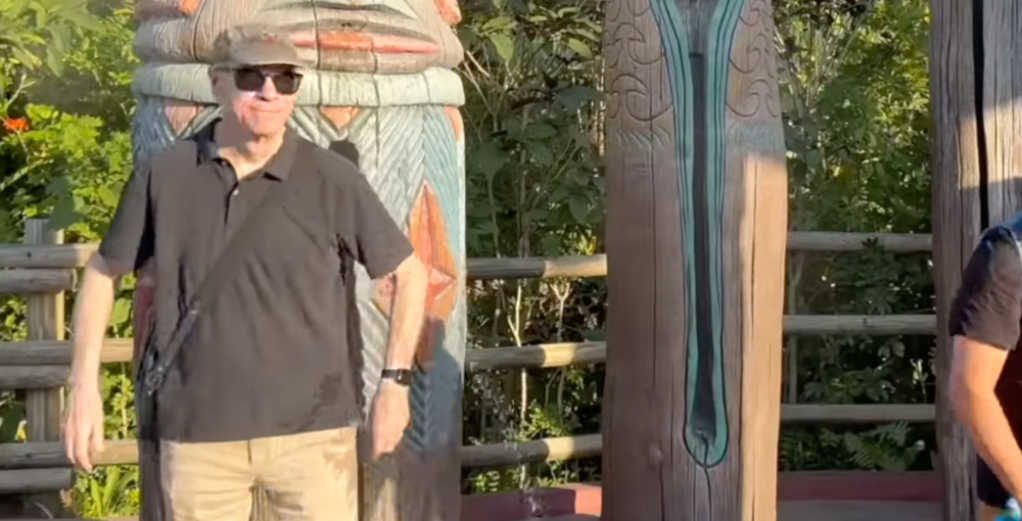
I always make a point to visit the Leaky Tikis, unique to Florida (with counterparts in Hong Kong Disneyland), and enjoy interacting with these playful features—they’re a source of lighthearted fun.

The Scope of the Transformation

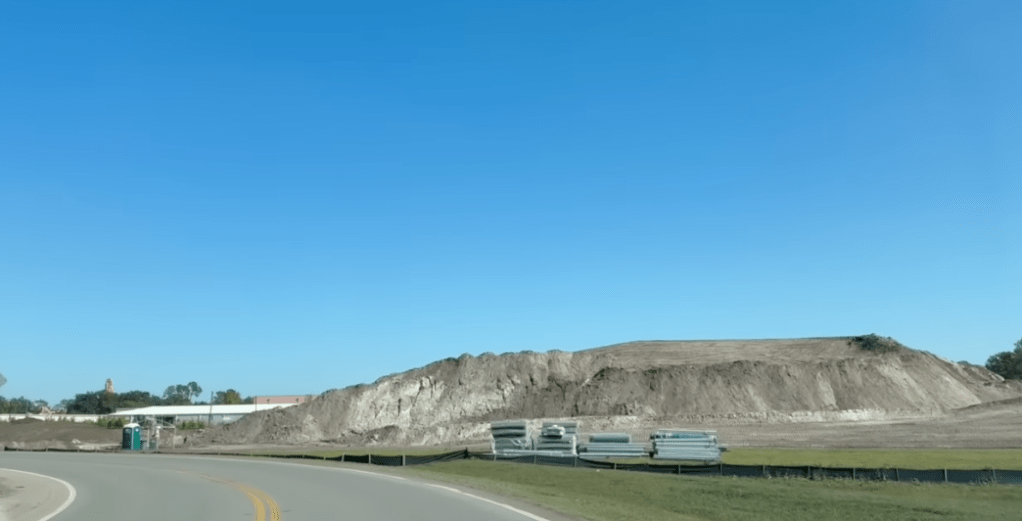
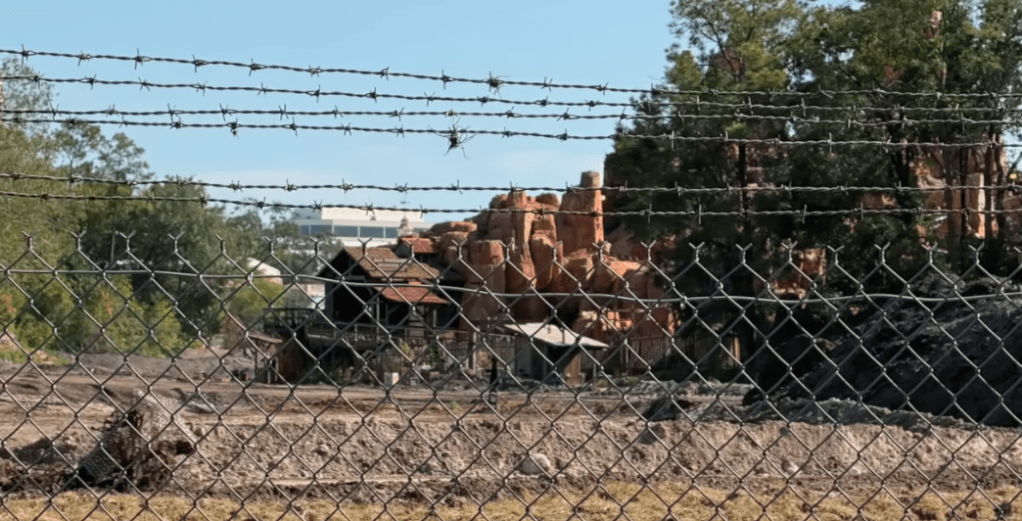
One of the most striking changes is the drained river and the removal of a significant portion of the forest. Although construction on Cars Land or Villains Land has not officially begun, site clearing is underway. This phase reveals unexpected aspects of the land and marks the beginning of a massive, complex transformation.

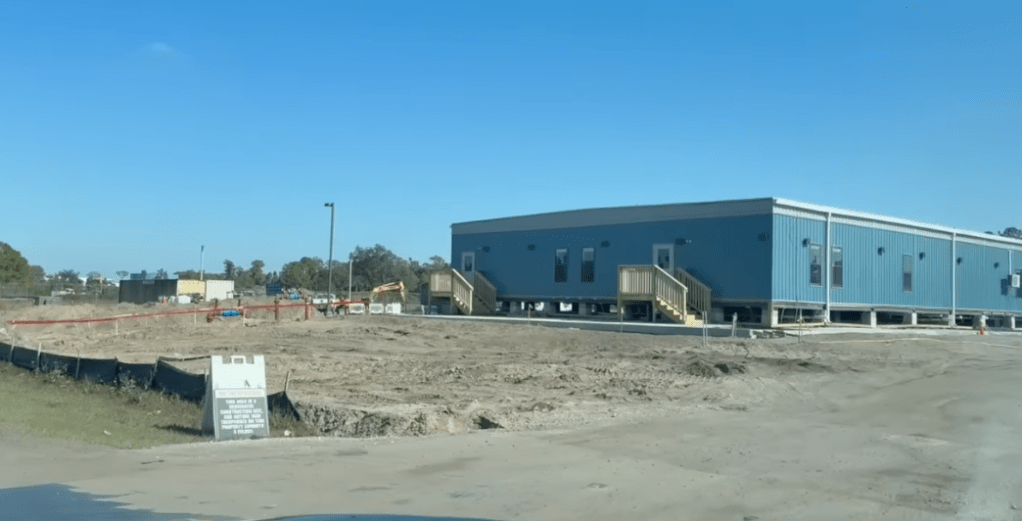
Driving along the public road nearby, I was reminded of how the landscape has changed over decades. Once a secluded, tree-lined country road, it now feels open and exposed, with visible signs of ongoing development. The presence of construction trailers for the teams and Imagineers hints at the longevity and scale of the project—anticipated to last five to seven years, though no official schedule has been released. The area behind the trailers is rapidly evolving, with Bayou Adventure taking shape and significant laydown areas established for contractors.

From above, the dramatic reduction in tree cover underscores the permanent impact of these changes. The view now stretches from the canal, past the railroad and Thunder Mountain, all the way to the Contemporary Hotel. It’s a landscape in flux, one that will continue to change and shape the Magic Kingdom experience for years to come.

Conclusion

With this visit to the Magic Kingdom complete, this episode draws to a close. Stay tuned for new episodes soon. In the meantime, check out the show notes, subscribe, like, share the content with friends, and consider supporting the channel as a member to help it thrive. Until next time, this is goodbye from Lost Canyon.

Theory of First Costs

Buildings cost money and buildings that appear to be a part of a themed environment cost even more money.  The jobs of Project Managers rest on the foundation that they deliver projects on time and on budget, so PMs are inspired to find ways to reduce costs wherever possible.  If they go over budget or a project opens late, they may not manage another project.

Not everything is in the control of a Project Manager such as when a natural disaster increases the cost of building materials due to demand, or when a ride system fails to preform and has to be rebuilt.  These are uncommon, but when the project mandate is building a mountain, then a mountain they shall build. That is the goal for the project.

Splash Mountain is an example of a building that appears to be a mountain.

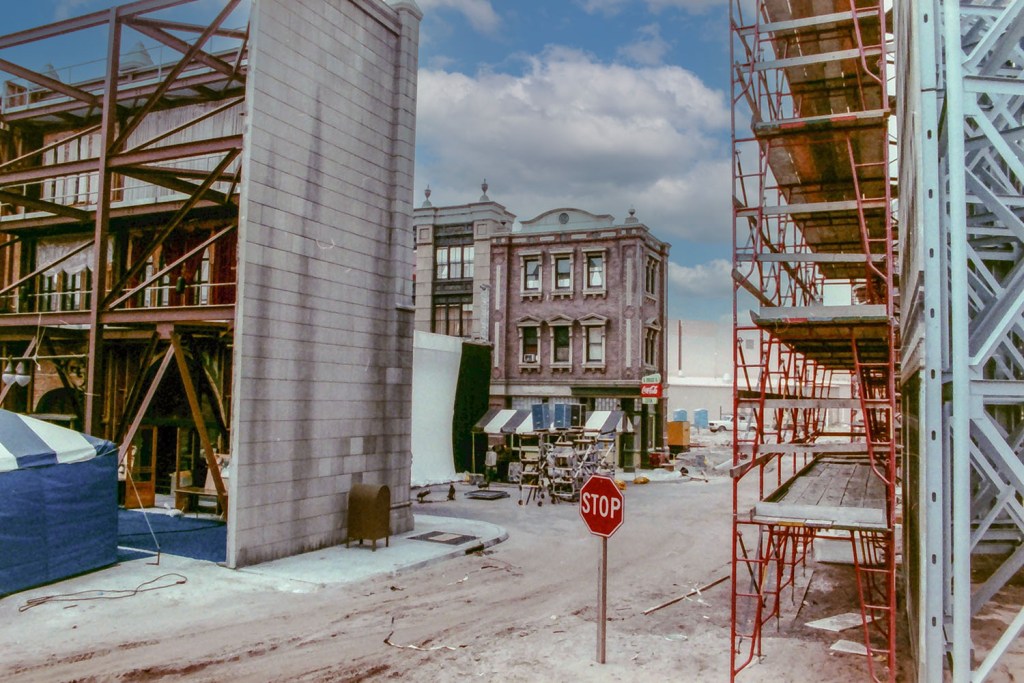
But there was a popular trend starting in the late 1980s that resulted in not building mountains but building movie studio soundstages and back lot set walls.  The Disney MGM Studios at Walt Disney World was the Disney Park that led the way because a simple box instead of an immersive environment could be built which was acceptable because simple construction meant the story conceit.  If guests were asked what they were seeing the answer was ‘it’s a soundstage’, and soundstage are simple boxes and boxes are cheap and fast to build.  The finished project achieves its objectives and general happiness results.

Backlot street at the Disney MGM Studios Walt Disney World.

But the ‘first cost’ often isn’t the ‘final cost’.  

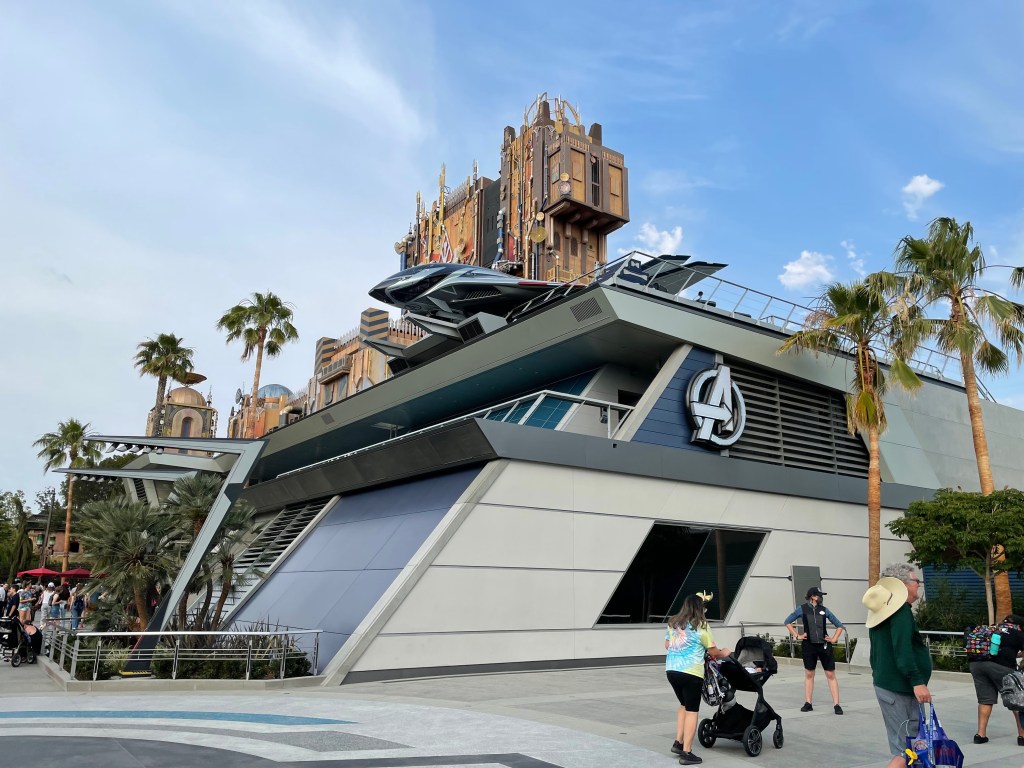
Due to the fact that the simple box is limited, inflexible, and expensive there are costs for changes and modifications driven by future projects.  This is what we are seeing now in Anaheim with the expansion of ‘Avengers Campus’ at Disney California Adventure.  The simple wall with the mounted Avengers Quinn jet and the opening was built to accommodate the Red Car ride.  But to build the expansion of Avengers Campus, the Red Car maintenance barn has been demolished.  What was built originally was ‘just enough’ with no solid plans for future modifications and revisions. Should the existing retail shop become part of a new project there could costs, and the costs fall to the next Project Team.

Looks like a building but its not (Avengers Campus DCA).

The rule of first vs second costs is applied to entire Disney Parks.  For example, when Hong Kong Disneyland and Walt Disney Studios Park opened, both were half day parks.  Over the years new rides were built and lands added at a cost greater than if they had been built originally.

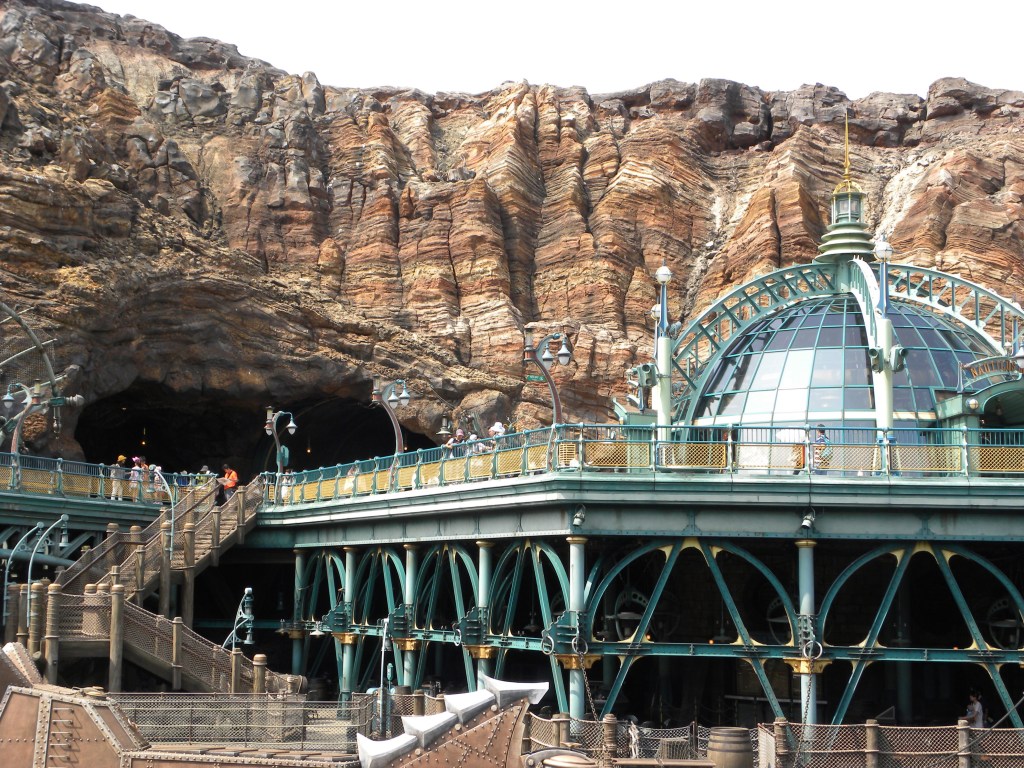
20K ride at Tokyo Disney Sea.

In fairness sometimes there are second costs incurred due to guests opinions and dissatisfaction, such as when the 20k ride at Tokyo Disney Sea was redesigned with a new show.  So, the ‘bean counters’ aren’t always at fault.  Sometimes but not always.  It’s an artful skill to balance the risks and needs of projects to succeed not fail, deliver on time and not late, and stay on budget while not going broke.  Writing as someone who has been in the war trenches, I confirm it is not an easy or simple task.

“Walt Disney, A Magical Life” Thoughts

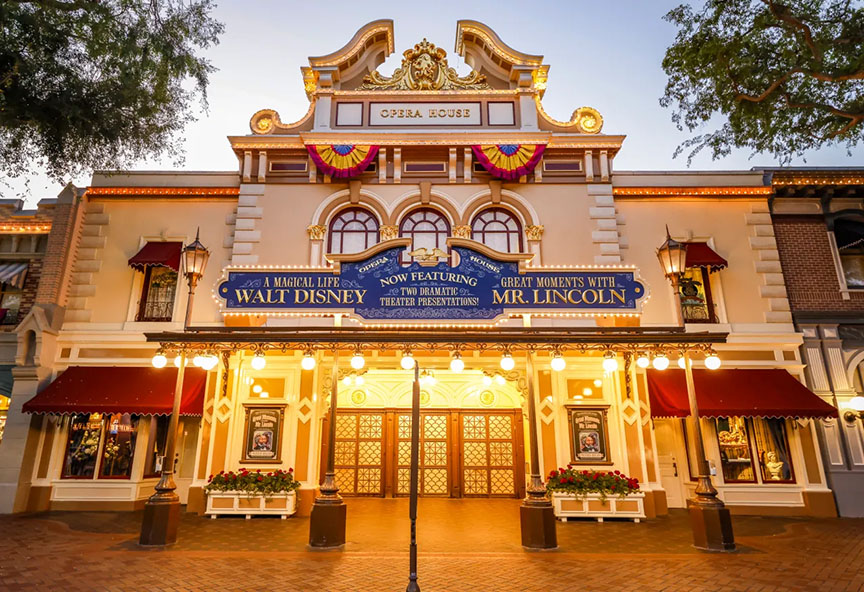
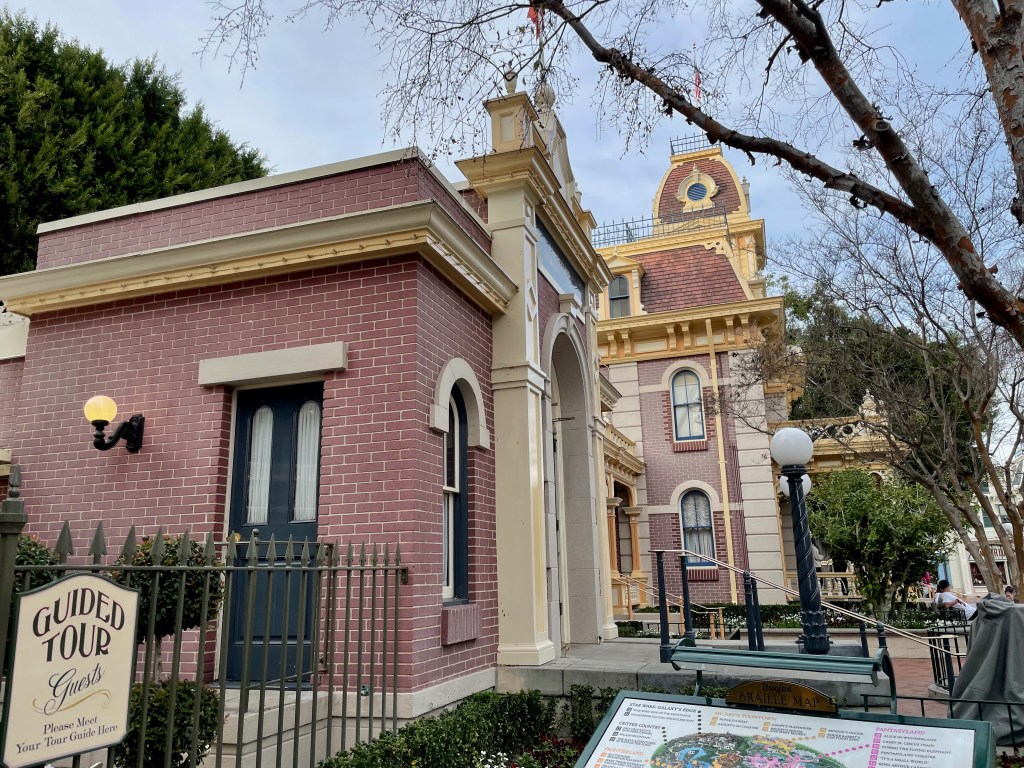
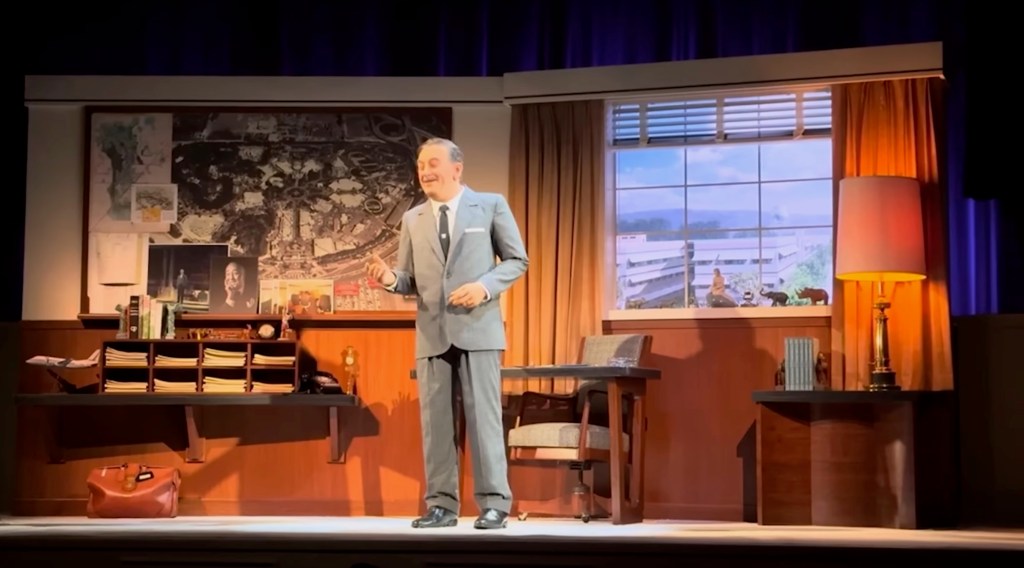
Disneyland is the first Disney Park and the only one that Walt Disney lived to visit, and even sleep in.  I’ve visited his tiny apartment located above the Fire Station with its even tinier bathroom and its really tiny shower.  It looked like any shower plan involved walking into and then backing out of the compartment.   Walt’s apartment is located across Town Square, and the main windows look out toward the Opera House where the new show honoring Walt has opened.  “Walt Disney, A Magical Life” celebrates both the man and his work and it is timely because there is generation who is not all that familiar with the man or his work.

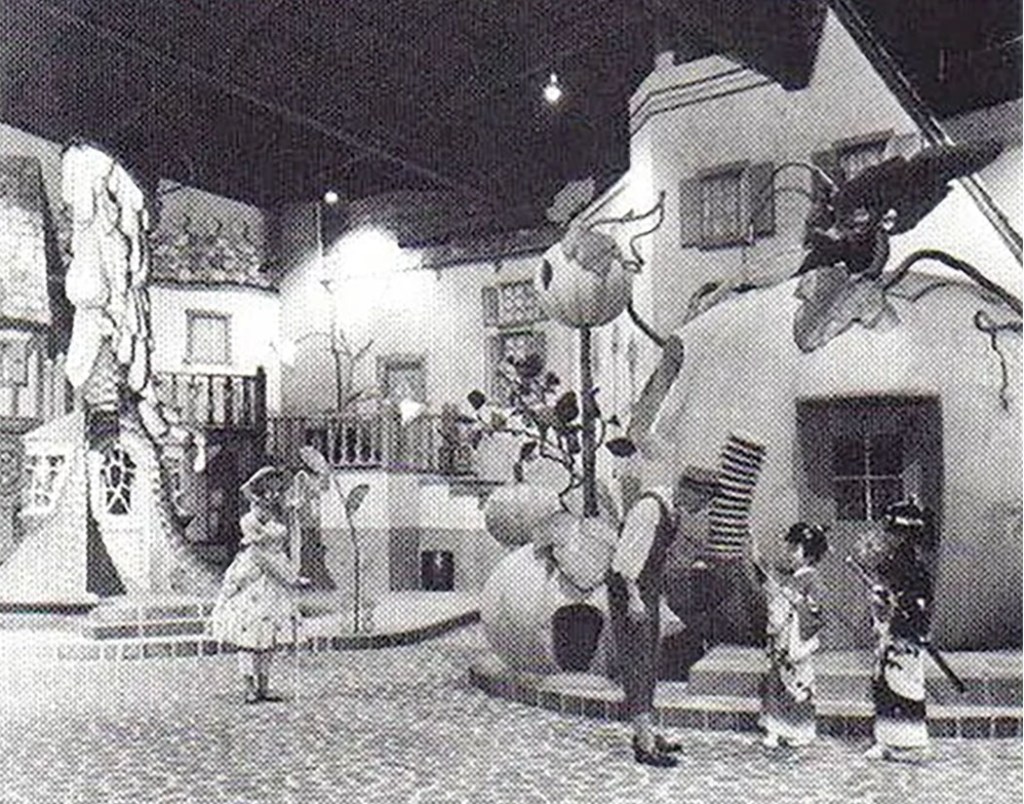
The Disneyland Opera House has had several different lives.  Built as a lumber mill and carpentry shop, it then showcased sets from the Disney film “Babes in Toyland”.  Next came the Lincoln show that premiered at the 1964 World’s Fair which went through changes and revisions over decades.  The changes occurred while the Disneyland telephone switchboard team worked on the floor above the man from Illinois.

Babes in Toyland movie sets in the Opera House on Main Street Disneyland

President Lincoln was nearly replaced by the Muppets and was replaced for a time for the film “The Walt Disney Story”, which didn’t last long in the Opera House.

The Walt Disney Story on Main Street.

I have experience creating a show celebrating Mr. Disney because I was the Creative Lead for “One Man’s Dream”, which was part of the ‘100 Years of Magic” celebration at Walt Disney World.  During the design and production, I discovered that delivering a show about Walt Disney is harder than it might appear.  Everyone has their memory of Walt and people soon started picking at the show presented.  

The new show in Disneyland employes advanced figure animation, projection technology and important exhibits, but as with the earlier shows about Walt people have found fault.  “The sound is odd, the face is too fat, and the mustache is too thick” are among the comments.  

The guests making the comments are both correct and wrong in their opinions, and the company Walt and his brother founded will need to accept that this show is an example of the old adage that you can’t please everyone.  Sometimes you can’t please anyone, but congratulations are due to the team at Imagineering for trying.