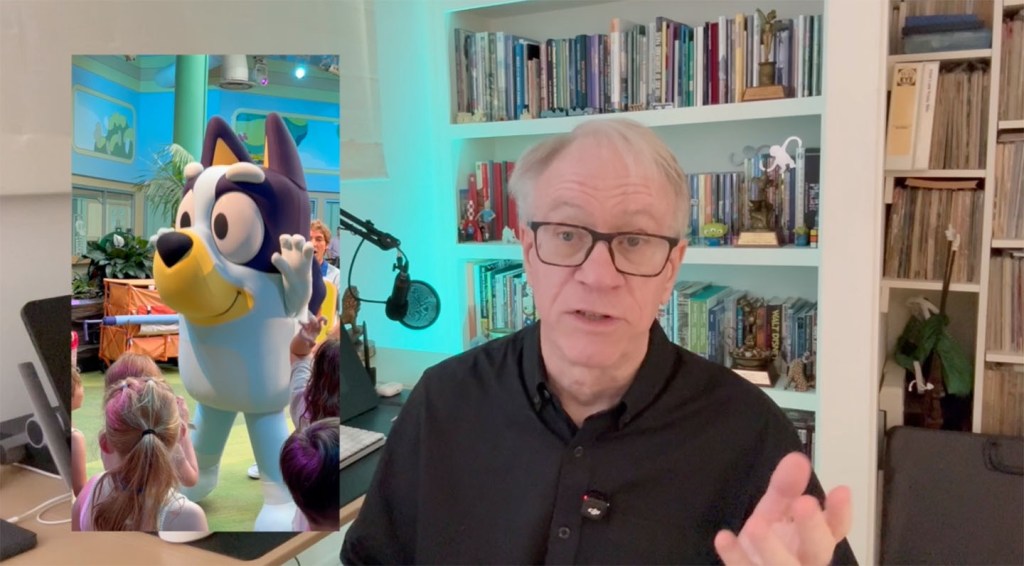
What links Walt Disney and Bluey? Both connect to dancing, though in very different settings. More importantly, both reflect Disney’s long use of adaptive reuse. Across the parks, buildings have often taken on new purposes over time. In Tomorrowland, for example, the Monsanto Hall of Chemistry eventuallybecame Star Tours. Spaces like these may start as temporary solutions, but they can last far beyond their planned end dates when they continue to serve a useful purpose. Spaces like these are examples of ‘Adaptive Reuse’ in the Disney Parks.
Why This Happens
Entertainment offerings are usually cheaper than building new rides.
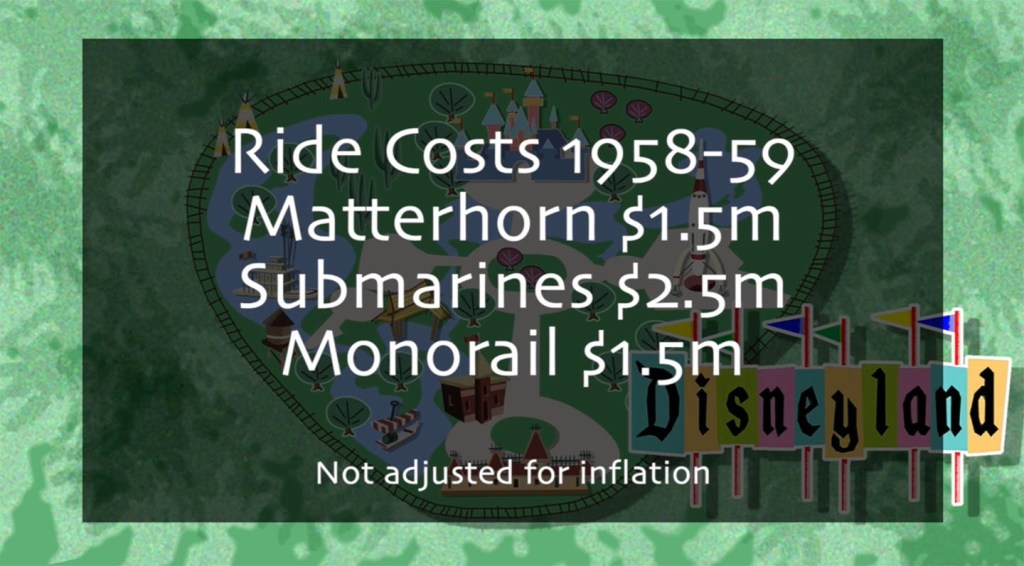
Cost of expanding Disneyland in 1958 – 1959:
- Matterhorn Bobsleds — $1.5 million
- Submarine Voyage — $2.5 million
- Disneyland Monorail — $1.5 million
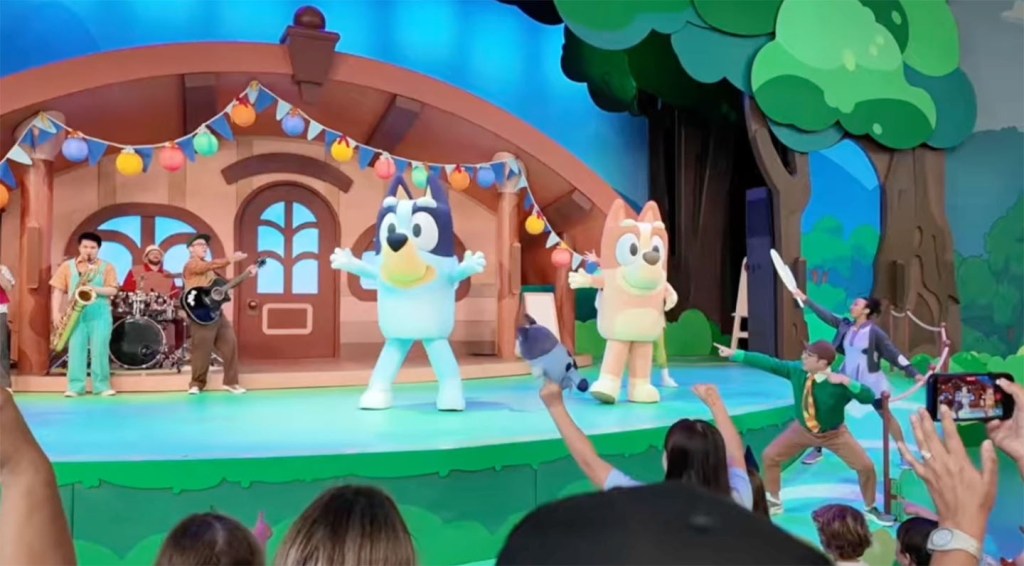
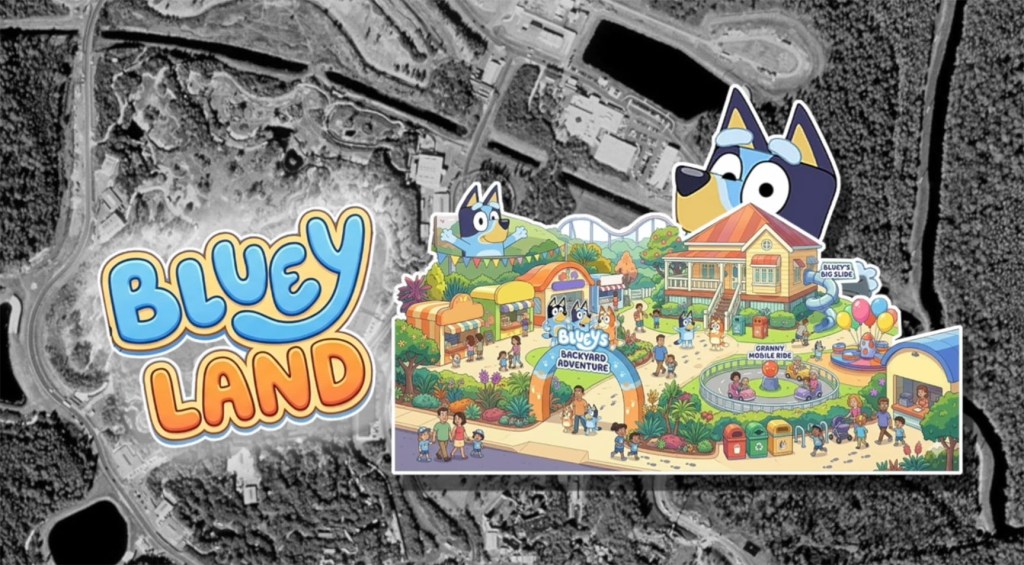
At Disney parks, rides require major investment, while entertainment can often be added at a lower cost. That makes flexibility valuable. The Hall of Chemistry, for example, became Adventure Through Inner Space and later Star Tours. When attractions such as the Matterhorn, Submarine Voyage, and Monorail cost millions to build, reusing existing spaces helps Disney stretch its resources. It also lets the parks react quickly when something unexpected becomes popular. Bluey shows how this can happen: although Disney does not own the property, the character found a place in the parks, became a hit, and began reshaping the surrounding space. At Disneyland, Bluey now uses the former Fantasyland Theater, a site that was once Videopolis and, before that, open land visible from the train.
Here are several examples.
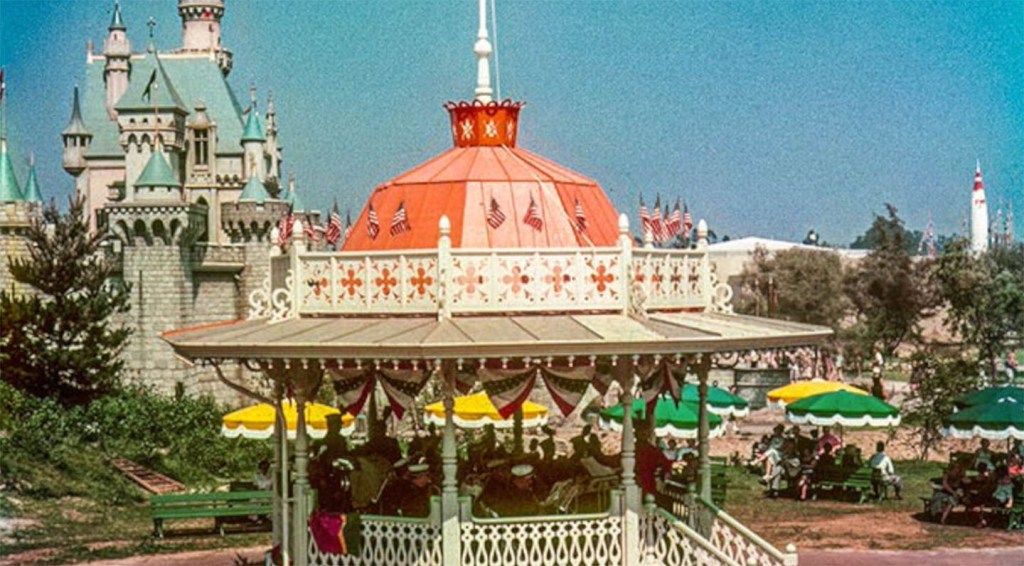
- Carnation Gardens
Carnation Gardens opened as a popular venue for swing dancing and big-band performances, and Walt Disney himself was known to dance there. Though originally labeled temporary, it lasted for decades. Today, the area is Fantasy Faire, and the former theater space is the Fantasy Faire Theatre.
- Videopolis in Disneyland California
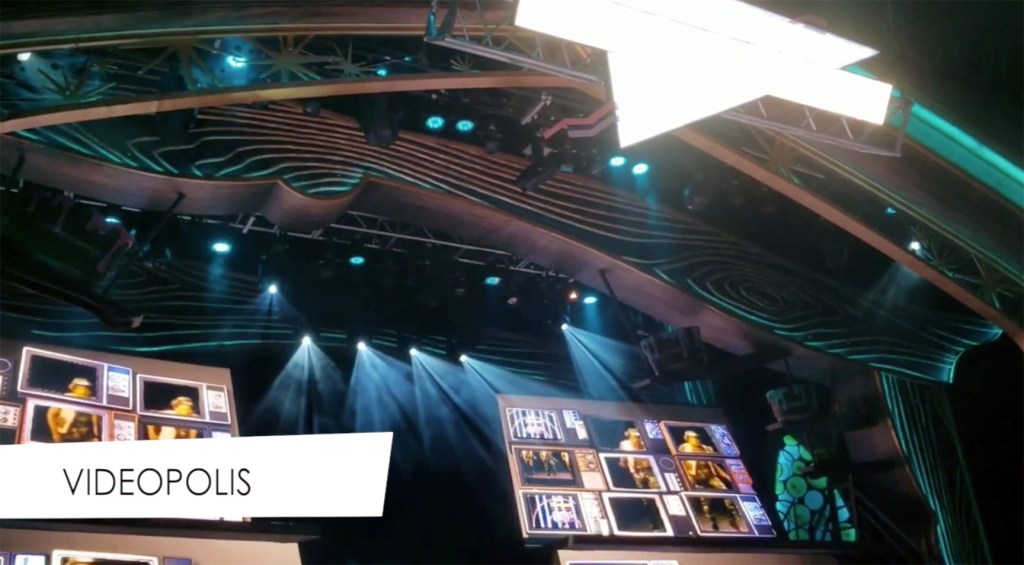
Videopolis opened behind Fantasyland on June 22, 1985. Located near “it’s a small world,” the $3 million outdoor venue included a 5,000-square-foot dance floor and 70 video monitors. By day, it served as a performance stage; at night, it became a high-tech teen dance club.
The club was popular, but it didn’t last.
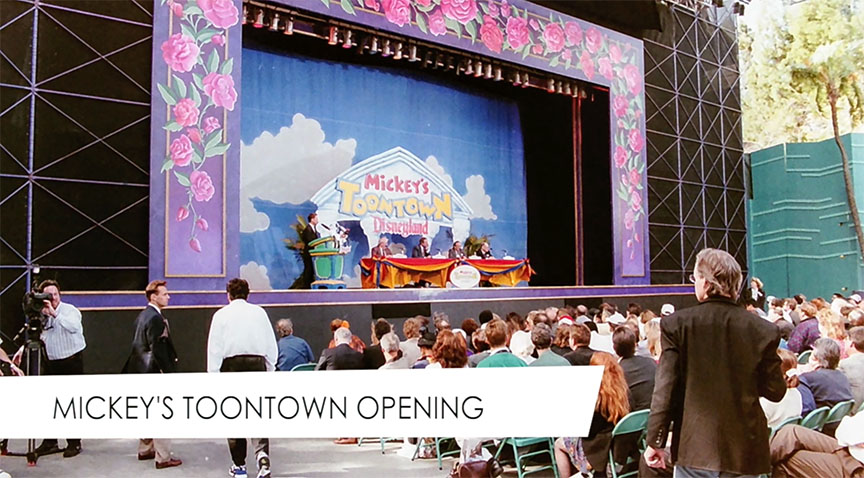
The dance-club era ended in 1989, but the venue continued hosting daytime shows. On June 23, 1995, it was officially renamed the Fantasyland Theater.
- Notable Fantasyland Theater productions include:
- Tale of the Lion King (2022–2024): A vibrant, story-theater adaptation of The Lion King featuring a traveling troupe of storytellers.
- Mickey and the Magical Map (2013–2020): A visually stunning stage show where Mickey Mouse interacted with various Disney characters through a magical, living map.
- Princess Fantasy Faire (2006–2012): A royal, interactive meet-and-greet and stage presentation featuring Disney royalty.
- Snow White: An Enchanting Musical (2004–2006): A Broadway-style adaptation of the classic animated film.
- Animazment – The Musical (1998–2001): A Broadway-style revue celebrating classic Disney animated films.
- The Spirit of Pocahontas (1995–1997): A live musical stage retelling of the 1995 animated film.
The land that became Videopolis was once outside Disneyland, across Winston Road. When the park opened, Disneyland sat south of the road; the land to the north was outside the park. As Disneyland expanded with “it’s a small world” and the railroad area, that land was absorbed but remained vacant for a time, visiblefrom the train as future development space. When Michael Eisner and Frank Wells wanted a quick new offering, the empty site became Videopolis, a teen dance club built on a fast timeline.
A second Videopolis opened in Discoveryland at Disneyland Paris, combining a theater, dining, and, at one time, interactive displays for sponsor Philips.
Key details
Videopolis included a 5,000-square-foot dance floor, 70 television monitors showing popular music videos, and live performers such as Debbie Gibson, Janet Jackson, and New Kids on the Block.
After Videopolis closed, the space became Fantasyland Theater. Over time, Disney added the equipment, roofing, and support facilities needed for a full theater.
Today, that theater is home to Bluey. Bluey also appears in coaster form at Alton Towers in the UK.
- Disney–MGM Studios WDW
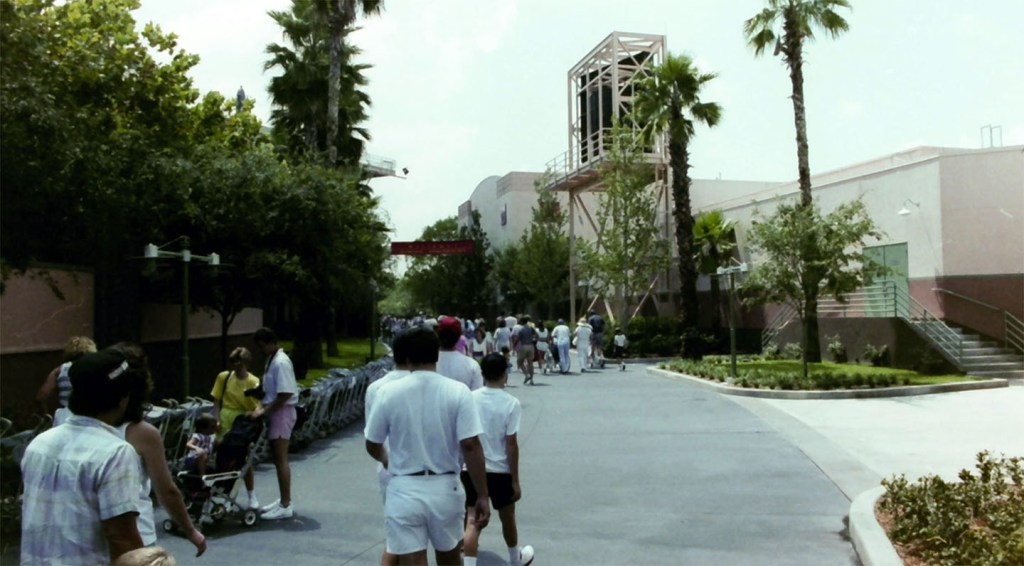
When Disney-MGM Studios opened, guests could only see the New York Street backlot from the Tram Tour. After the park became successful, Disney opened the area to pedestrians, but it offered little for guests to do. To activate it, Disneybrought in outside properties, including the Power Rangers, Ninja Turtles, Ace Ventura, and Goosebumps. New York Street became a flexible setting that could temporarily host whatever the park needed.
In that sense, New York Street became a template for temporary use: a space adaptable to different characters and experiences.
- Alpine Gardens at Disneyland California
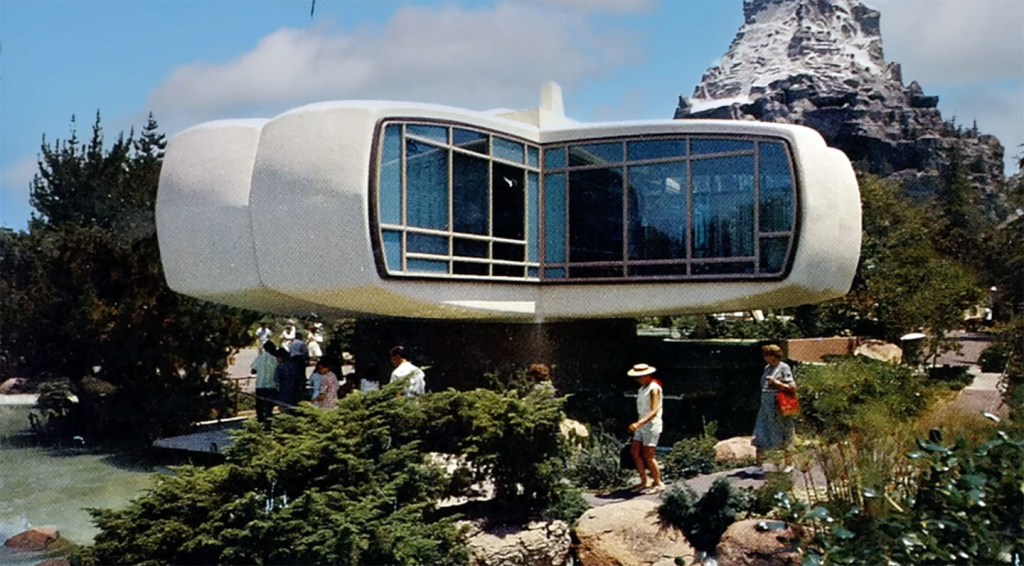
Near Disneyland’s hub was a site that began as bare ground when the park opened in 1955. Ruth Shellhorn designed the area. Monsanto’s House of the Future opened there on June 12, 1957, and closed on December 1, 1967. Afterward, the space was transformed into Alpine Gardens, named for its landscaped water feature. Later it became a Little Mermaid meet-and-greet area, and today it serves as the Tinker Bell character greeting location.
- Bluey at Animal Kingdom Walt Disney World
Bluey at Walt Disney World is another example of reusing existing facilities. The characters could have been placed at EPCOT in Celebration Hall, which has indoor space and sits next to a theater, but instead they went to Animal Kingdom’s Conservation Station. That location originally focused on education, with some entertainment, and included a veterinary hospital, interactive exhibits, and a petting area at the end of a train ride. Over time, it became Rafiki’s Planet Watch, and today it also serves as a home for Bluey.
What’s the impact?
One drawback of temporary measures is that they often rely on licensed properties Disney does not fully own. That can limit flexibility. Pixar is a good example. Before Disney acquired Pixar, projects had to be coordinated through Emeryville, which made the process slower and less efficient. After the acquisition, collaboration became much easier because Disney had direct access to files, approvals, and answers.
What’s the future?
Sometimes the result is a property being fitted into existing spaces rather than receiving a dedicated land. Duffy is a good example. Although Duffy originated in Orlando and later appeared in California, the character became especially successful in Asia, particularly at Tokyo Disneyland. Even so, there is still no dedicated Duffy land. Instead, Duffy appears across multiple areas and events, including strong presences in Shanghai and Hong Kong. Rather than anchoring a single themed land, Duffy has been woven into different parts of the parks.Adaptive reuse is not the same as new construction. For example, building Cars Land on a former parking lot at Disney California Adventure is park expansion, not adaptive reuse. Same with Camp Minnie Mickey where the land became Pandora.
Disney Parks are full of examples of Adaptive Reuse.

